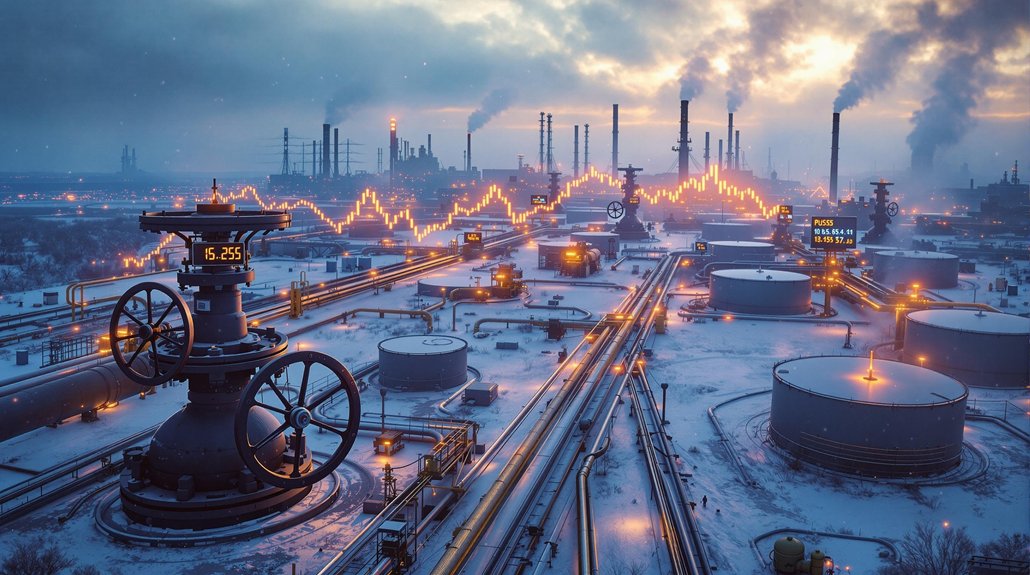
When natural gas prices swing wildly, electricity bills swing too. Natural gas price volatility peaked at 171% in February 2022, the highest level since 1994. This extreme spike has left many Americans wondering why their electricity costs keep rising.
Natural gas is the dominant fuel for generating electricity in the United States. When gas prices jump around dramatically, those changes flow directly to consumers’ electric bills. The U.S. produces more natural gas than almost any other country, yet domestic prices still skyrocketed during the 2022 crisis. Henry Hub prices, which track natural gas costs, jumped from roughly $2-3 per unit before Russia invaded Ukraine to over $8 per unit by mid-2022. That’s a fourfold increase.
The Ukraine invasion triggered global natural gas price spikes that rippled across America. Gas exports as liquefied natural gas, or LNG, exposed U.S. consumers to worldwide market swings. Even though prices calmed after 2022, reported to reach around 47% volatility in December, electricity rates haven’t dropped back down. Residents in gas-dependent regions like Massachusetts and Connecticut saw among the largest rate hikes.
Multiple factors drive gas price volatility. Winter months show the highest swings due to heating demand. Production freeze-offs, storms, and pipeline outages also spike prices. Weather changes and inventory levels matter too. Increasing reliance on natural gas as the primary electric generating fuel has fundamentally contributed to the observed volatility in energy markets.
U.S. residential electricity prices’ve risen around 40% since 2010. A significant portion, estimated around 25% of recent increases, came directly from rising natural gas costs. Studies show mixed effects; some find wholesale prices less volatile when natural gas sets the marginal price more often. Utility investment in transmission and distribution infrastructure reportedly increased by 64% between 2016 and 2023, adding further pressure to customer rates.
However, renewable energy growth is helping keep electricity prices from climbing even higher. Solar and wind power don’t have fuel costs, so they don’t create volatility. Renewables push wholesale prices down and provide cheaper electricity alternatives.
Looking ahead, more cost pressures are coming. Wildfire damages and grid hardening investments are driving rates up. Aging infrastructure needing replacement also adds to future costs.
References
- https://gasoutlook.com/analysis/u-s-electricity-price-increases-on-gas-price-volatility-wildfires/
- https://www.dallasfed.org/-/media/documents/research/papers/2024/wp2408.pdf
- https://pragmaticenvironmentalistofnewyork.blog/2025/03/11/renewables-are-cheaper-because-of-fuel-volatility/
- https://flex-power.energy/energyblog/the-great-decoupling/
- https://rmi.org/the-myth-of-stable-and-affordable-natural-gas-prices/
- https://justenergy.com/learning-center/price-volatility/
- https://www.gasfoundation.org/wp-content/uploads/2019/11/volstudych1.pdf
- https://www.eia.gov/todayinenergy/detail.php?id=62203