While many countries race to develop better electric vehicle batteries, Germany has emerged as a leader in an equally important field: recycling those batteries once they’re used up. The nation is turning what could be toxic waste into valuable resources for home solar systems and new batteries.
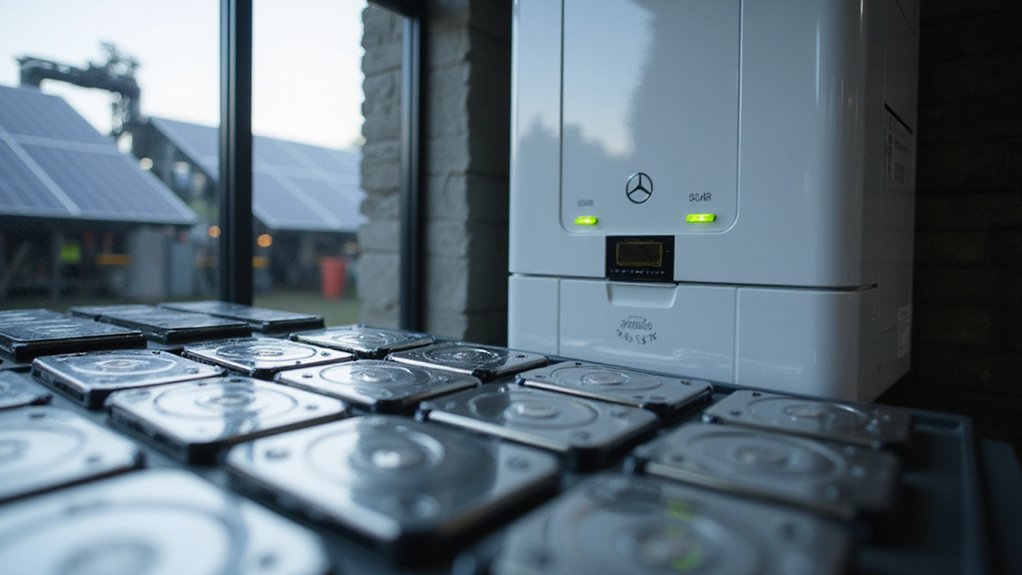
Mercedes-Benz recently opened a CO₂-neutral battery recycling plant in Kuppenheim. This facility can recover up to 96% of valuable materials from used EV batteries. These recovered materials can produce enough components for 50,000 new batteries each year.
Mercedes’ groundbreaking recycling facility transforms old EV batteries into materials for 50,000 new ones annually with 96% recovery efficiency.
Chemical giant BASF invested €460 million in its Schwarzheide plant. The facility uses advanced methods to extract critical elements like lithium, nickel, and cobalt. These elements then go directly into making new batteries. This approach creates a closed loop system that reduces waste.
Germany recycles 24% of its lithium-ion batteries, more than the US or Asia. This leadership position comes from strong regulations and smart partnerships. The EU Battery Regulation sets ambitious targets: by 2030, recyclers must recover 70% of lithium and 95% of cobalt, nickel, and copper from batteries.
Innovative companies like Cylib GmbH are developing new recycling methods. Their Dormagen facility will use water-based processes to recover lithium and graphite. When completed in 2026, it will process 30,000 tons of batteries yearly.
These advanced recycling methods use less energy than traditional approaches. Instead of melting batteries at high temperatures, they use mechanical and chemical processes. This saves energy and reduces pollution. The environmental impact is further minimized through capacity factors exceeding 90% in these recycling operations, similar to efficient geothermal energy systems.
The German government supports these efforts through research funding and partnerships with universities. These collaborations help improve recycling technology and logistics.
As the EV battery recycling market grows toward a projected $73.18 billion by 2034, Germany’s early investments are paying off. The country now handles 35% of Europe’s recycling capacity, creating jobs while solving an environmental challenge. The collaboration with business and scientific partners was emphasized during the recent inauguration of the Kuppenheim plant, highlighting the importance of multi-sector cooperation in advancing sustainable recycling solutions.
References
- https://www.gtai.de/en/invest/industries/environmental-technologies/mercedes-benz-opens-first-ev-battery-recycling-plant-1830448
- https://discoveryalert.com.au/news/basf-battery-recycling-germany-2025/
- https://ceramics.org/ceramic-tech-today/new-funding-and-facilities-in-ev-battery-recycling-industry/
- https://www.recyclingtoday.com/news/cylib-ev-battery-recycling-facility-groundbreaking-dormagen-germany/
- https://www.electrichybridvehicletechnology.com/news/clarios-acquires-ecobat-facilities-as-ev-battery-recycling-market-hits-73-billion.html