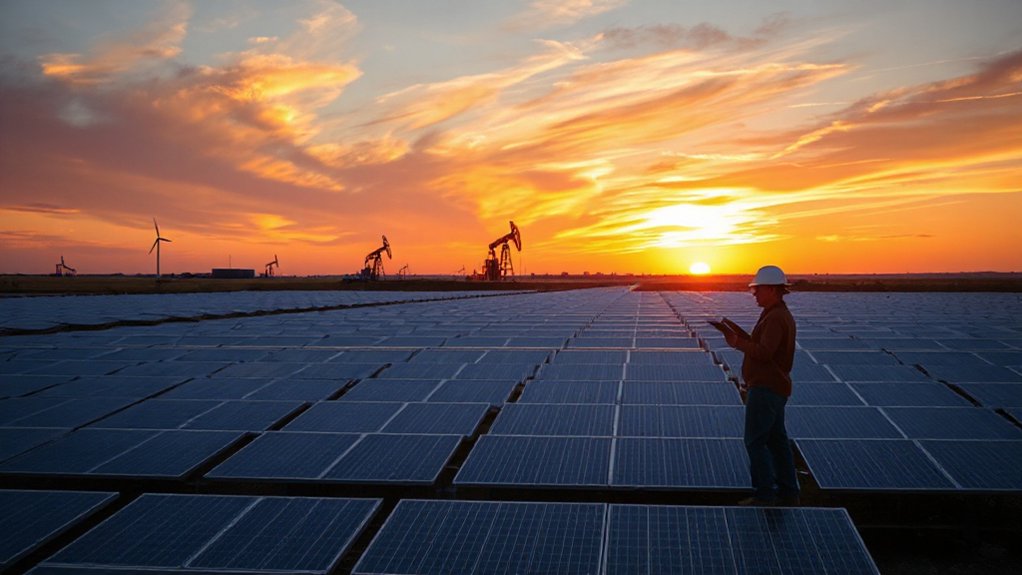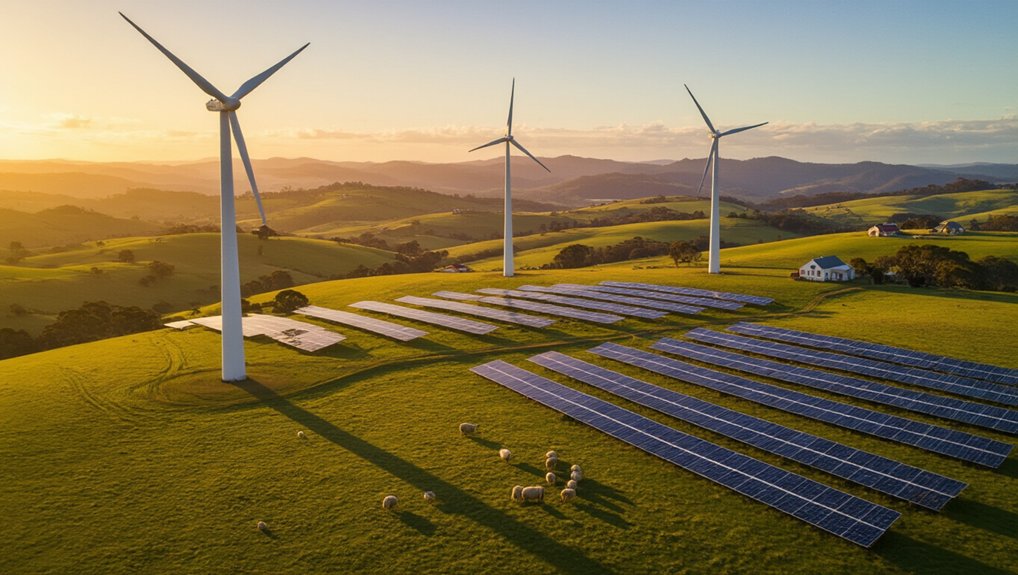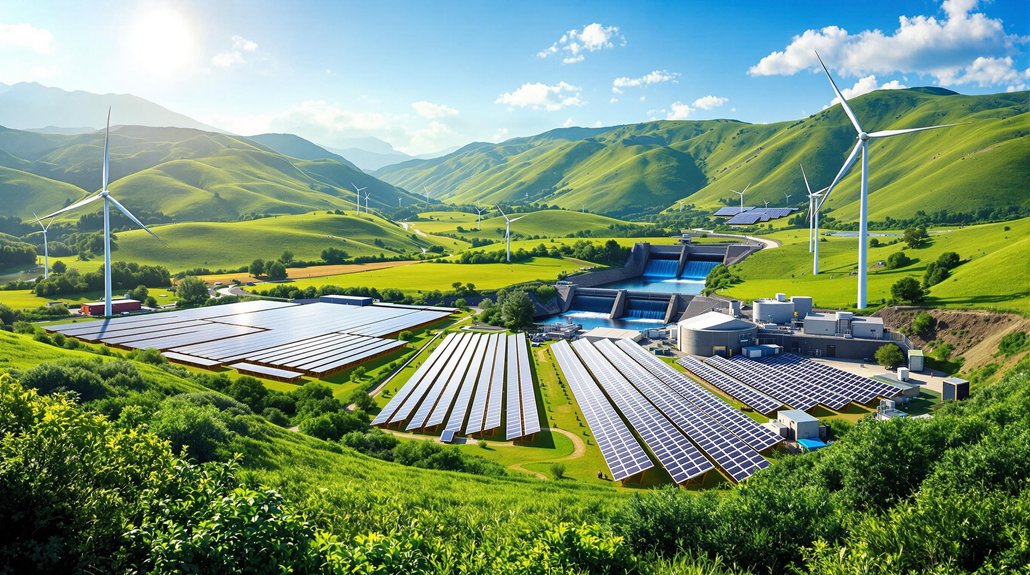
Clean electricity has surpassed 40% in global power generation for the first time since the 1940s. Solar, wind, hydro, and nuclear power now dominate new energy installations, with fossil fuels accounting for just 6% of new capacity. Ironically, power sector emissions still rose to 14.6 billion tonnes of CO2 in 2024. Europe leads with 71% clean energy while China pumps out one-third of global renewables. The shift’s underway, but it’s complicated.
While fossil fuels still dominate the global energy landscape, clean electricity has finally crossed a historic threshold. In 2023, low-carbon sources pushed past the 40% mark in global power generation. Solar, wind, hydro, nuclear – they’re all chipping away at coal and gas‘s long-held monopoly. Not too shabby.
This milestone takes us back to the 1940s, when hydropower ruled supreme. But here’s the kicker – today’s electricity systems are 50 times larger. Yep, fifty. The scale of this achievement makes those old hydro days look like a school science project.
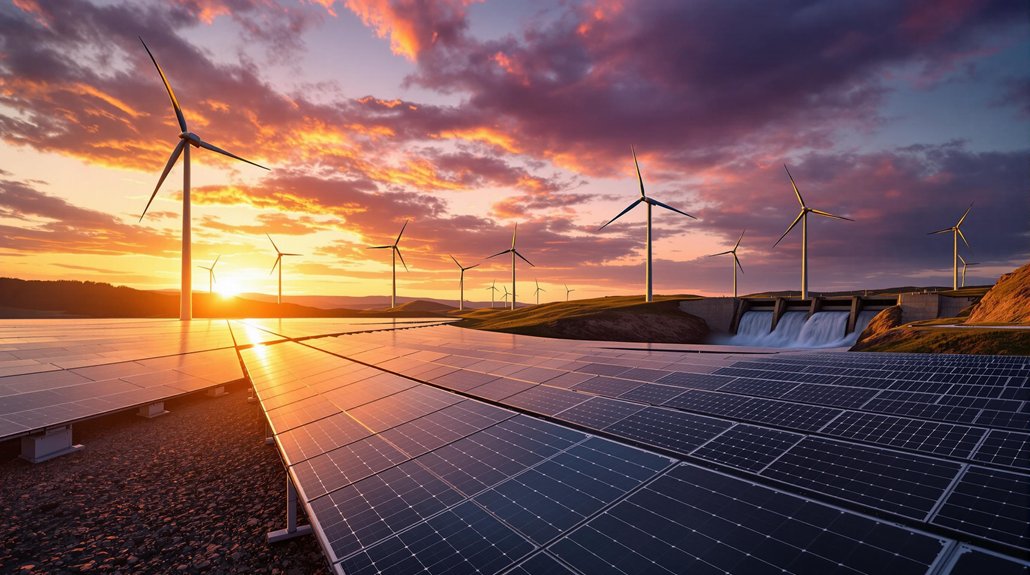
Solar and wind now account for 14% of global electricity, with hydropower adding another 14.7% and nuclear bringing 9.4% to the table. The shift is happening fast – a whopping 91% of new power capacity last year came from solar and wind installations. Fossil fuels? A measly 6%. Their worst showing in history.
Solar and wind dominate new electricity generation, making fossils look like yesterday’s news. A clean power revolution is underway.
Europe’s leading the charge, obviously. The EU generated 71% of its electricity from clean sources. Show-offs. Germany, Denmark, and Spain deserve particular credit, though they had decades of subsidies to help. The EU has made remarkable progress with solar generation nearly doubling in just three years to provide 11% of electricity, even surpassing coal.
Money talks. First half of 2024 saw $313 billion poured into renewable energy investments. These aren’t charity donations – costs have plummeted, making renewables increasingly attractive. China has emerged as a dominant force, accounting for nearly one-third of global renewable energy output in 2023.
It’s not all sunshine and rainbows, though. Global power sector emissions still rose in 2024, hitting 14.6 billion tonnes of CO2. Brutal summer heatwaves cranked up electricity demand for cooling. The irony isn’t lost on anyone.
The technology’s ready. The economics work. But there’s still a mountain to climb. Solar generation might power the equivalent of India today, but we’re talking about transforming the entire global energy system. A system that took centuries to build. In the U.S. alone, solar capacity has reached an impressive 219 gigawatts in 2023, enough to power 37 million homes.
Still, 40%. That’s something. A milestone worth noting as we sweat through another record-breaking summer.