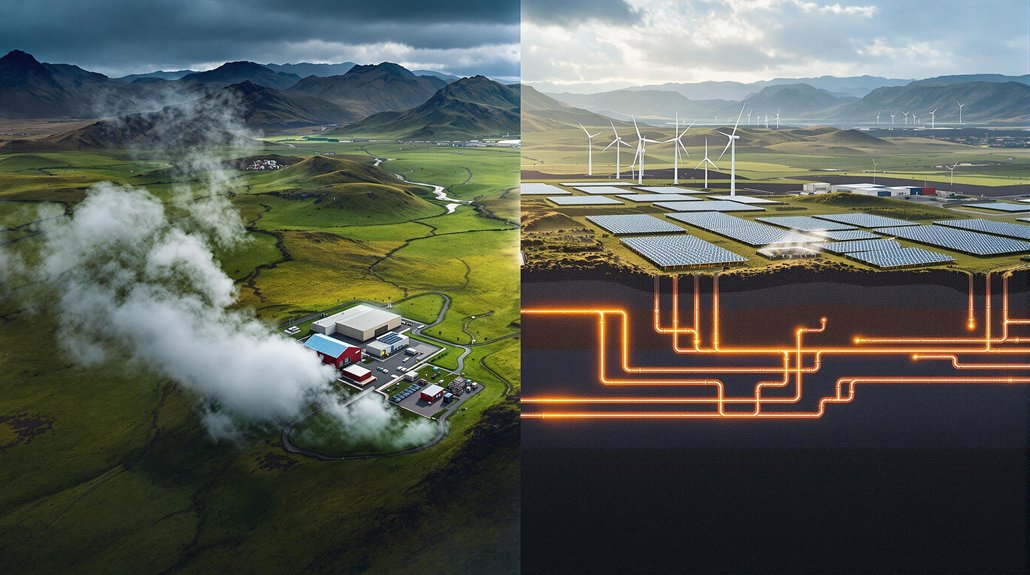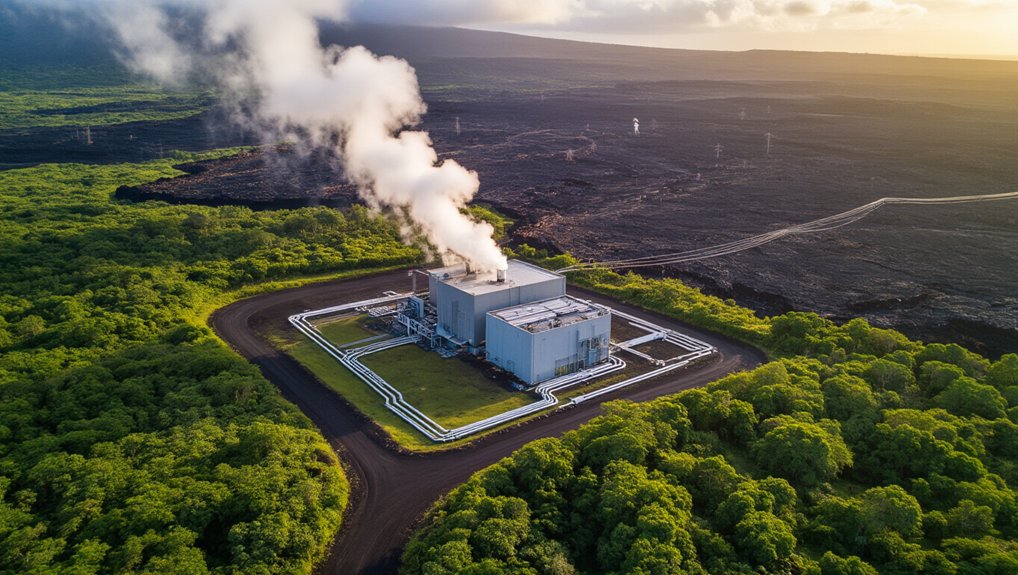
While Hawaii keeps talking about its 100% renewable energy goals, the islands are literally sitting on a goldmine of clean power beneath their volcanic soil. The state’s geothermal capacity could hit 205 MW across Hawaii and Maui by 2025. That’s real power, not just political promises.
Seven resource areas have been evaluated, including the Hualalai and Mauna Loa Southwest Rift zones. The Big Island alone could generate 180 MW. Yet here’s the surprise – the state wants geothermal to cover just one-third of the Big Island’s energy needs by 2045. One-third. From a resource that runs 24/7, unlike those temperamental solar panels that clock out when the sun does.
The numbers tell an interesting story. Current operations at PGV waste 36-72 MWh daily because of off-peak curtailment. Translation: they’re literally throwing away clean energy because the grid can’t handle it at certain times. Future scenarios look even more wasteful, with 100-200 MWh potentially lost daily as capacity grows. Makes perfect sense, right? Puna Geothermal Venture produces five times more electricity than a large solar farm while occupying 80% less land.
Hawaii throws away 36-72 MWh of clean geothermal energy daily because the grid can’t handle it.
Multiple state agencies are scrambling for permits and funding, competing for federal dollars while coordinating regulatory frameworks. Meanwhile, the Lower Kilauea East Rift Zone and other prime spots wait. Maui’s got potential too, though most action stays on the Big Island where the heat’s most accessible. The high upfront costs of geothermal exploration and drilling remain significant barriers to expanding beyond traditional hotspots.
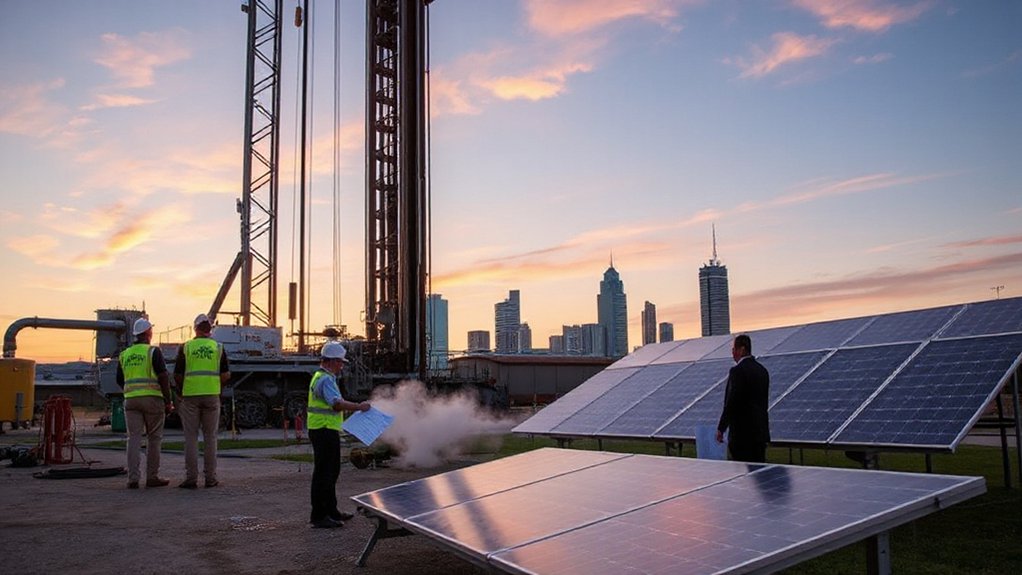
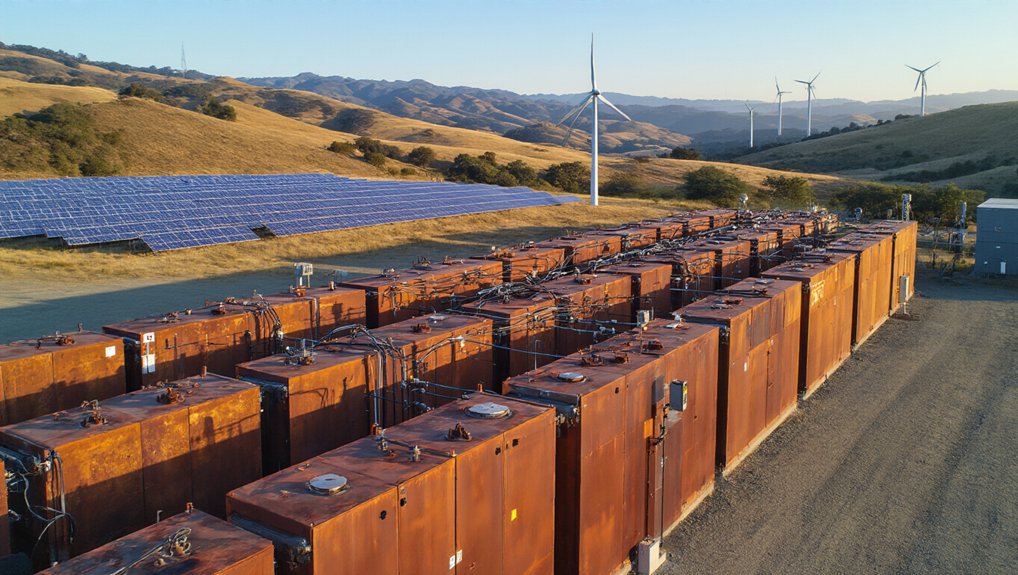
The infrastructure needs work. Transmission lines need upgrades. New drilling zones need exploration. The whole system needs an overhaul to handle what’s coming. At least they’re thinking about hybrid systems – mixing geothermal with solar and battery storage. Smart move, finally.
Here’s what matters: geothermal offers baseload power with capacity factors that embarrass wind and solar. It’s reliable, continuous, and doesn’t care about weather. While 238 MW of utility-scale solar comes online in 2025, it’s the underground heat that’ll keep the lights on after sunset. Geothermal currently provides 13% of state electricity production, proving its worth as a cornerstone of Hawaii’s energy portfolio.
The state’s betting its clean energy future on realizing geothermal’s potential. With enhanced drilling tech and resource mapping improving, maybe they’ll actually hit those ambitious targets. Or maybe they’ll keep curtailing perfectly good energy while debating permits. Time will tell which way Hawaii’s volcanic power plays out.
References
- https://www.hawaiitribune-herald.com/2025/04/14/hawaii-news/geothermal-power-exploration-building-up-steam/
- https://www.civilbeat.org/2025/06/hawaiʻi-wants-more-geothermal-power-plants-but-doesnt-yet-know-where/
- https://gdr.openei.org/submissions/1702
- https://www.eia.gov/state/print.php?sid=HI
- https://energy.hawaii.gov/wp-content/uploads/2011/10/AssessmentOfEnergyReservesAndCostsOfGeothermalResourcesInHawaii.pdf