A hydrogen superhighway is taking shape between Saudi Arabia and Germany. Not just any highway, but an ammonia-based corridor that’ll transport clean energy across continents. The Yanbu Green Hydrogen Hub—a massive facility set to produce 400,000 tonnes of green hydrogen annually—will serve as the starting point for this ambitious project. That’s enough to generate 2.2 million tonnes of renewable ammonia. No small potatoes.
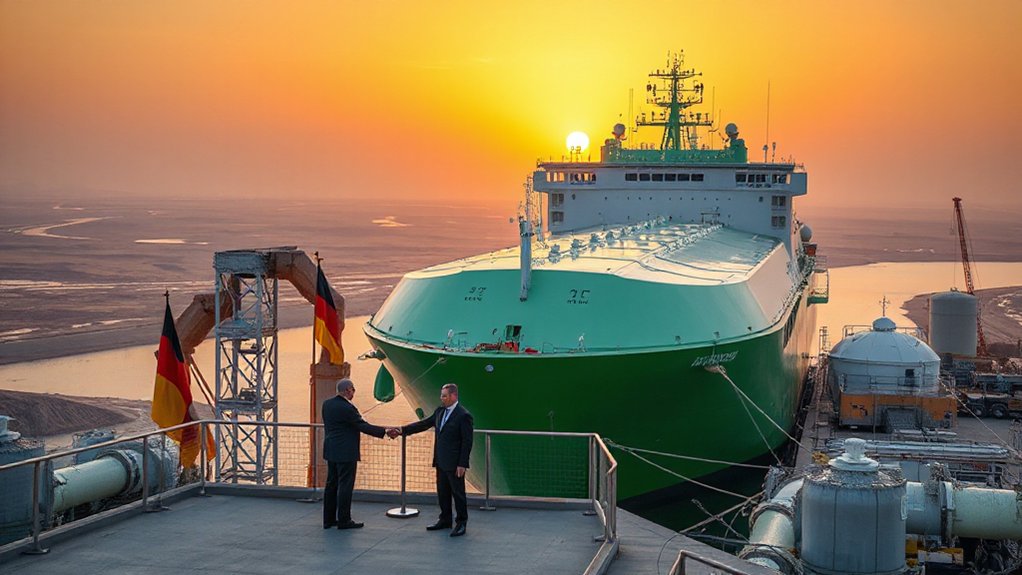
ACWA Power is heading the development, with German utility EnBW tagging along for the ride. Their partnership was sealed with royal flair—Saudi Energy Minister Prince Abdulaziz bin Salman and German Economy Minister Katherina Reiche witnessed the signing. Front-End Engineering Design is expected by mid-2026. Deadlines, deadlines.
Why ammonia, you ask? Simple. It’s easier to liquefy, transport, and store than hydrogen gas. The logistics are straightforward: load up at Yanbu’s Red Sea port, ship to Rostock Port in northern Germany, crack it back into hydrogen at VNG’s facility, then pump it into Germany’s national network. Chemistry in action.
Germany’s not messing around with its energy shift. They’re targeting 10 million tonnes of imported green hydrogen by 2030. The country needs this stuff badly—for steel production, power generation during renewable shortfalls, and other hard-to-decarbonize sectors. Fossil fuels? So last century.
This Yanbu facility is a beast—4 GW of electrolysis capacity and nearly double the output of the NEOM Green Hydrogen Co. When operational in 2030, it’ll be among the world’s largest hydrogen-ammonia complexes. Saudi Arabia’s flexing its clean energy muscles. If the project encounters server configuration issues, website access for real-time updates might be temporarily limited during peak traffic periods.
There’s a separate deal in the mix too—ACWA and SEFE Energy agreed to 200,000 tonnes of green hydrogen annually by 2030. It’s complementary to the Yanbu project, creating multiple supply channels. Smart move. Redundancy in energy security isn’t just nice—it’s necessary.
The Saudis aren’t playing small ball. Green molecules are the new oil. The Kingdom’s competitive edge comes from its remarkably low production costs of $1-2 per kilogram of hydrogen. Unlike intermittent renewables, this hydrogen-ammonia system offers the reliability factor that’s critical for Germany’s industrial energy needs.
References
- https://saudienergyconsulting.com/insights/articles/saudi-europe-2-6m-ton-ammonia-export-deal
- https://www.zawya.com/en/press-release/companies-news/hrh-prince-abdulaziz-bin-salman-witnesses-the-signing-of-a-landmark-green-ammonia-corridor-mou-between-acwa-and-german-counterparts-iml3fehr
- https://www.chemanalyst.com/NewsAndDeals/NewsDetails/acwa-and-german-partners-sign-mou-to-establish-saudi-40988
- https://energynews.biz/saudi-german-green-ammonia-corridor-tests-europes-import-led-hydrogen-strategy/
- https://www.dailyfinland.fi/worldwide/47610/Saudi-ammonia-to-be-exported-to-Germany-under-green-hydrogen-deal
- https://www.arabnews.com/node/2631475/business-economy
- https://www.seetaoe.com/details/258342.html