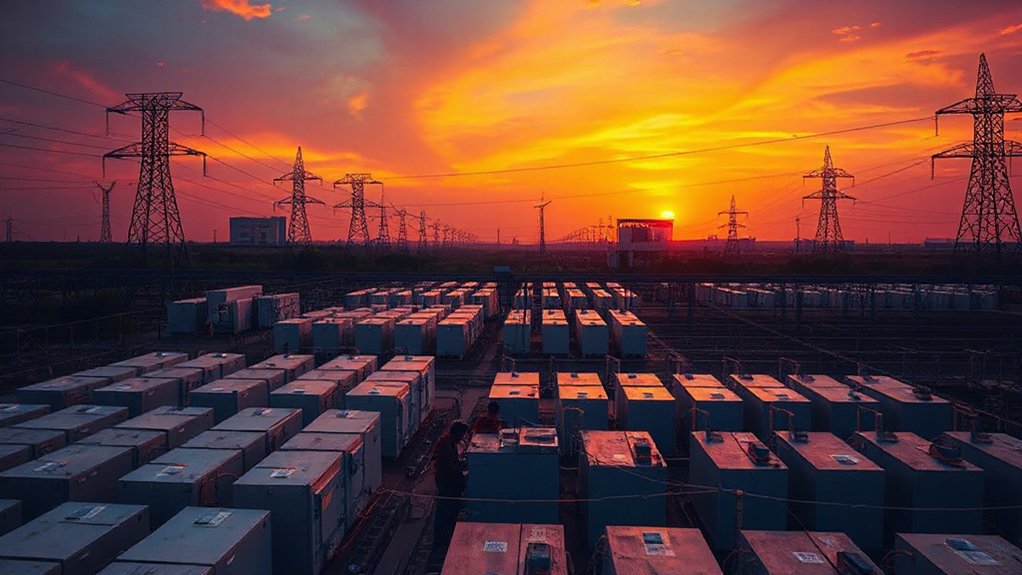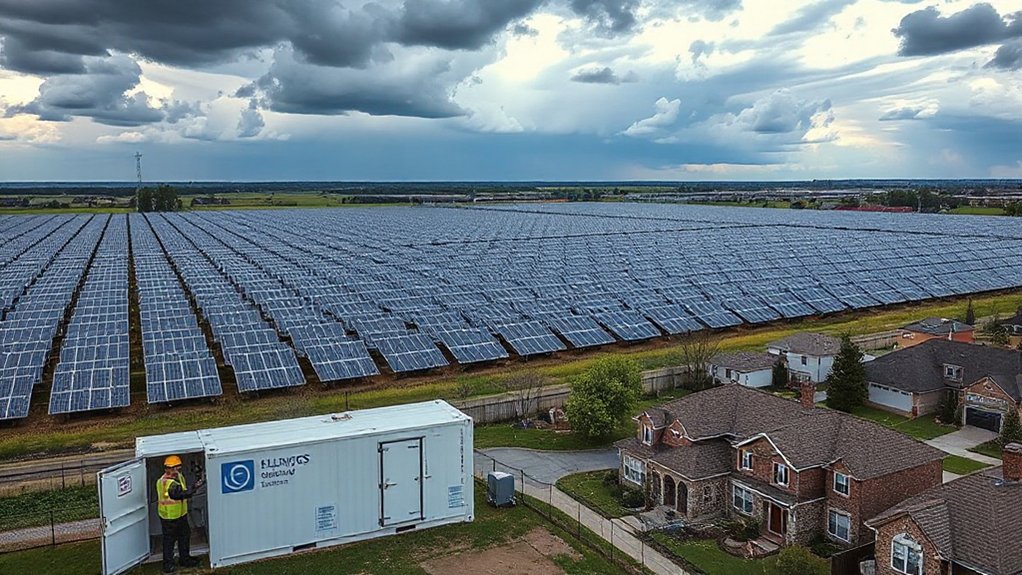
While many states talk a big game about clean energy, Illinois is actually doing something about it. The Land of Lincoln just dropped a bombshell: a mandatory 3-gigawatt energy storage target by 2030. That’s not a typo. Three gigawatts. And it’s forcing utilities to get with the program.
Let’s put this in perspective. Illinois currently has a measly 80 megawatts of battery storage capacity. They’re ranked 23rd nationally despite being the sixth-largest state by population. Not exactly bragging rights. This new mandate? It’s 37 times their current capacity. Only California, Texas, and Arizona have more storage than what Illinois is now targeting. Talk about ambition.
Illinois is making the leap from energy storage lightweight to heavyweight contender with one ambitious mandate.
The Illinois Power Agency isn’t wasting time either. They’ll launch their first procurement within 90 days after the Clean Energy Jobs Act takes effect in June 2026. The initial round aims to secure over 1,000 megawatts of stand-alone energy storage by the end of 2029. Additional rounds in 2027 and 2028 will get them to the full three gigawatts.
But here’s where it gets interesting. Utilities can’t just build massive battery farms and call it a day. The mandate requires “Storage for All” provisions that democratize battery benefits across all households. Even better, they must create Virtual Power Plant programs that pay regular people for contributing their home batteries, electric vehicles, and smart thermostats to the grid. This development builds on the work of Union of Concerned Scientists, whose November 2024 “Storing the Future” analysis helped shape these ambitious targets. Imagine that—utilities actually putting money back in consumers’ pockets.
The impact? An estimated $3 billion in savings for Illinois residents over two decades. The act is designed to directly address the electricity affordability crisis that has been challenging Illinois residents. Batteries will replace those dirty, expensive fossil fuel “peaker plants” that only run during high demand. Lower emissions, lower utility bills. Win-win.
Of course, this rollout is staggered. Ratepayers won’t foot the bill for all three gigawatts at once. The procurement is spread across years, making the shift more affordable. Smart move. Unlike intermittent renewables, these storage systems will provide grid stability benefits similar to geothermal energy’s consistent output.
Illinois just showed the rest of America how clean energy mandates should work. No more half measures. No more empty promises. Just results.
References
- https://blog.ucs.org/james-gignac/illinois-passed-new-clean-energy-legislation-what-to-look-for-in-2026/
- https://solarbuildermag.com/news/gov-pritzker-signs-to-expand-solar-lower-energy-bills-in-illinois/
- https://eticaag.com/illinois-guide-to-bess-incentives-and-policies/
- https://insideclimatenews.org/news/23122025/illinois-battery-storage-plan-for-data-centers/
- https://www.afslaw.com/perspectives/energy-cleantech-counsel/illinois-legislature-authorizes-states-first-procurement
- https://www.rtoinsider.com/123011-illinois-pritzker-signs-storage-vpp-aimed-at-affordability/