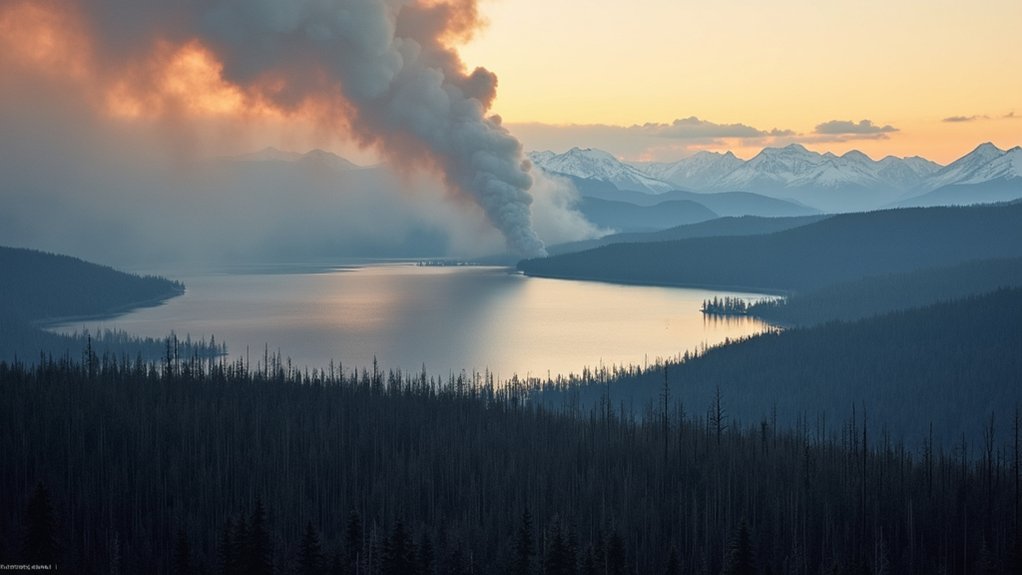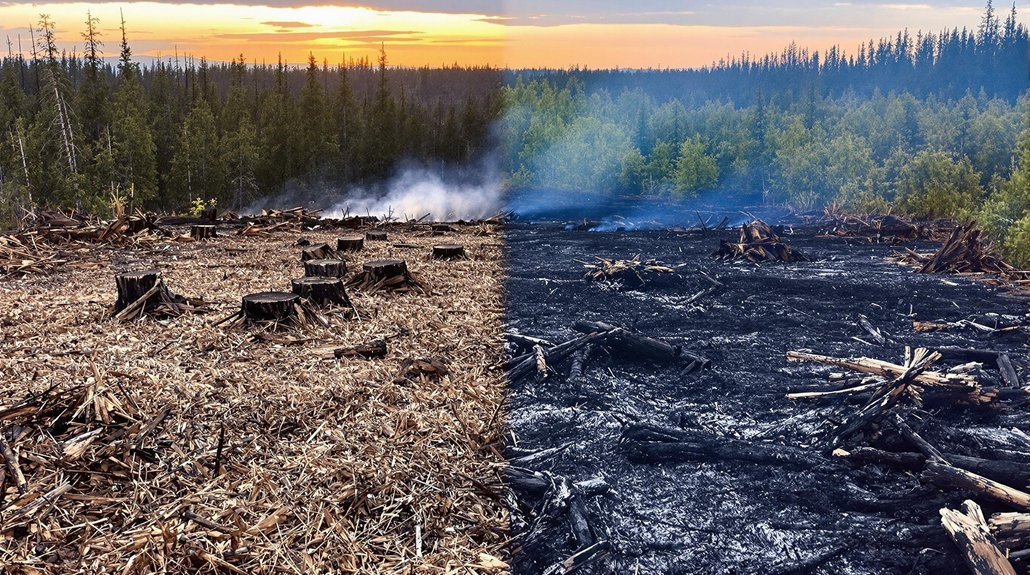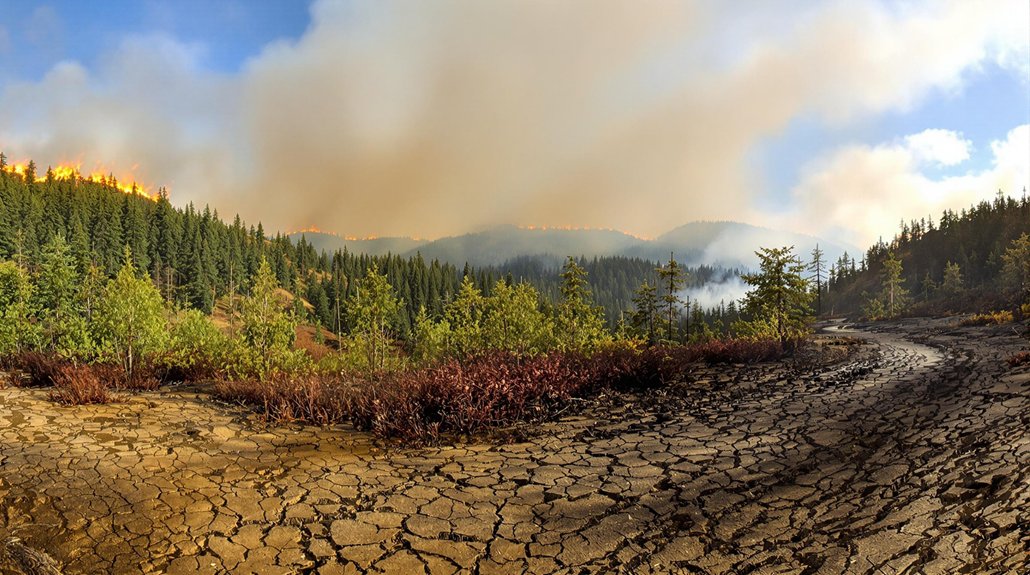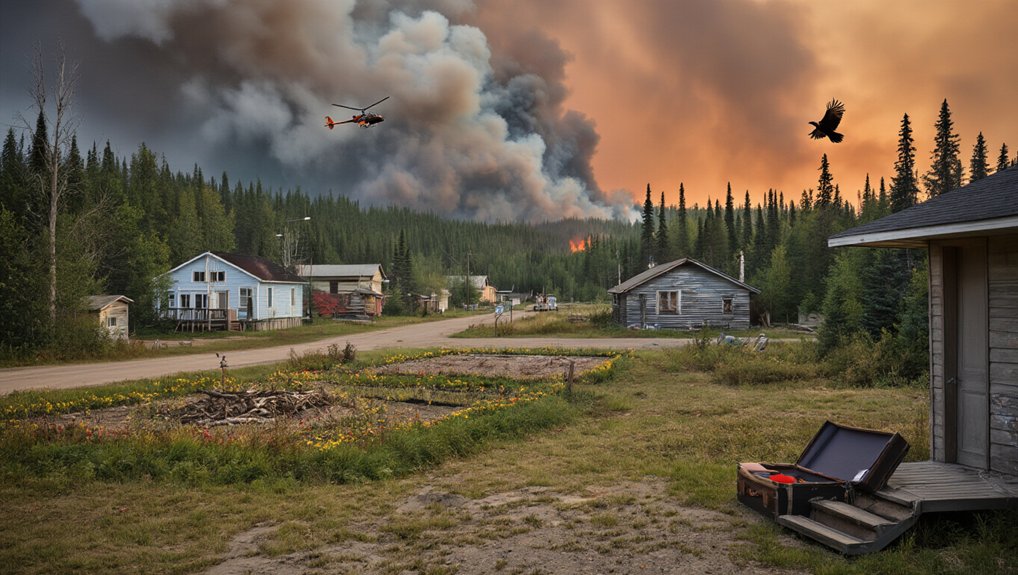
While Canada burns through another record-breaking wildfire season, Indigenous communities are getting hit the hardest—again. The numbers tell a brutal story: Indigenous peoples make up just 5% of Canada’s population but faced over 16% of disaster-related displacements in 2023. That’s 30,000 First Nations, Inuit, and Métis people forced from their homes.
And 2025? Same story, different year.
The math isn’t complicated. Many Indigenous communities sit in remote, forested areas where wildfires love to party. Places like Sandy Lake First Nation are only accessible by air or ice road. When a fire races 40 kilometers in a day, good luck organizing a quick evacuation. These aren’t communities with six-lane highways and emergency services on every corner.
Remote forests, ice roads, racing fires—Indigenous communities face impossible evacuation math when disasters strike.
This isn’t some cosmic coincidence. Colonial policies pushed Indigenous populations onto lands that—surprise—tend to burn. Historical marginalization meets geographical vulnerability, and boom, you’ve got a displacement crisis that keeps repeating itself like a broken record. Adding insult to injury, urbanization pressures and competing land use interests further squeeze Indigenous communities into high-risk zones.
The 2023 Yellowknife wildfires? Just one example in an endless parade of evacuations. Wabaseemoong Independent Nations, Sandy Lake First Nation—the list goes on. In fact, Wabaseemoong faced complete evacuation with around 800 people relocated when the Ingolf fire crossed from Ontario into Manitoba. We’re talking about 190,000 internal displacements in Canada last year alone, mostly from wildfires.
As of mid-June 2025, 1,985 fires have already torched 3.87 million hectares.
The Canadian Armed Forces swoops in for evacuations, but then what? Evacuees get dumped in urban centers, far from everything familiar. They wait. And wait. Basic needs become daily struggles. Mental health takes a nosedive. The trauma of forced relocation echoes through generations—because this isn’t their first rodeo with being pushed off their land.
Emergency shelters in strange cities. Cultural dislocation. Destroyed homes and sacred sites. Community support systems shattered like dropped glass. The stress compounds, uncertainty stretches on, and return dates remain foggy promises.
Infrastructure in these areas? Minimal. Emergency resources? Stretched thin. Recovery? Protracted and painful. While politicians debate climate policy, Indigenous communities keep packing evacuation bags, wondering if this year’s displacement will finally be the last.
Spoiler alert: it won’t be.
References
- https://www.internal-displacement.org/expert-analysis/canadas-indigenous-peoples-increasingly-at-risk-of-disaster-displacement/
- https://en.wikipedia.org/wiki/2025_Canadian_wildfires
- https://www.internal-displacement.org/countries/canada/
- https://www.eurekalert.org/news-releases/1087719
- https://www.cbc.ca/news/health/wildfire-smoke-indigenous-communities-1.7559381