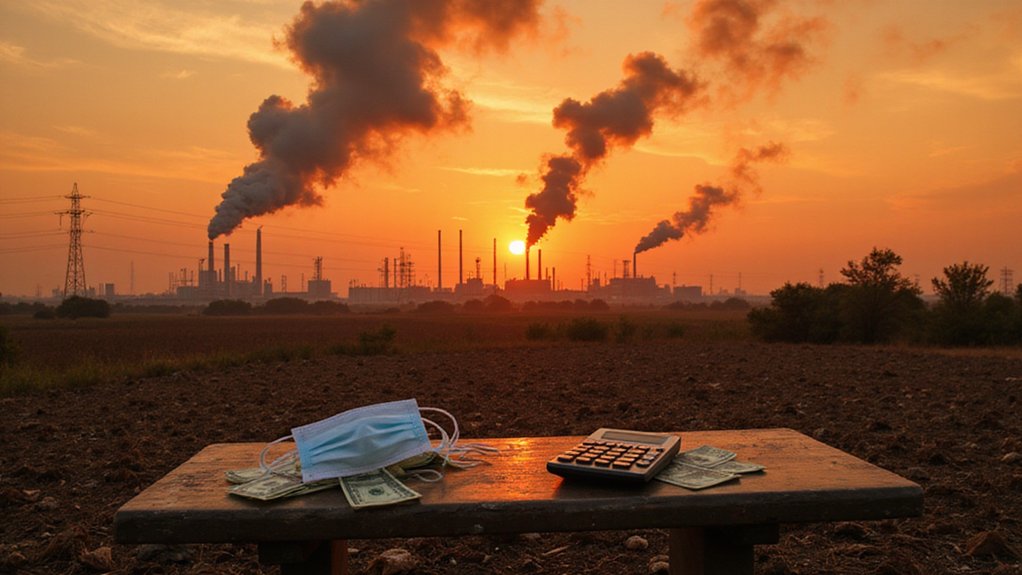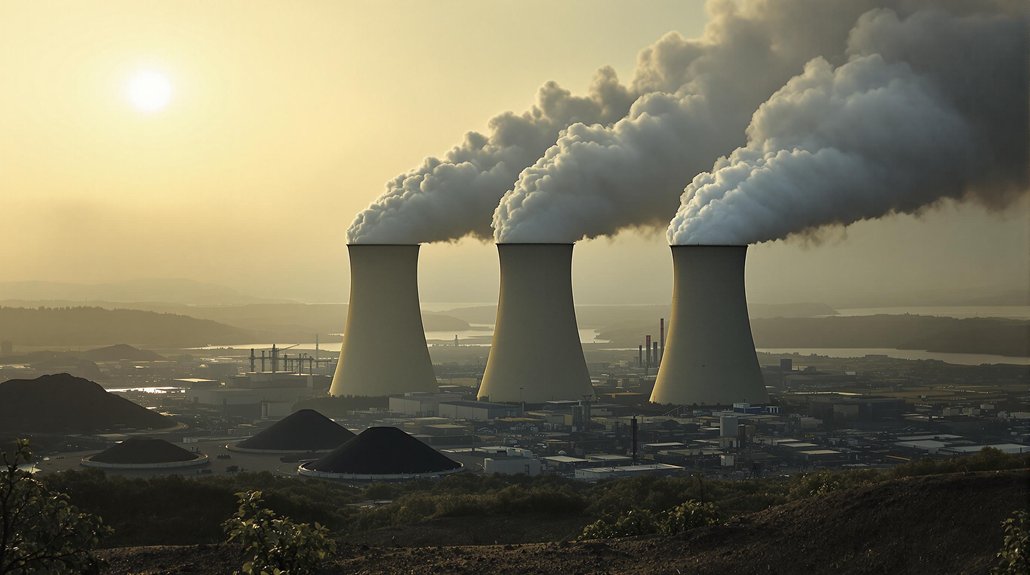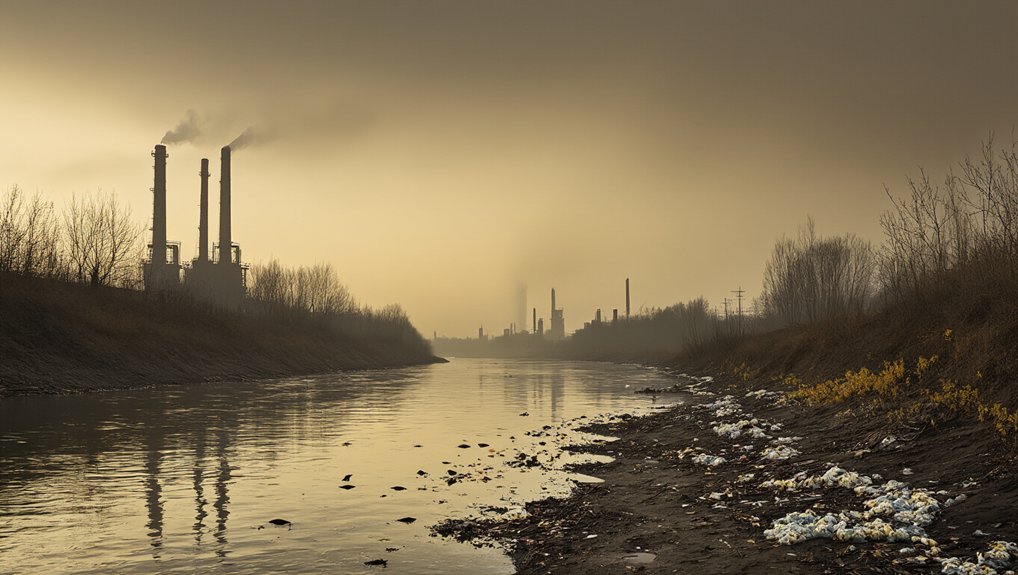
When the Industrial transformation kicked off in the late 1700s, nobody bothered to read the fine print. Factories sprouted like weeds, smoke stacks pierced the sky, and everyone cheered progress. Meanwhile, rivers worldwide were getting a toxic makeover. Mercury levels surged 200%, turning waterways into chemical cocktails.
Progress cheered while rivers turned toxic – mercury surged 200% and nobody noticed the fine print.
Industrial facilities dumped everything imaginable into rivers. Oil, debris, toxic substances – if it was waste, it went straight into the water. No filters, no treatment, no second thoughts. The result? Aquatic ecosystems got hammered. Fish died, plants withered, and the water that once sustained communities became their worst enemy. Today, over 40% of lakes, rivers, and estuaries remain unsafe for fishing and swimming due to hazardous waste contamination.
Cities built along these poisoned arteries paid the price. Cholera and typhoid spread like wildfire through urban areas. Drink the water, get sick. Bathe in it, get sick. The pattern was brutally simple. Working-class neighborhoods, already crammed and filthy from rapid urbanization, bore the brunt. Streets bred disease, and overcrowding made everything worse. Urban populations in England and Wales exploded from 17% in 1801 to 72% in 1891, packing millions into polluted industrial centers.
The numbers tell a grim story. Since the Industrial transformation’s start, humanity has released approximately 2.3 trillion tonnes of CO₂ into the atmosphere. Coal combustion spewed sulfur dioxide, nitrogen oxides, and particulate matter. London’s Great Smog of 1952 killed over 12,000 people in a single event. That’s not progress – that’s a massacre in slow motion.
Industrial waste sites still poison communities today. Heavy metals like mercury and lead persist in soil and water, a gift that keeps on giving. Persistent organic pollutants don’t just disappear. They stick around, accumulating in food chains, wreaking havoc on ecosystems and human health alike.
Eventually, reality hit hard enough that governments couldn’t ignore it. The UK passed the Clean Air Act in 1956, after thousands choked to death on their own air. Other nations followed, slowly, reluctantly. But the damage was done. Forest clear-cutting, resource depletion, biodiversity loss – the Industrial transformation’s toxic legacy runs deep.
Those mercury-laden rivers? They’re still flowing. The 200% surge wasn’t a temporary spike. It marked the beginning of an environmental debt we’re still paying off, one poisoned waterway at a time.
References
- https://greenly.earth/en-us/blog/ecology-news/what-was-the-industrial-revolutions-environmental-impact
- https://lonestarhazmat.com/the-toxic-legacy-how-hazardous-waste-is-endangering-our-environment/
- https://whatisgreenliving.com/what-was-the-environmental-impact-of-the-industrial-revolution/
- https://www.thecollector.com/environmental-impact-industrial-revolution-pollution/
- https://www.open.edu/openlearn/nature-environment/environmental-studies/working-our-environment-introduction/content-section-2.3