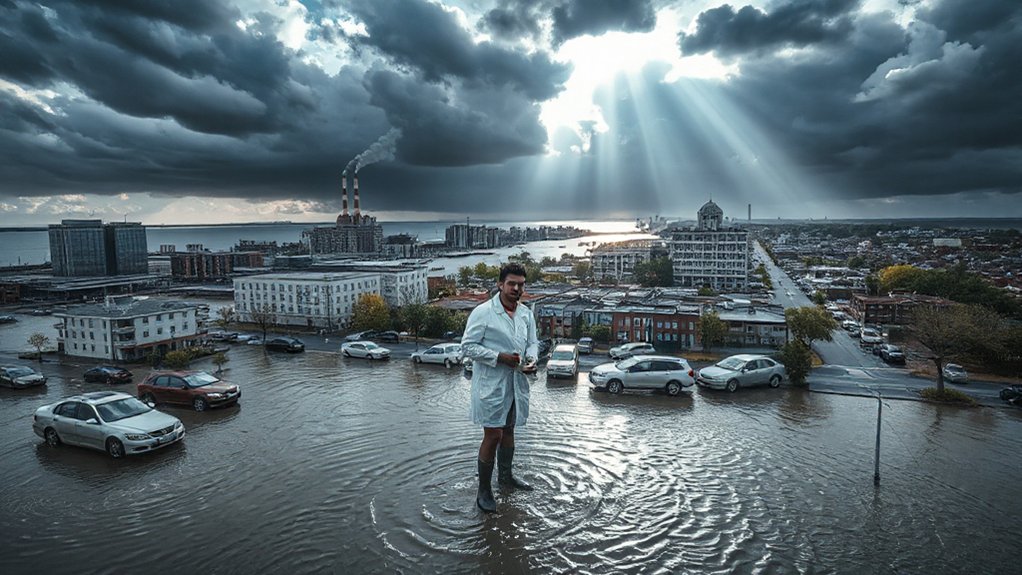
How much can the world cut emissions in the next six years? According to the latest IPCC report, nations must reduce global greenhouse gas emissions by 43% by 2030 compared to 2019 levels. This dramatic cut is essential to limit warming to 1.5°C and prevent irreversible climate damage.
Nations must reduce global greenhouse gas emissions by 43% by 2030 to limit warming to 1.5°C and prevent irreversible climate damage.
The stakes couldn’t be higher. Scientists warn that emissions must peak before 2025 at the latest for the 1.5°C target to remain achievable. Without immediate deep reductions across all sectors, this goal becomes impossible. Even with aggressive action, temporary temperature increases beyond 1.5°C are likely, though later reductions can bring temperatures back down. The remaining carbon budget for a two-thirds chance of limiting warming to 1.5°C is estimated around 420 gigatons of CO2.
The challenge is enormous but not insurmountable. From 2010 to 2019, global emissions reached their highest levels in human history. However, the growth rate did slow during this period, suggesting change is possible. The report emphasizes that every sector of society—energy, industry, agriculture, and transportation—contains options to halve emissions by 2030. Achieving net-zero CO2 emissions globally will require action to continue well past 2030, with net-zero timing in the early 2050s for the 1.5°C pathway.
Technology and costs tell an encouraging story. Solar and wind energy prices have dropped up to 85% since 2010. Battery costs fell similarly, making clean energy increasingly affordable. These advances mean the tools to cut emissions already exist and are becoming more economical.
However, technology alone won’t solve the problem. Governments must implement strong policies tailored to specific sectors. Research shows that sector-by-sector approaches work better than general national pledges. Carbon taxes and targeted sector policies are recommended strategies.
The report also highlights methane‘s importance. Alongside greenhouse gas cuts, methane emissions must drop by one-third. To achieve net zero CO2 emissions by the early 2050s for the 1.5°C pathway, societies need widespread electrification, efficient buildings, compact cities, and reforestation efforts.
The timeframe is critical. Scientists describe the next few years as a “now or never” moment for deep reductions. The tools and knowledge exist to limit warming. Lifestyle changes could reduce emissions by 40-70% by 2050 while improving people’s health. The question isn’t whether it’s possible—it’s whether nations will act quickly enough.
References
- https://www.ipcc.ch/2022/04/04/ipcc-ar6-wgiii-pressrelease/
- https://www.ipcc.ch/sr15/
- https://www.asiaeec-col.eccj.or.jp/policynews-202305-1/
- https://coastalreview.org/2022/04/emissions-can-be-reduced-50-by-2030-ipcc-report/
- https://healthpolicy-watch.news/climate-mitigation-report/
- https://www.ipcc.ch/report/ar6/wg3/chapter/summary-for-policymakers/