
While the renewable energy sector continues its expansion across America, a looming deadline crisis threatens to upend the solar industry’s growth trajectory. The recently passed “One Big Beautiful Bill Act” (OBBBA) has created a stark reality for solar developers: build now or lose out. Period.
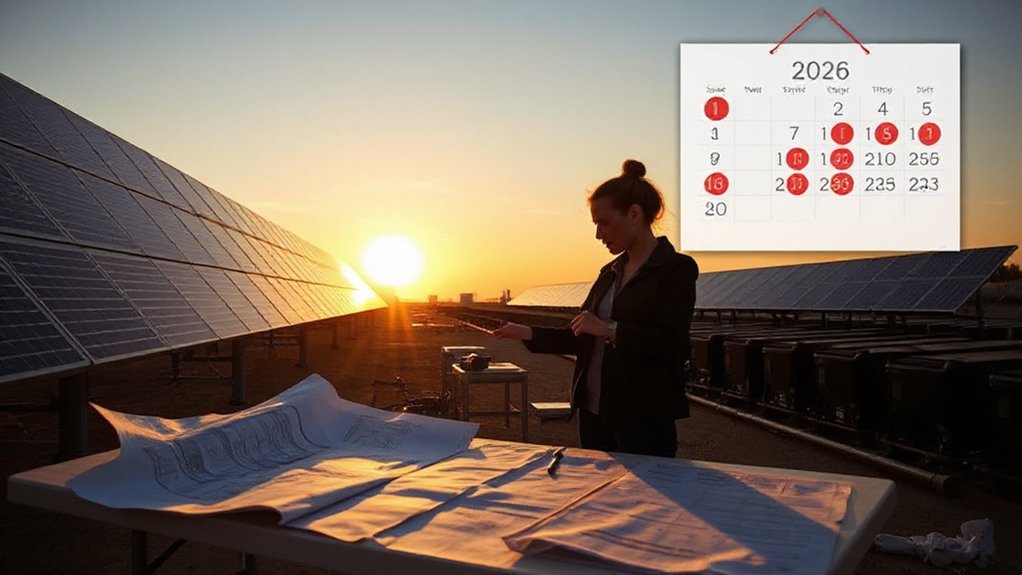
July 4, 2026 isn’t just for fireworks anymore. It’s the final day for most solar projects to satisfy “begin construction” requirements and preserve standard Investment Tax Credit timelines. Miss that date? Good luck getting the full 30% commercial ITC.
Even if you start construction before the deadline, you’d better finish by December 31, 2027, or you’re out of luck.
The clock’s ticking. Break ground by July 2026, finish by December 2027, or kiss your full ITC goodbye.
The IRS used to give developers a comfortable four-year window to complete projects after breaking ground. Those days are ending. Faster timelines, stricter rules. Get used to it.
Here’s where it gets interesting—or ridiculous, depending on your perspective. Battery storage projects don’t face the same cliff. They’re exempt from the accelerated phaseout and eligible for ITC through approximately 2033. Talk about playing favorites!
Storage gets a gentle ramp-down while solar gets shoved off a ledge. Developers aren’t stupid. They’re already positioning storage as a “bridge asset” that can deliver grid services while they figure out how to navigate the post-2027 solar landscape. Smart move.
Residential solar faces an even tighter squeeze. Systems need installation and commissioning by the end of 2025 to qualify for credits. That’s right—homeowners have even less time than commercial developers.
The OBBBA also introduced Foreign Entity of Concern requirements affecting equipment sourcing after 2026. Projects beginning construction by December 31, 2025 are actually exempt from these FEOC guidelines that will apply to later projects. Supply chains are scrambling. Panel manufacturers are panicking.
The new legislation has also dramatically changed depreciation benefits, extending the recovery period from 5 years to 20 years while making bonus depreciation permanent.
The bottom line? The solar industry is facing an unprecedented development crunch. Companies have roughly two years to lock in projects before the ITC cliff arrives. Some won’t make it. Others will thrive in the chaos. This cliff comes at a critical time when experts recommend 60-80% renewables in our electricity mix by 2035 to combat climate change. The deadline shock is real, and the race is already underway.
References
- https://www.cleanegroup.org/what-nonprofits-need-to-know-about-itc-2025/
- https://brightergy.com/commercial-solar-tax-credit-incentives-what-business-leaders-need-to-know-before-the-30-itc-window-closes/
- https://93energy.com/blog/itc-safe-harbor-rules-for-solar-projects-what-you-need-to-know
- https://www.greenlancer.com/post/solar-tax-credit-ending
- https://www.energytoolbase.com/big-beautiful-bill/renewable-credits-energy-resources/
- https://www.solarpowerworldonline.com/2026/01/states-work-to-speed-renewable-deployment-before-itc-deadline/
- https://www.pacificoenergy.com/post/energy-storage-after-itc-phaseout-opportunities-strategies
- https://www.novoco.com/periodicals/articles/obbba-and-the-clean-energy-race-against-the-clock