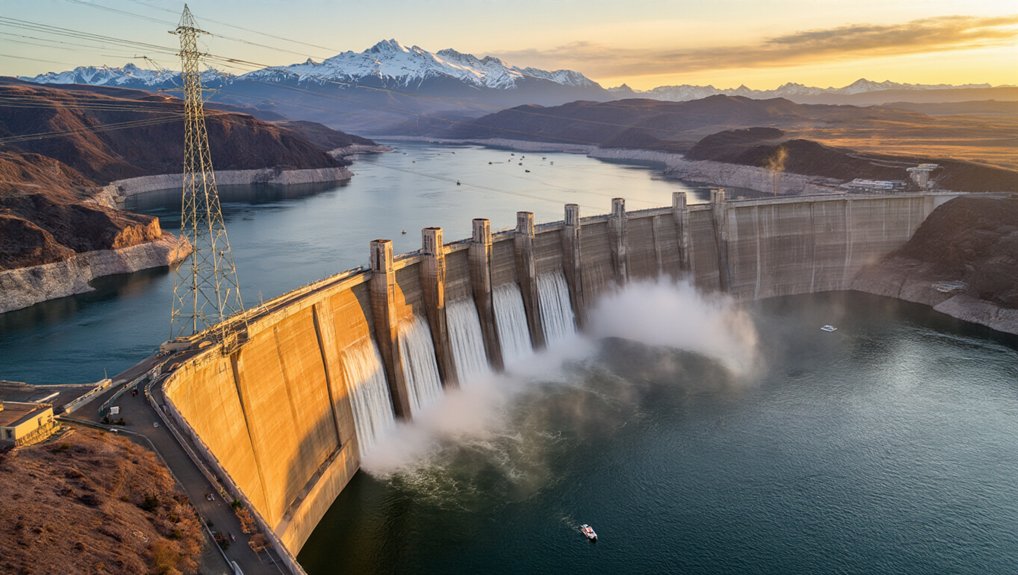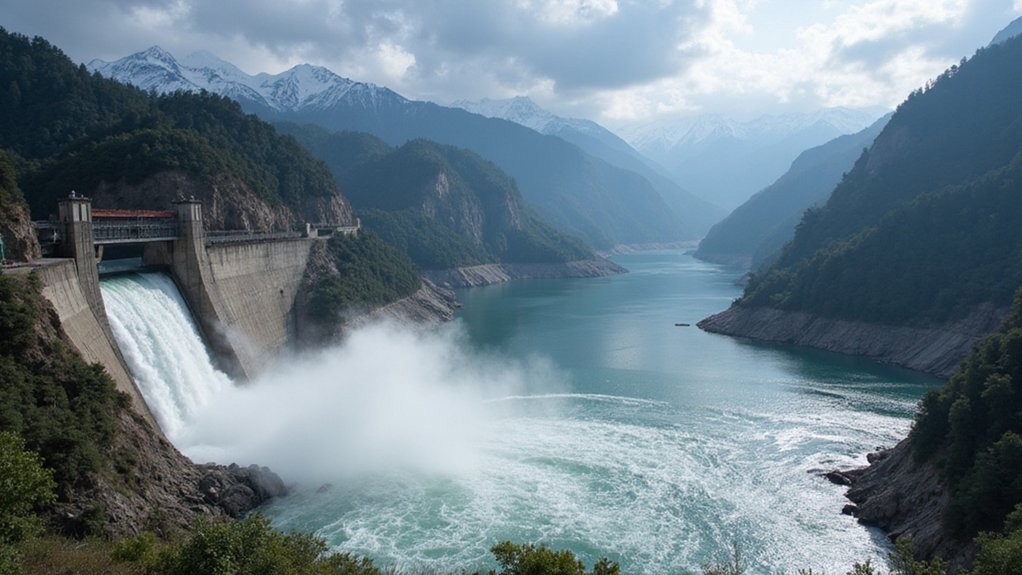
A staggering 80% of the region’s hydropower potential remains untapped, sitting idly while energy demands soar.
Jammu and Kashmir boasts an estimated hydropower potential exceeding 20,000 MW, with identified capacity ranging between 14,800 and 18,000 MW. Yet the current installed capacity? A mere 3,263 to 3,540 MW. That’s right—only about 20% utilized. Talk about leaving money on the table.
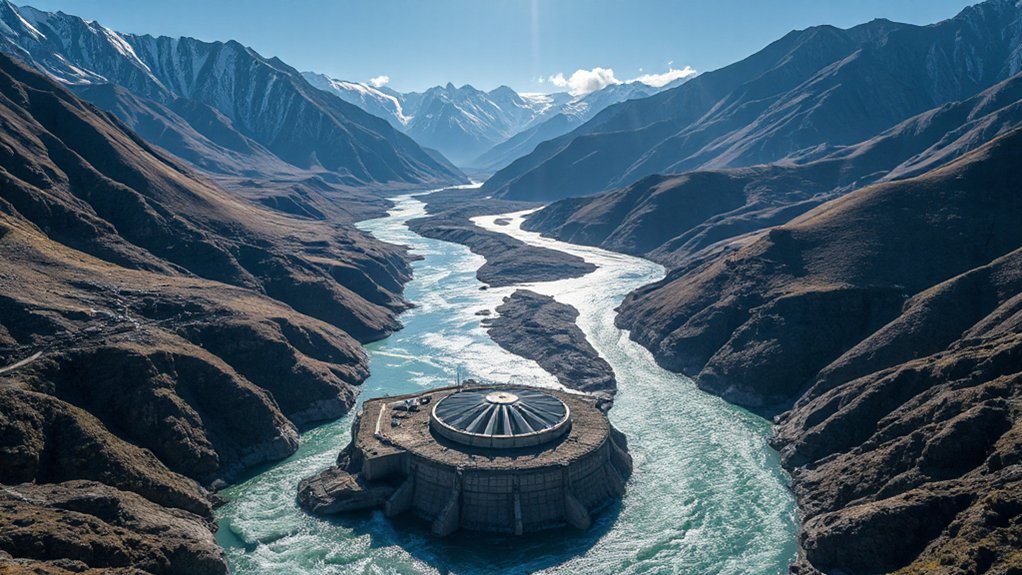
The region’s rivers could power millions of homes. The Chenab basin alone holds 11,283 MW potential, with Jhelum contributing 3,084 MW, Indus adding 1,608 MW, and Ravi chipping in 500 MW. Instead, most of that water just keeps flowing. Doing what water does. Not generating electricity.
The Chenab basin sits on 11,283 MW of untapped power while water simply flows away. What a waste.
Currently, the power comes from a hodgepodge of projects. The state sector operates 13 to 21 projects generating about 1,200 MW. NHPC’s seven central sector projects contribute 2,009 MW. And the private sector? A whopping 42.5 MW from four tiny projects. Impressive, right? Not. The government is actively pursuing the transfer of power projects from NHPC to address the severe generation deficit.
Major operational projects include the twin Baglihar stations at 900 MW combined, the Uri projects yielding 720 MW, and Salal pumping out 690 MW. But winter hits hard—Uri-I drops from 480 MW to a measly 200 MW when temperatures plummet. The energy deficit has seen remarkable improvement, dropping from 17.8% in 2018-19 to just 1.5% in 2023-24.
What’s holding things back? The usual suspects: geopolitical tensions near the Line of Control, environmental concerns, and infrastructure challenges.
Meanwhile, 15 pipeline projects with 7,768 MW combined capacity crawl forward at bureaucratic pace.
The future looks somewhat brighter, with 7,000 MW expected in the next decade and 9,000 MW currently under execution. Since 2019, projects totaling 2,026 MW have launched, including Kiru (624 MW) and Ratle (850 MW).
JKSPDC has generated nearly 49,000 MUs since 2014, with annual figures gradually increasing. Still, for a region sitting on a hydropower goldmine, the progress feels like watching paint dry. Untapped potential, indeed.
References
- https://risingkashmir.com/jk-reports-1197-4-mw-power-generation-from-13-hydropower-projects/
- https://theaspd.com/index.php/ijes/article/download/11286/8082/23810
- https://www.pib.gov.in/PressReleasePage.aspx?PRID=1988259
- https://www.ijtrd.com/ViewFullText.aspx?Id=19201
- https://www.pramanaresearch.org/gallery/prj-p1485.pdf
- https://preciouskashmir.com/2025/10/18/power-potential/
- https://pdd.jk.gov.in/jkpdd/uploadedfiles/Drafthydropolicy2025_20251202174115.pdf
- https://iced.niti.gov.in/energy/fuel-sources/hydro/potential