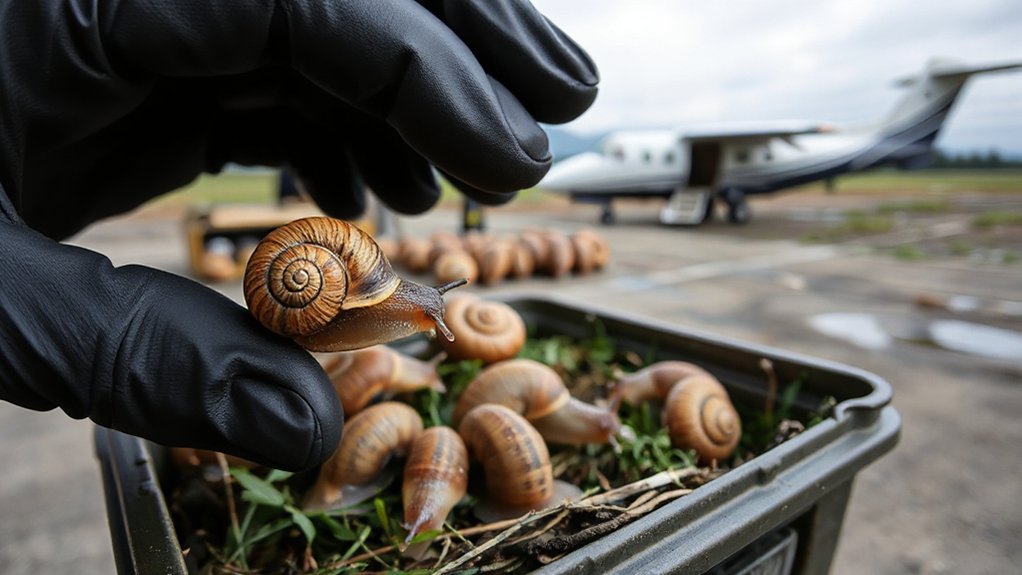

While most people wouldn’t notice if a snail disappeared forever, a dedicated team of scientists in Hawaii is fighting desperately to prevent just that. The Hawaiian islands once hosted a mind-boggling 750 different snail species, each a tiny masterpiece of evolution. Now? Up to 90% are gone. Vanished. Extinct. Blame invasive predators, habitat destruction, overcollection, and climate change. Not exactly humanity’s finest hour.
Since 2012, the SEPP Partnership has been scrambling to save what’s left. It’s a collaboration between the US Fish and Wildlife Service, Hawaii’s Division of Forestry and Wildlife, and the University of Hawaii. Their mission? Stop the extinction train before it reaches the station.
Program coordinator David Sischo leads a team that could easily star in an action movie. Field crews scale sheer cliffs on deserted islands just to find patches of ferns no bigger than a living room where rare snails might be hiding.
They’re after specific targets: Geomotry grabamai, Schololyanna, and Atlantica calatoids. Not exactly household names.
These aren’t casual hikes. They’re desperate searches for the last members of species hanging by a thread. Twenty to thirty adults per species—that’s all they need to establish a captive breeding population. Sounds simple. It’s not.
Back at their facilities, the captive rearing crew works miracle after miracle, developing novel methods to breed these finicky mollusks. Under the leadership of Geneviève Blanchet, the team oversees the breeding and rearing of these rare snails with meticulous care. The goal? Get enough snails to eventually release them back into protected areas.
Meanwhile, similar efforts are happening elsewhere. In North Carolina, Andy Wood spent three decades saving two endemic freshwater snails from extinction.
Is all this effort worth it for creatures most people squish without a second thought? Absolutely. These snails represent ecological spectacles unique to their islands. They’re living museums of evolution. They’re also sentinels—their disappearance signals deeper environmental issues. Like the birds of prey rehabilitated by Last Chance Forever, these species play vital roles in maintaining ecosystem health.
The battle continues. Translocation plans are underway. Educational exhibits are being upgraded. Partnerships are forming. It’s a last-chance flight, and these tiny passengers might just make it.
References
- https://dlnr.hawaii.gov/ecosystems/sepp/
- https://lastchanceforever.org
- https://www.youtube.com/watch?v=AnciOjEy6mw
- https://en.wikipedia.org/wiki/Snail_extinction_prevention_program
- https://www.youtube.com/watch?v=9n1fKYBM42k
- https://www.soest.hawaii.edu/soestwp/announce/news/pbrc-researcher-aids-native-snail-conservation-upgraded-exhibit-at-the-honolulu-zoo/
- https://www.zoo.org/nameasnail