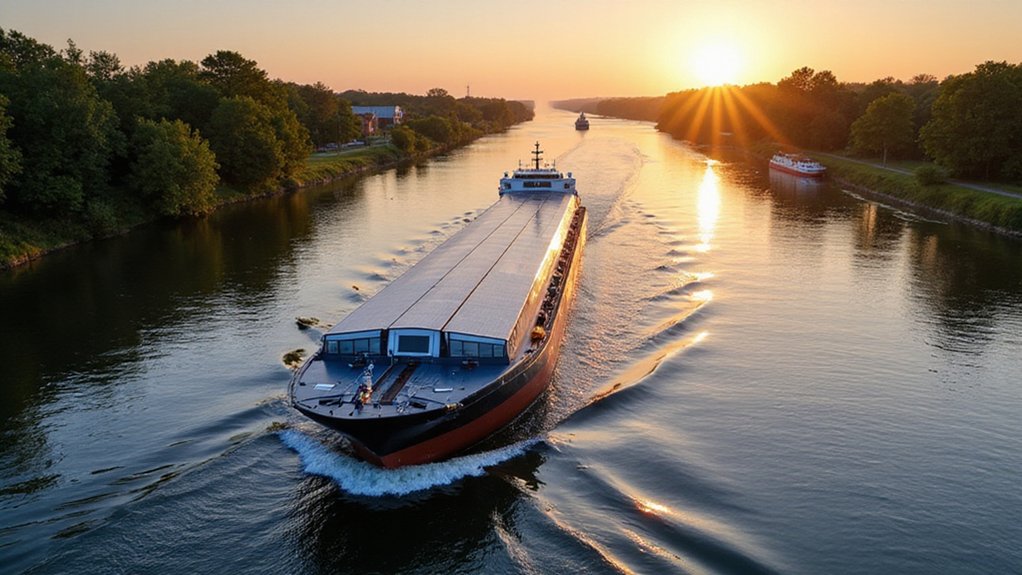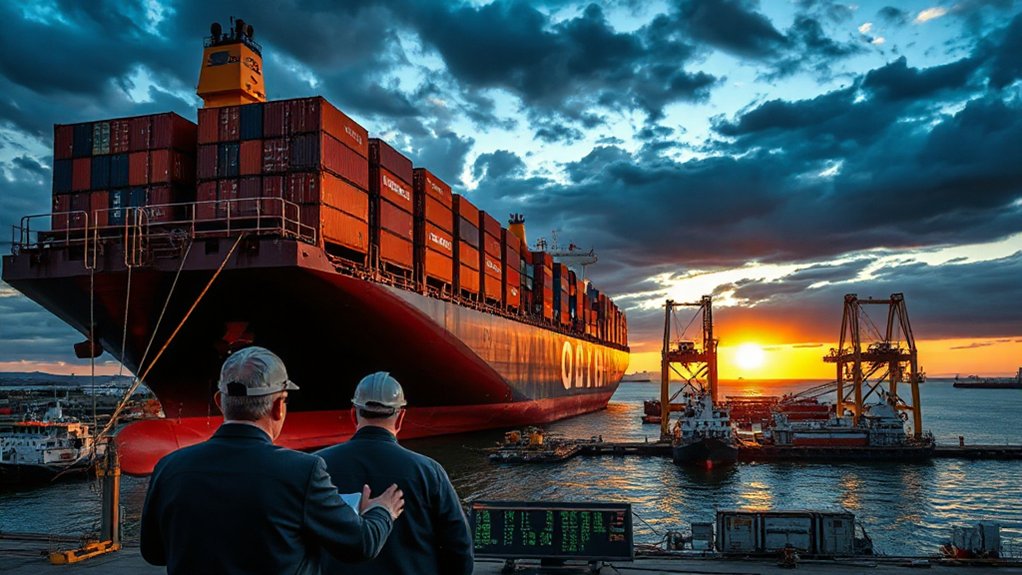

While fossil fuels have dominated the shipping industry for decades, a green revolution is surging through maritime corridors worldwide. Green methanol is making waves—big ones. The numbers don’t lie: a market valued at $4.29 billion in 2025 is projected to explode to $15.25 billion by 2030. That’s a staggering 28.9% CAGR. Not too shabby for an industry typically resistant to change.
Ships are getting on board fast. Over 60 methanol-capable vessels currently navigate our seas, with another 300 on order. Singapore’s methanol bunker sales jumped from a measly 300 tonnes in 2023 to 1,600 tonnes in 2024. By 2030? Potentially over 1 million tonnes annually. China has positioned itself as a key player, accounting for 43% of planned global low-GHG methanol production capacity. The momentum is real.
Regulations are pushing this shift. The IMO’s decarbonization goals, FuelEU Maritime, and corporate ESG commitments are all shoving shipping companies toward cleaner alternatives. Methanol slashes sulphur oxides, nitrogen oxides, and particulates compared to traditional fuels. Plus, the new ISO 6583:2024 standards finally give everyone clear guidelines. About time.
Technically speaking, methanol’s ready for prime time. Dual-fuel engines have racked up over 600,000 operating hours. Retrofitting existing vessels? Totally doable. No need for fancy cryogenic technology at ports either—just use what’s already there. Some ships even report 60% energy consumption reductions per TEU per nautical mile. The methanol’s biodegradable and water-soluble nature provides additional environmental security in case of spills, unlike conventional fuels. Impressive stuff.
But—and it’s a massive but—costs remain the elephant in the room. Bio-methanol prices in 2025 average around $2,500 per tonne MGO equivalent, roughly triple what conventional marine gas oil costs. Ouch. Current global bio-methanol production capacity sits at a paltry 2.2 million tonnes, nowhere near the projected 60 million tonnes needed by 2040.
The maritime methanol revolution has its engines running, but without addressing these cost barriers, this promising green ship might just sink before reaching open water. The technology’s ready. The will exists. Now it’s just about the wallet.
References
- https://www.marketsandmarkets.com/blog/AD/industry-analysis-environmental-benefits-methanol-powered-ships-market
- https://www.dnv.com/news/2025/dnv-report-methanol-as-marine-fuel-at-high-readiness-level-but-adoption-hurdles-remain/
- https://www.infineuminsight.com/en-gb/articles/supporting-early-methanol-adopters/
- https://www.custommarketinsights.com/report/green-methanol-market/
- https://www.resourcewise.com/blog/methanols-emerging-role-in-the-bunkering-market
- https://globalmaritimeforum.org/press/methanol-and-ammonia-progressing-rapidly-extra-push-needed-to-scale/
- https://www.gminsights.com/industry-analysis/e-methanol-market
- https://downloads.ctfassets.net/gk3lrimlph5v/42oVCMYa8EuGXsvd46hlH6/e7a183fa7adb94749676607ad72a2a8c/Getting_to_Zero_Coalition-From_pilots_to_practice__Methanol_and_ammonia_as_shipping_fuels.pdf
- https://www.argusmedia.com/en/news-and-insights/latest-market-news/2723041-methanol-and-ammonia-feasible-as-bunker-fuels-report