Maryland’s taking a big step toward cleaner, cheaper energy. The state’s set aside $200 million from its Strategic Energy Investment Fund to build local power and lower utility bills. The state will allocate roughly $100 million per year from the Strategic Energy Investment Fund to lower energy bills over two years.
Maryland’s setting aside $200 million to build local power and bring down utility bills for residents.
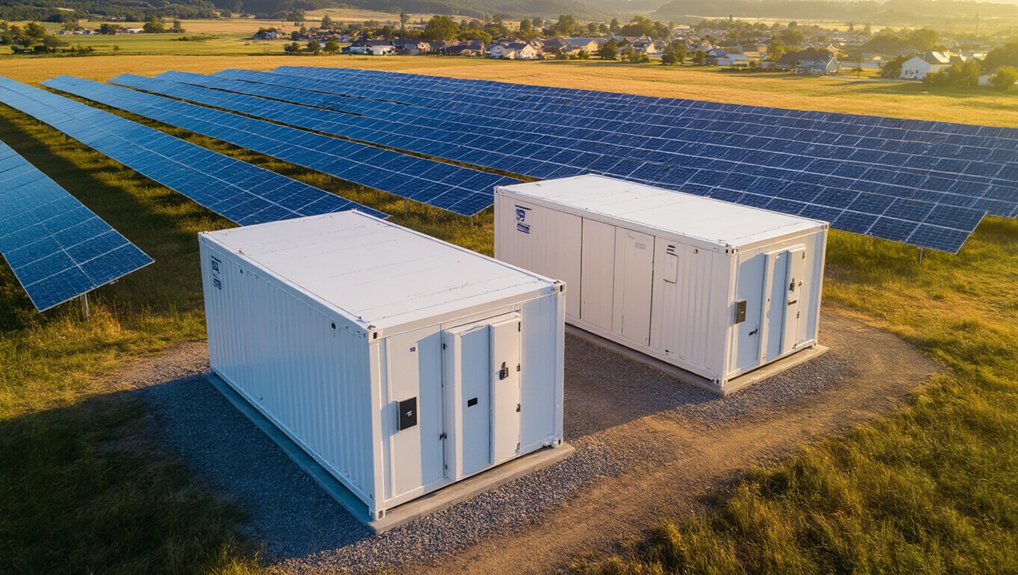
Solar panels paired with battery storage are leading the charge. State officials say this combination is the fastest way to get new power sources up and running. It’s no surprise, then, that solar and battery storage projects are dominating the PJM interconnection queue, which is the regional system that connects power plants to the grid.
Maryland’s Affordable Solar Act is pushing things even further. According to the Affordable Solar Act, the law aims to add approximately 4,000 megawatts of new solar capacity above what’s already running by January 1, 2028. Reportedly, half of that will come from large utility-scale projects, and the other half from smaller distributed solar systems closer to homes and businesses. According to legislative documents, the law’s expected to take effect October 1, 2026.
To help struggling clean energy projects stay alive, Maryland’s created the Solar and Energy Storage Market Stabilization Program. It reportedly offers low- or zero-interest loans and grants to projects facing financial trouble. Projects that include battery storage are said to get priority. To qualify, a project must reportedly be ready to break ground and be up and running within three years of applying. By some accounts, funding goes to the lowest-cost projects first, through a closed bidding process.
Maryland’s also working on upgrading its electrical grid. Utilities must install better transmission technology and modernize existing infrastructure. The state’s streamlining the approval process for new transmission lines and community solar projects. There’s also a faster review track for large energy storage systems and other dispatchable power sources.
Energy storage has its own target, too. Maryland’s Energy Storage Program is pushing for an estimated 750 megawatts of new storage capacity. The state’s also reportedly allowing Alternative Compliance Penalty revenues to fund grants and loans for new renewable energy sources from fiscal years 2027 through 2031. Data centre developers are also being held accountable, with requirements to pay for their own energy infrastructure upgrades rather than passing those costs to ratepayers. The Utility RELIEF Act is designed to reduce energy costs by $150 annually for Maryland households. Maryland’s clearly betting big on a cleaner energy future.
References
- https://mgaleg.maryland.gov/2026RS/fnotes/bil_0006/sb0386.pdf
- https://www.pv-tech.org/solar-pv-and-energy-storage-get-boost-in-new-maryland-legislation/
- https://www.solarpowerworldonline.com/2026/03/maryland-legislators-include-utility-solar-in-statewide-energy-savings-initiative/
- https://www.bakerdonelson.com/maryland-lawmakers-weigh-sweeping-solar-expansion-with-the-affordable-solar-act
- https://legiscan.com/MD/text/SB386/id/3334330/Maryland-2026-SB386-Introduced.pdf
- https://energy.maryland.gov/Pages/newsdetail.aspx?NR=202675
- https://www.wypr.org/wypr-news/2026-02-24/gov-moores-landmark-energy-proposal-immediately-met-with-maryland-lawmakers-red-pens