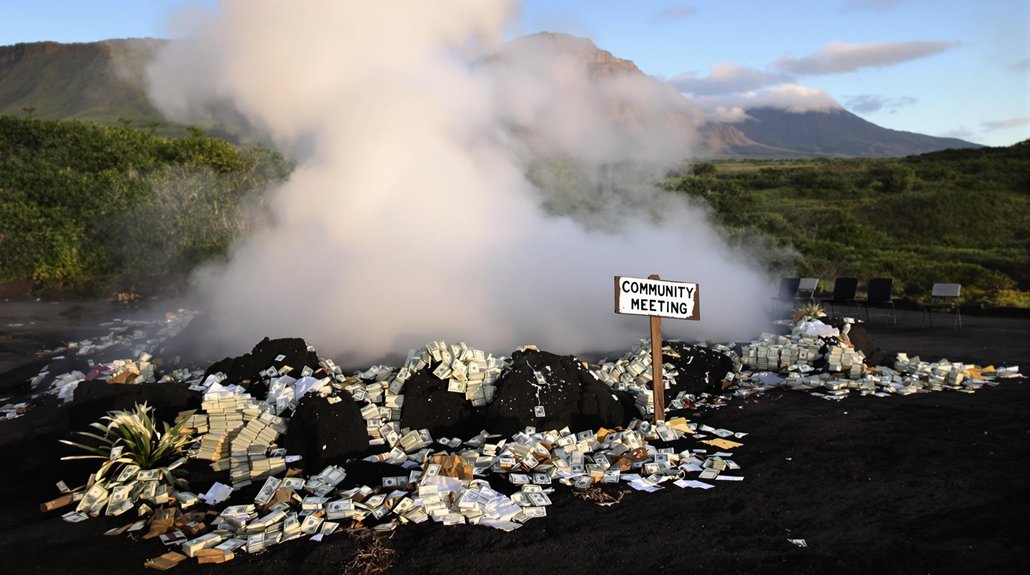
While Waikā continues to rake in millions for geothermal outreach on Hawaii’s Big Island, residents are increasingly frustrated with what they see as an expensive public relations campaign that puts the cart before the horse. Over $2.7 million in subawards have flowed to the organization, with another $3 million earmarked by lawmakers specifically for their outreach efforts.
What do taxpayers get for this mountain of cash? Ten op-eds, a basic website, some social media posts, and town halls that leave locals more confused than informed. Oh, and a three-page development roadmap. Impressive stuff.
The timing has particularly irked Big Island residents. Community meetings are happening before any clear geothermal testing or development plans exist. Nobody knows where drilling might occur. It’s like being asked to approve an invisible house on a mystery lot.
Meanwhile, the bureaucratic mess thickens. Both the state energy office and technology agency hired separate consultants for fundamentally the same work. Pa’akai Communications scored a sweet $795,000 contract for outreach on three islands, while Waikā pocketed over $1.4 million as of July 2025.
Duplicating efforts, doubling costs—the state’s geothermal outreach throws millions at consultants while actual plans remain nonexistent.
Native Hawaiian inclusion remains a contentious issue. Waikā champions “Native-to-Native” partnerships and greater Indigenous resource management, but critics question whether these efforts go beyond symbolism. The Department of Hawaiian Home Lands is exploring geothermal projects on trust lands, adding sovereignty concerns to the mix.
State officials defend the approach, insisting the energy office maintains statutory control as the lead geothermal agency. Yet this has created overlap and ambiguity with the outsourced outreach work.
The state’s push for energy independence has clearly made geothermal a priority, but at what cost? The environmental impact of geothermal facilities could be significant, with concerns about water usage similar to those plaguing AI data centers elsewhere. Cultural experts have expressed serious offense at presentations that made inappropriate references to Hawaiian cultural deities and practices. Locals want research and concrete plans before the PR blitz. They’re tired of vague promises and flashy presentations devoid of substance.
For now, millions continue flowing into “community engagement” while actual engagement with the community seems strangely absent. With only $5 million currently allocated for exploration when experts estimate $33 million is needed, residents question if the state has its priorities backward. Go figure.
References
- https://www.civilbeat.org/2025/08/hawaiis-high-priced-geothermal-consultants-are-getting-heat/
- https://capitolwebsite.azurewebsites.net/sessions/session2025/Testimony/SB1269_SD1_TESTIMONY_WAM_02-18-25_.PDF
- https://www.civilbeat.org/2025/06/hawaiʻi-wants-more-geothermal-power-plants-but-doesnt-yet-know-where/
- https://www.scribd.com/document/837065790/3-FINALWaika-Community-Outreach-Plan-Jan-2025
- https://www.hawaiifreepress.com/Portals/0/Article Attachments/Article Attachments 2025/Waika-HTDC-UH Geothermal Project Monthly Reports.pdf