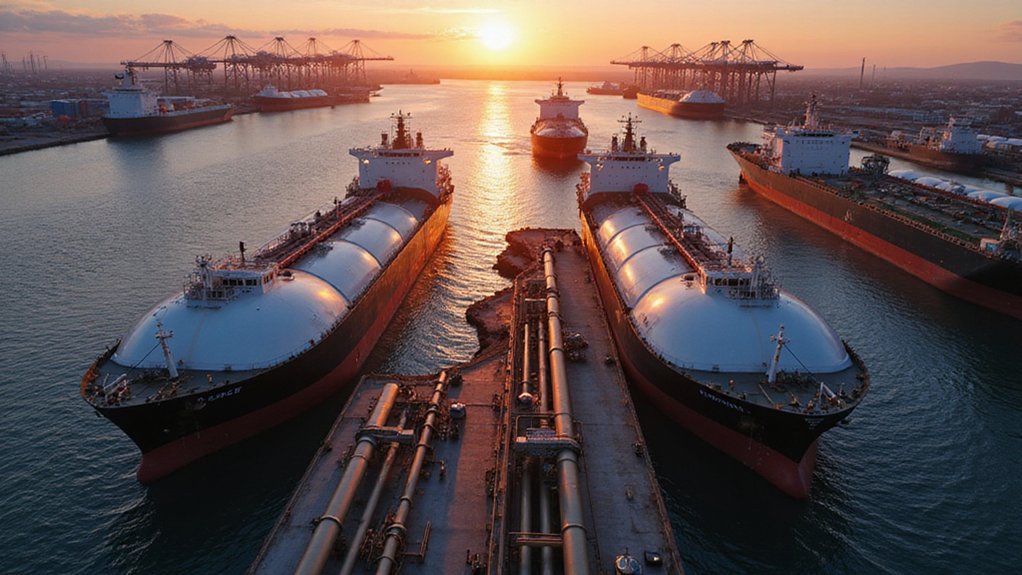
Despite boasting the highest projected oil loadings since 2017, the North Sea drilling sector is facing a catastrophic collapse in exploration. December 2025 loadings are set to hit 2.1 million barrels per day, driven by Johan Castberg’s record output and the Buzzard field restart. But don’t pop the champagne just yet.
For the first time since 1964, the UK’s waters won’t see a single new exploratory oil well drilled this year. Zero. Zilch. Nada. This unprecedented drought follows a measly four wells in 2024, which turned up less than 100 million barrels. Pretty pathetic by historical standards.
The government’s 2025 Budget threw more uncertainty into the mix. No new licenses for offshore exploration, as promised in their manifesto. Great timing, huh? This policy shift comes as UK’s remaining proven and probable reserves sit at just 2.9 billion barrels of oil equivalent.
The manifesto’s no-new-licenses stance hits just as UK reserves dwindle to a measly 2.9 billion barrels. Talk about timing.
Sure, prospective resources increased 31% to 4.6 billion barrels after the 33rd licensing round, but who’s going to find it if nobody’s drilling?
Jobs are vanishing faster than free donuts at a police convention. Employment supported by oil and gas has plummeted from 441,000 in 2013 to a mere 213,000 today. One in four North Sea workers are eyeing the exit door, citing job security concerns. Can’t blame them.
The drilling market is feeling the squeeze too. Committed utilization is dropping from 92% to 89% next year. Average downtime sits at 27 days annually, costing up to $38 million per incident. These challenging conditions persist despite the region’s extensive pipeline networks developed over five decades supporting export operations.
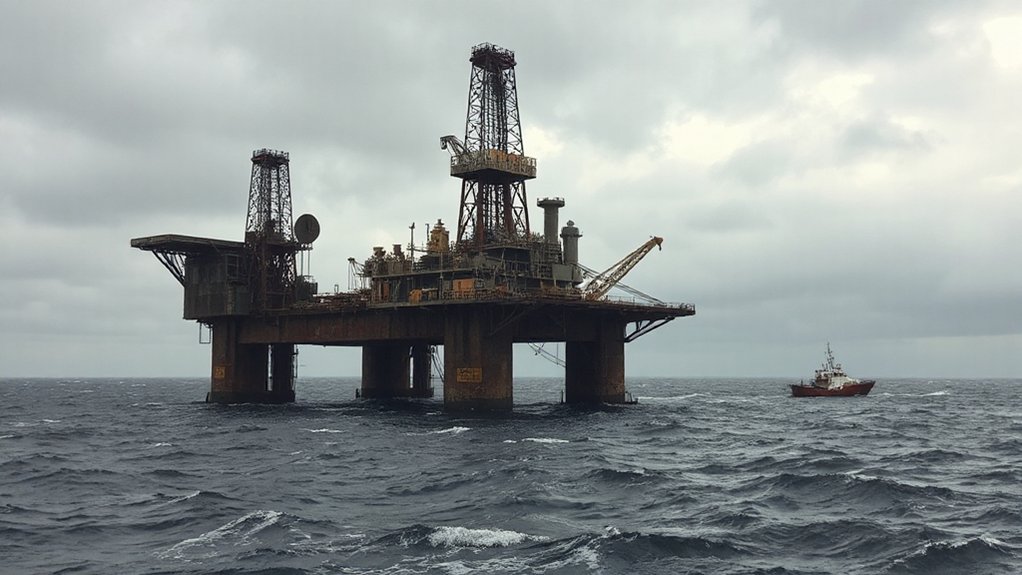
Without significant modernization, operators risk continued reliability issues as aging infrastructure contributes to the industry’s current 40% dependence on obsolete technology.
And 40% of offshore production relies on technology that was outdated when flip phones were still cool.
Remember the BP Deepwater Horizon disaster? Over $65 billion in damages and BP’s stock nosedived 51% in 40 days. That’s the kind of catastrophe the industry can’t afford right now.
References
- https://discoveryalert.com.au/north-sea-crude-export-operations-2025/
- https://gmsoffshore.com/offshore-drilling-in-2025-no-room-for-error/
- https://www.worldoil.com/news/2025/10/17/north-sea-recoverable-oil-and-gas-resources-rise-31-after-last-licensing-round-new-report-shows/
- https://energynewsbeat.co/no-new-north-sea-oil-wells-for-first-time-since-1960s-labours-crackdown-on-oil-and-gas-industry-blamed-for-collapse-of-exploration-in-uk-waters/
- https://www.upliftuk.org/post/drilling-into-the-facts-on-north-sea-oil-and-gas
- https://capx.co/north-sea-oil-is-being-killed-by-uncertainty