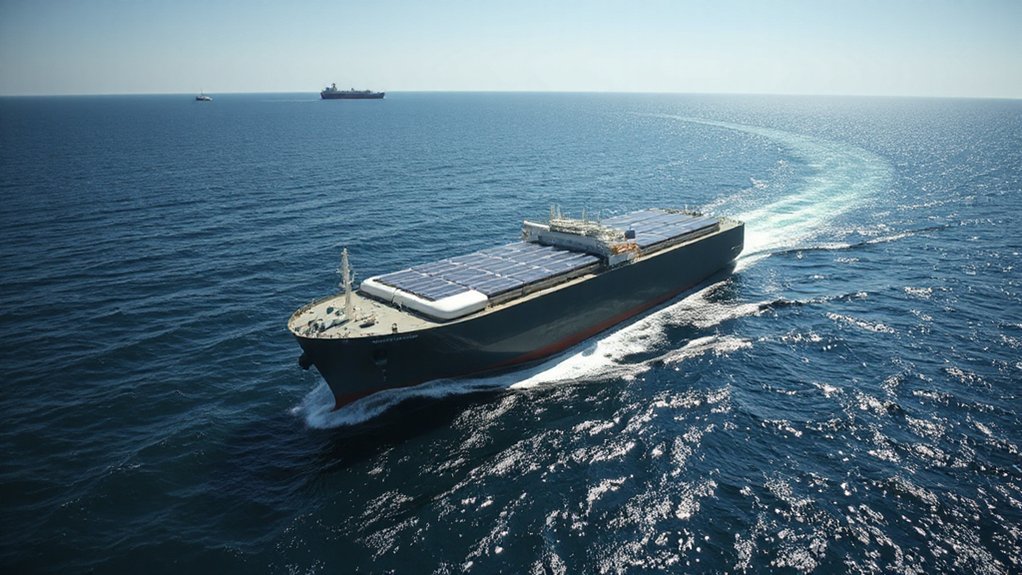
A revolution is brewing on the high seas. Battery giant CATL claims that pure-electric vessels capable of ocean voyages will become reality within three years. No more belching diesel fumes. No more oil spills. Just clean, quiet power pushing massive ships across the deep blue. Sounds too good to be true? Maybe not.
CATL isn’t exactly a maritime newbie. Since 2017, they’ve been electrifying boats on rivers, lakes, and coastal waters. In 2022, they doubled down by establishing a dedicated marine subsidiary. Their mission? Make green shipping as easy as driving a Tesla. Bold claim.
The proof is already floating. “Yujian 77,” China’s first pure-electric tourist vessel, launched in July 2025. It’s not crossing oceans yet, but it’s getting there. With nearly 4,000 kWh of battery capacity, it cruises about 100 kilometers per charge. Not bad for a first attempt.
The tech is impressive. CATL’s marine batteries use their CTP technology, achieving around 140 Wh/kg energy density. They’ve packed their fifth-generation LFP batteries into systems that can handle salt spray and rough seas. One vessel saves 250 tons of fuel annually. That’s like planting 20,000 trees.
CATL’s not playing small ball either. They’re powering nearly 900 vessels worldwide, grabbing 40% of the global marine battery market. The company’s Times Electric Ship subsidiary, founded in November 2022, is spearheading these maritime innovations with specialized expertise. Most are tourist boats and cargo vessels, but ocean-going ships are the next frontier.
The whole system is getting smarter. Cloud-based monitoring, battery swapping stations, and shore-based charging networks are part of the package. CATL recently unveiled their zero-carbon shipping solution at Marintec, offering end-to-end integration from power systems to management. They’re even working on electrifying those fancy water-landing vertipads for flying taxis. Because why not?
Will we see massive container ships silently gliding across the Pacific by 2028? CATL thinks so. And with their track record, they might just pull it off. The high seas are about to get a high-tech makeover. No smoke required.
References
- https://www.yicaiglobal.com/news/pure-electric-ships-to-likely-sail-oceans-in-three-years-says-gm-of-catls-maritime-business
- https://chinaevhome.com/2025/12/04/catl-eyes-ocean-going-electric-vessels-within-three-years/
- https://electrek.co/2025/12/04/catl-predicts-fully-electric-boats-will-be-capable-of-navigating-oceans-within-three-years/
- https://cnevpost.com/2025/12/04/catl-expects-pure-electric-vessels-capable-ocean-voyages-3-years/
- https://www.moomoo.com/news/post/62427325/catl-expects-pure-electric-vessels-to-be-capable-of-ocean
- https://electricfleet.online/catl-ocean-electric-ships/
- https://cleantechnica.com/2025/12/05/catl-expects-oceanic-electric-ships-in-3-years/amp/
- https://theliquidgrid.com/maritime-decarbonization/electric-ships/
- https://www.workboat.com/the-state-of-green-marine-power