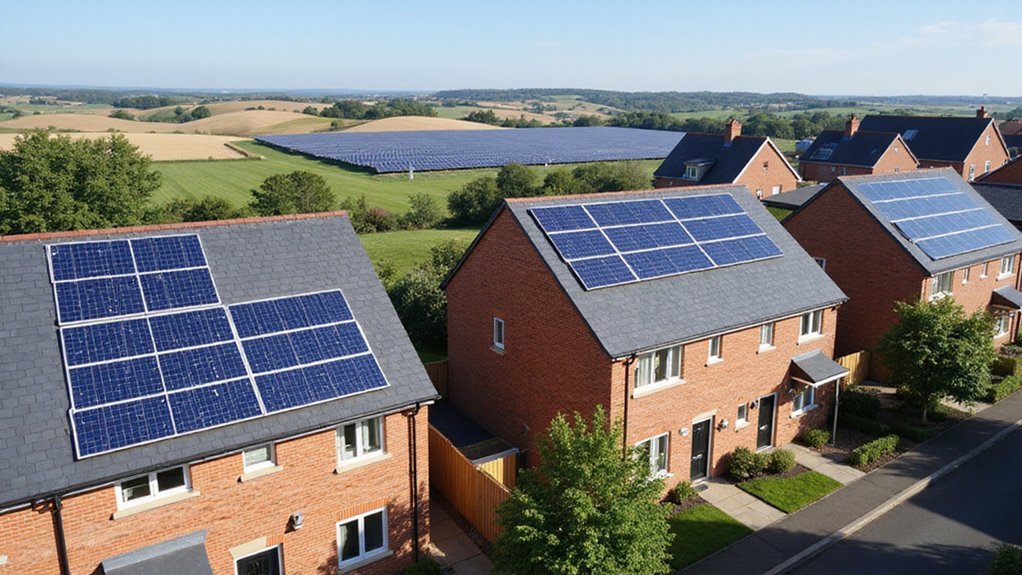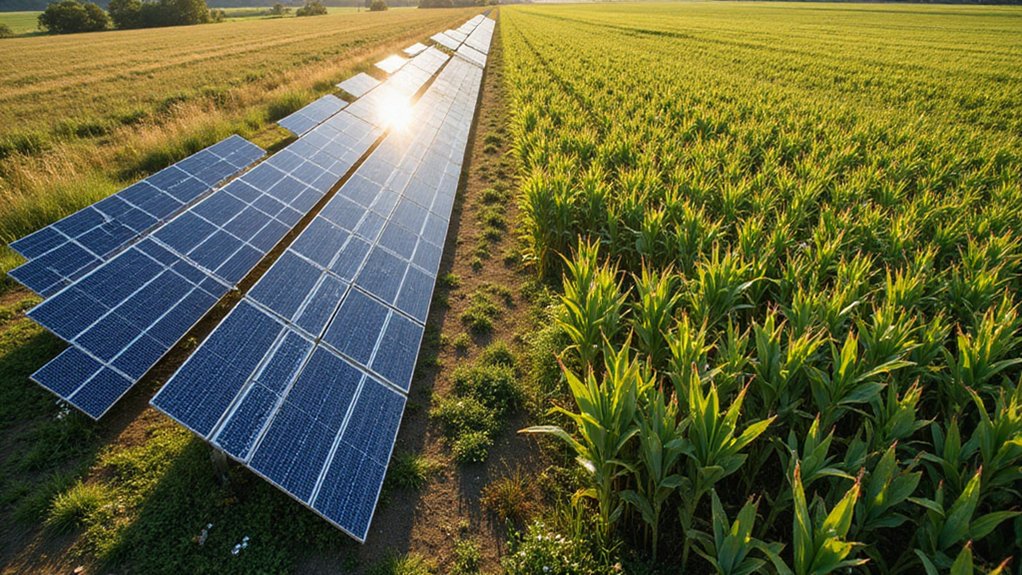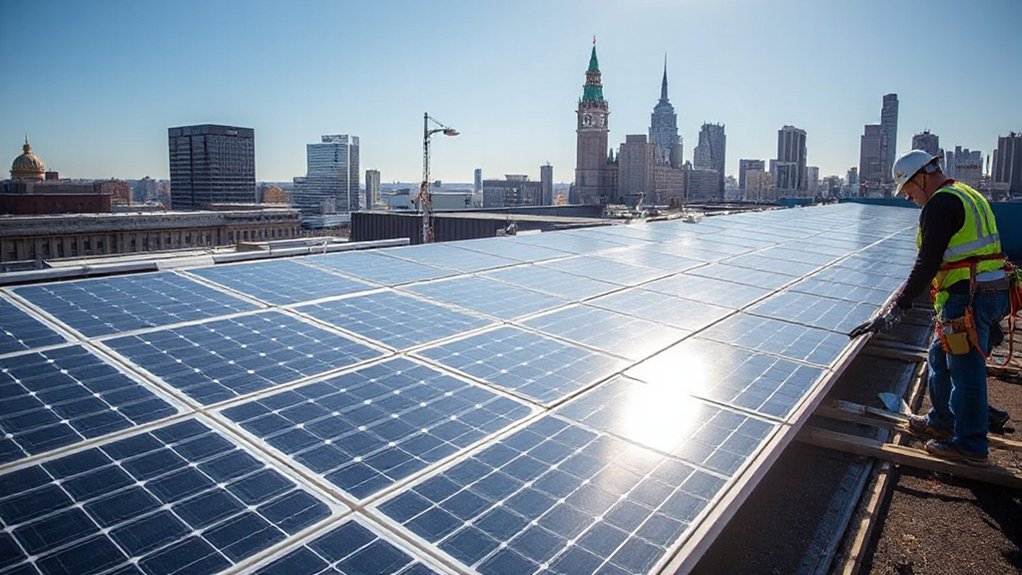

Philadelphia has locked down a major renewable energy deal that’s turning heads in municipal circles. The 70-megawatt Adams Solar facility near Gettysburg is officially up and running as of April 2024, following delays from that pesky pandemic we all suffered through. This isn’t some tiny rooftop setup – we’re talking 230,000 solar panels sprawled across 700 acres. Big stuff.
The city signed a 20-year Power Purchase Agreement at $44.50 per megawatt-hour. Not bad. Actually, it’s about 15% cheaper than what they were paying before. Smart move locking in that rate too, since energy prices have been about as stable as a toddler after eating Halloween candy.
Philadelphia’s 20-year solar deal locks in rates 15% below market, bringing stability to a notoriously unpredictable expense.
This solar farm isn’t just for show. It’s powering roughly 25% of Philadelphia’s municipal electricity needs – that’s about 600 city buildings including City Hall, the airport, and water department facilities. First year projections estimate 156,000 megawatt-hours of generation. Math nerds can confirm that’s a lot of juice.
The environmental impact? It’s displacing more than 4 million tons of carbon dioxide emissions annually. The planet says thanks. It’s part of Philly’s grand plan to power all municipal buildings with renewable electricity by 2030. The project supports family-sustaining jobs in the renewable energy sector while helping the city meet its climate goals. The initiative includes an Economic Opportunity Plan designed to incorporate minority, women, and disabled-person owned businesses. Ambitious? Sure. Necessary? Probably.
This deal didn’t happen overnight. City Council authorized it back in 2018 under Mayor Jim Kenney. The Philadelphia Energy Authority acted as the middleman between the city and Energix Renewables, who’s running the show at the solar facility. The project aligns with broader economic trends, as renewable energy contributed 10% of GDP growth globally in 2023.
The city isn’t stopping there. Add in the SoNo project and Abes Run facility, and Philadelphia’s municipal electricity mix jumps to 30% renewable energy. Not too shabby for a city known more for cheesesteaks than climate leadership.
Bottom line: Philadelphia scored a solid deal that saves money, adds budget certainty, and helps the environment. Other cities might want to take notes. Or not. Their electric bills, their problem.
References
- https://www.phila.gov/2024-04-30-solar-power-project-brings-philadelphias-municipal-electricity-to-30-renewable/
- https://www.phila.gov/2018-11-01-philadelphia-moves-forward-w-large-scale-purchase-of-renewable-energy/
- https://www.renewableenergyworld.com/solar/utility-scale/philadelphia-inks-20-year-solar-ppa-for-70-mw-farm/
- https://phlcouncil.com/sono-project-solar-spring-garden/
- https://whyy.org/articles/philadelphia-solar-power-farm-energy/
- https://www.alleghenyfront.org/philadelphia-solar-power-buildings-climate-goal/
- https://www.inquirer.com/news/philadelphia/philadelphia-solar-array-adams-energix-20240426.html
- https://www.pahouse.com/Fiedler/InTheNews/NewsRelease/?id=135383