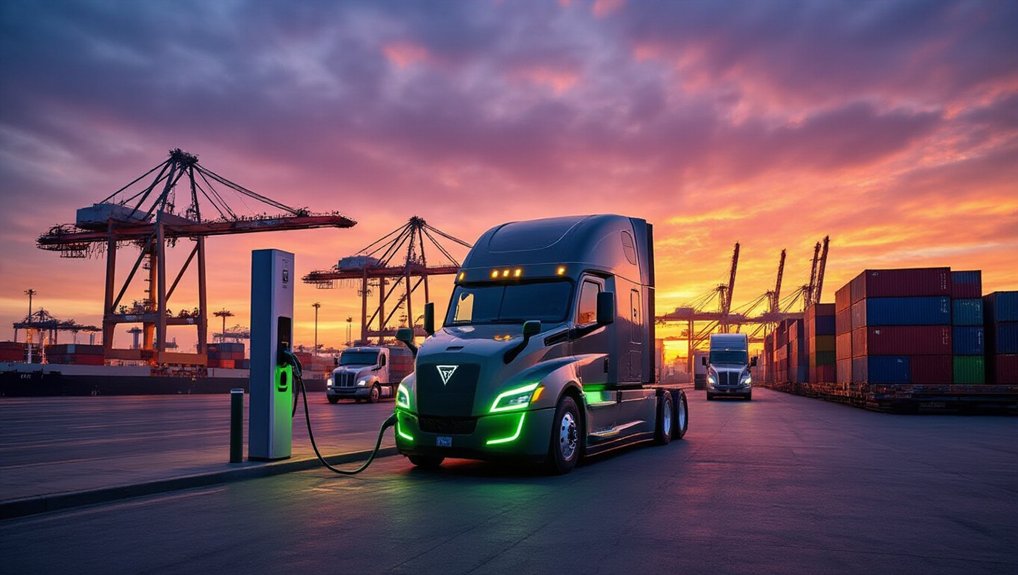

Diesel trucks have long reigned supreme at the Port of Los Angeles, but their chokehold on drayage transport is slipping. Twenty new electric trucks, fresh from America’s heartland, have recently joined the port’s fleet, marking a small but significant alteration in the transportation environment. Not exactly a transformation yet, but it’s a start.
The numbers tell the story. A whopping 546 zero-emissions trucks now operate at the ports of Los Angeles and Long Beach combined. Sure, that’s a drop in the diesel-saturated bucket, but it’s progress. The Board of Harbor Commissioners has unanimously approved the spending plan to accelerate this transition to zero-emissions vehicles. The port has already spent or committed $93 million toward zero-emissions truck deployment and infrastructure. Money talks, and in this case, it’s speaking with an electric hum rather than a diesel rumble.
Financial carrots are dangling everywhere. Cargo owners using diesel trucks get slapped with fees—$10 per loaded TEU and $20 for larger containers. Meanwhile, those embracing electric options? They pay zilch. Nothing like hitting folks in the wallet to change behavior.
The sticker shock of electric trucks—averaging a hefty $420,000—gets softened by vouchers covering up to 90% of costs. That’s right, up to $250,000 per truck. Not too shabby for companies looking to go green without seeing too much red in their ledgers.
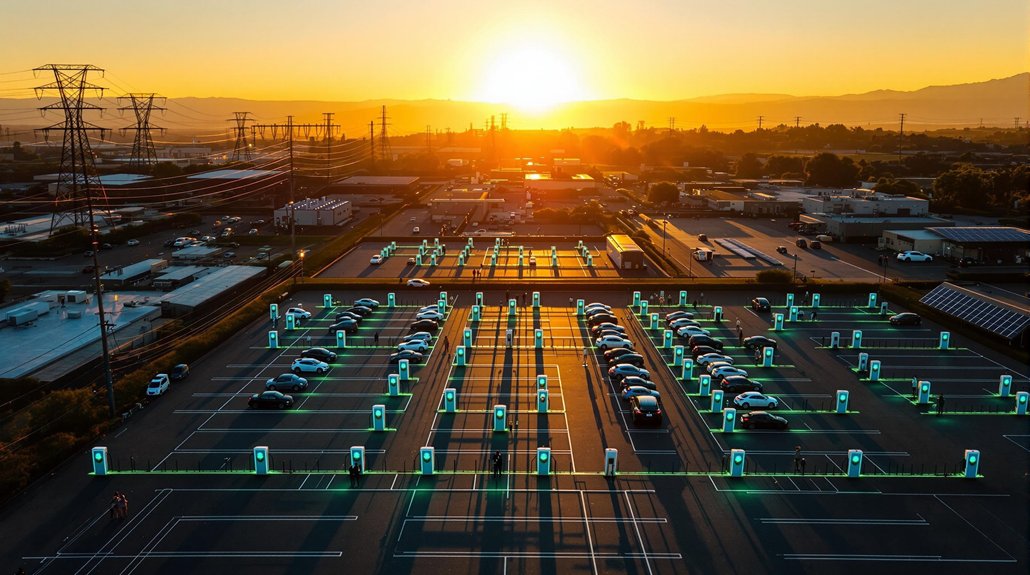
Charging infrastructure—the Achilles’ heel of any electric alteration—is getting serious attention. The ports have ponied up $25 million to kick things off, with plans for 207 heavy-duty charging units across eight regional sites. Approximately $123 million collected since April 2022 will help fund these and other clean transportation initiatives. These investments mirror the global trend toward renewable energy storage, which is critical for addressing intermittency issues in clean power systems. Locations like Wilmington and Commerce will soon feature more plugs than a hardware store.
Despite federal setbacks, including the revocation of California’s Advanced Clean Trucks rule waiver, the port is charging ahead with its Clean Air Action Plan. The goal? A fully zero-emission drayage truck fleet by 2035. Ambitious? Absolutely. Impossible? We’ll see.
But with diesel’s days numbered and electrics gaining ground, the port’s air might actually be breathable someday.
References
- https://www.portoflosangeles.org/references/2025-news-releases/news_052225_ctf
- https://www.truckingdive.com/news/port-of-los-angeles-spending-plan-clean-truck-fund/749167/
- https://evmagazine.com/top10/top-10-ports-adopting-ev-fleets
- https://www.calpacifictruck.com/blog/shifting-gears-california-trucking-trends-in-2025–85509
- https://www.portoflosangeles.org/references/2024-news-releases/news_062724_pola_polb_truck_charging