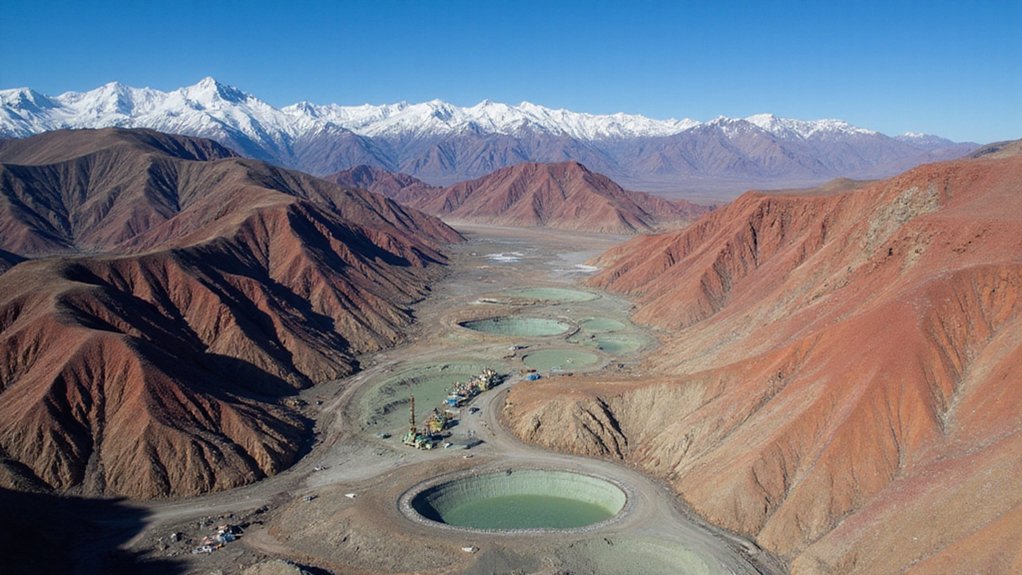
While most Americans remain oblivious to what powers their iPhones, a high-stakes mineral showdown is reshaping global politics. China’s grip on the critical minerals market isn’t just tight—it’s strangling. They process over 90 percent of rare earths, 78 percent of cobalt, and about 80 percent of the world’s lithium. Yeah, that’s pretty much everything that matters.
China’s stranglehold on critical minerals isn’t just economic—it’s the invisible power behind your smartphone and America’s security blindspot.
The U.S. is stuck in a nasty predicament. We’re 100 percent import-reliant for 12 critical minerals and over 50 percent dependent for another 29. Talk about being backed into a corner. Even when materials are mined elsewhere, guess where they end up for processing? China. They’ve built the infrastructure while America was, well, doing something else apparently.
Demand isn’t slowing down either. The International Energy Agency predicts a massive surge by 2030. AI companies are freaking out about a looming copper shortage. Defense systems, smartphones, electric cars—they all need these minerals. And when supply chains hiccup, everyone feels it.
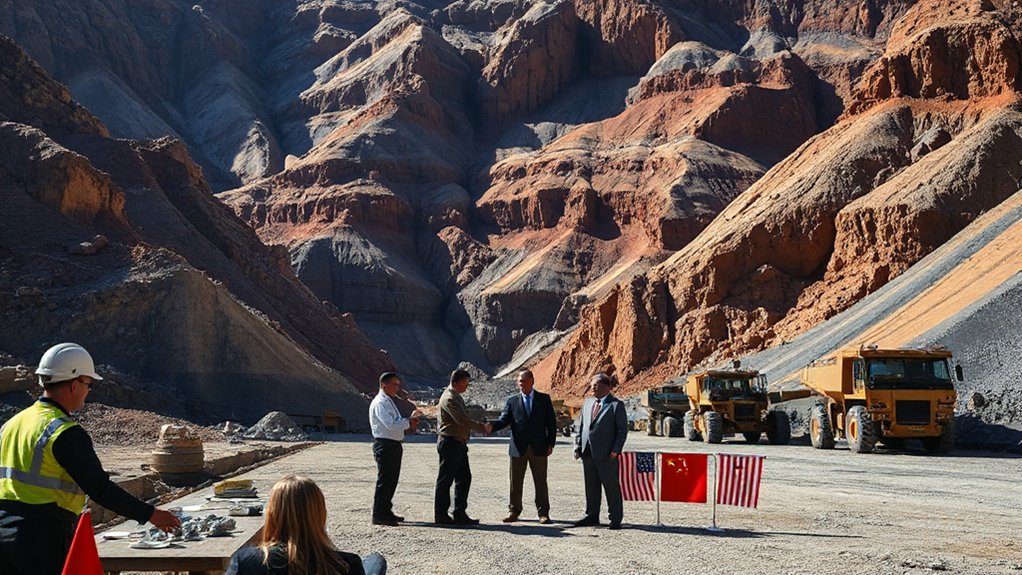
Washington finally woke up. Both Trump and Biden administrations scrambled to fix this mess. The G7, the Quad, bilateral deals—America’s throwing everything at the wall to see what sticks. Over $10 billion in joint commitments with Asian partners shows they’re serious. At least on paper.
New alliances are forming everywhere. The Minerals Security Partnership brings together 14 countries. The U.S. even cut deals with Saudi Arabia, Ukraine, and Congo. Russia and India are stepping up as alternative suppliers, sanctions be damned when necessity calls. Recent failures have shown that recycling solutions alone cannot replace primary mining supply due to contamination issues and high energy costs.
But challenges remain massive. Environmental concerns clash with extraction needs. The Democratic Republic of Congo supplies over 70% of the world’s cobalt, creating a dangerous single-point dependency. Venezuela’s mineral wealth sits tantalizingly out of reach behind political chaos. Arctic resources threaten Indigenous communities. And America’s one-off investments lack coherent strategy.
The mineral wars are just heating up. Whoever controls these rocks controls the future. And right now, that’s not us.
References
- https://www.cfr.org/article/visualizing-2026-five-foreign-policy-trends-watch
- https://amandavandyke.substack.com/p/the-critical-minerals-hub-the-mineral
- https://www.youtube.com/watch?v=f0VFYenLXCM
- https://www.globalpolicywatch.com/2025/10/made-in-america-the-outlook-for-critical-minerals/
- https://www.thearcticinstitute.org/dig-baby-dig-chinas-mineral-dominance-ripple-effects-arctic/
- https://www.latitudemedia.com/news/white-house-private-sector-closely-looking-at-venezuelan-critical-minerals/
- https://www.resources.org/common-resources/why-one-off-federal-investments-wont-make-or-break-us-critical-mineral-supply/
- https://www.csgtalent.com/insights/blog/global-mining-trends-2026–critical-minerals–technology–and-the-future-of-talent/