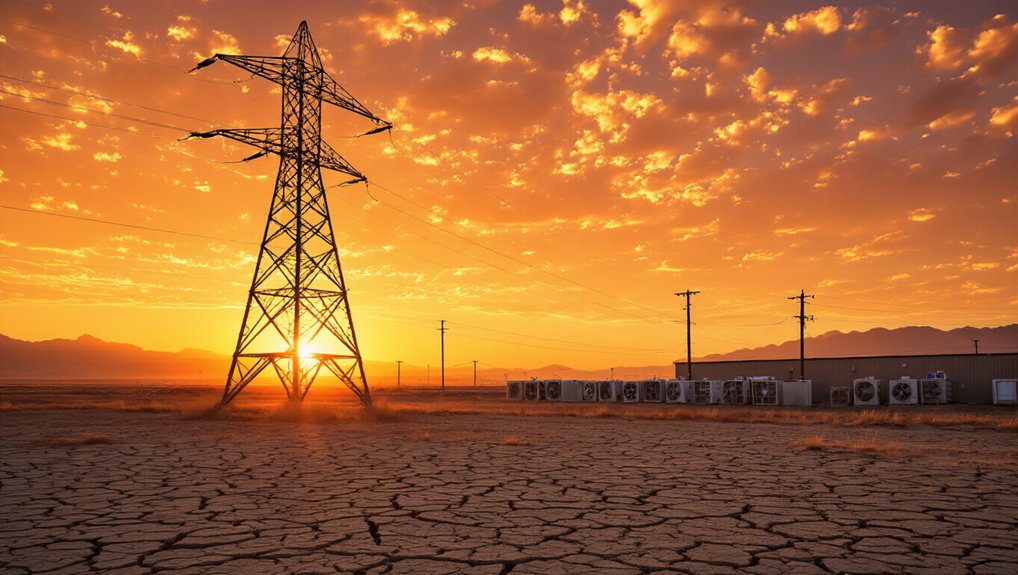
How long can our power grid hold on? The eastern U.S. is cooking under a massive heat wave, with temperatures hitting triple digits in some spots. Heat advisories and warnings blanket cities from St. Louis to Washington to New York. No escape. A heat dome has settled over the region like an unwelcome houseguest who won’t leave.
Engineers are sweating bullets as electricity demand surged to a staggering 25,898 MW. That’s a lot of air conditioners running full blast. Emergency orders allowed some power plants to break normal operating limits just to keep the lights on. Talk about pushing your luck.
The grid is creaking under pressure. Older power plants retiring, new ones delayed. Perfect storm, right? Meanwhile, average folks can expect electricity bills to jump about 3% this summer. Great timing with inflation already eating everyone’s lunch.
Our aging grid faces a supply-demand nightmare while consumers pay more for less reliability.
ISO New England issued “precautionary alerts” about tight operating conditions. That’s utility-speak for “we’re nervous but don’t want to cause panic.” The Northeast is expected to face above-normal heat all summer long. This strain is worsened by the surge in demand from data centers and EVs requiring massive amounts of power. Fun times ahead.
The heat dome isn’t just making people miserable—it’s exposing every weakness in our aging infrastructure. Some users attempting to access real-time power grid updates are finding that JavaScript must be enabled to view critical information. Power plants running beyond limits means more emissions. Environmental regulations? Temporarily tossed aside when the alternative is blackouts. Priorities get real clear when the thermostat hits 100.
Despite the doom and gloom, most regions claim they have enough resources to avoid blackouts under normal conditions. The key phrase being “normal conditions.” Nothing about this heat is normal.
Investment in electricity infrastructure is trending upward, but too slowly to match immediate needs. The surge in battery storage capacity could provide critical grid balance during these peak demand periods. We’re trying to fix the plane while flying it. The balance between supply and demand remains precarious at best.
Bottom line? The power grid is holding on by its fingernails during this heat wave. Like an overworked air conditioner, it’s running non-stop and making concerning noises. Let’s hope it doesn’t decide to quit mid-summer.
References
- https://subscriber.politicopro.com/article/eenews/2025/06/25/early-summer-heat-a-test-for-eastern-power-grid-00421735
- https://www.marketplace.org/story/2025/06/25/us-investment-swings-towards-electricity-not-drill-baby-drill
- https://www.utilitydive.com/news/summer-power-bills-are-going-up-federal-government-warns-EIA/751445/
- https://www.eenews.net/articles/blistering-early-summer-heat-tests-eastern-power-grid/
- https://www.eia.gov/todayinenergy/detail.php?id=65604