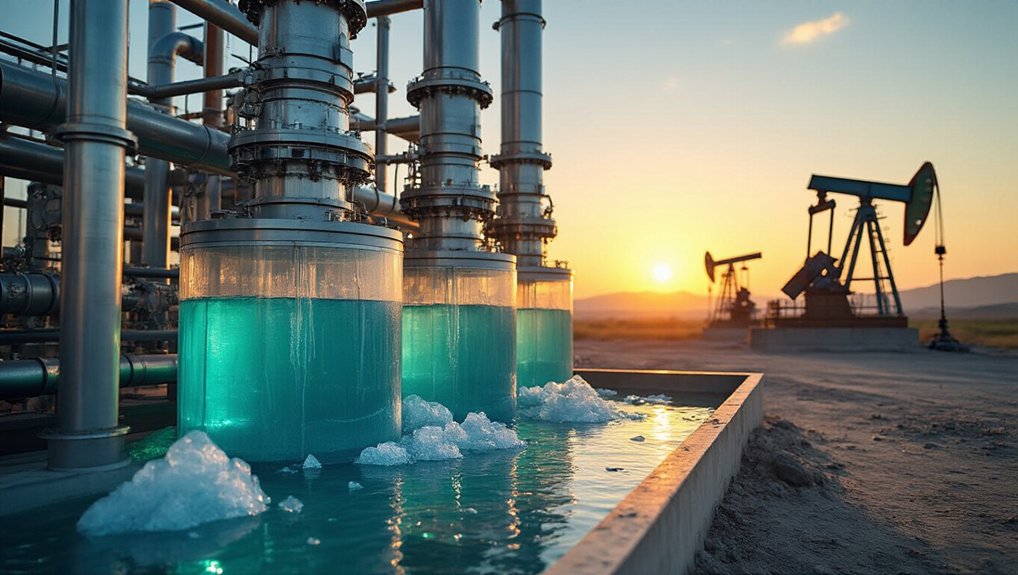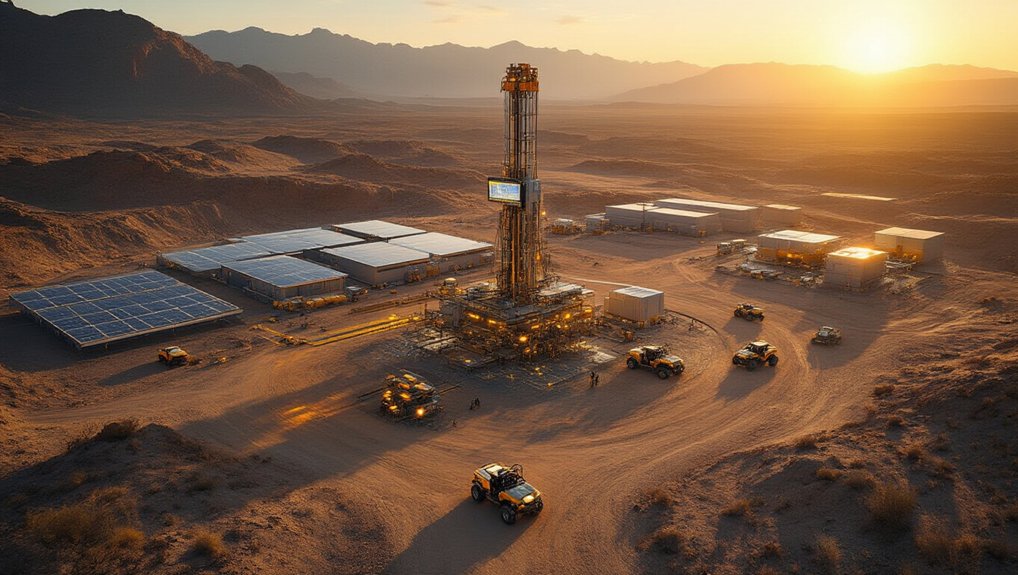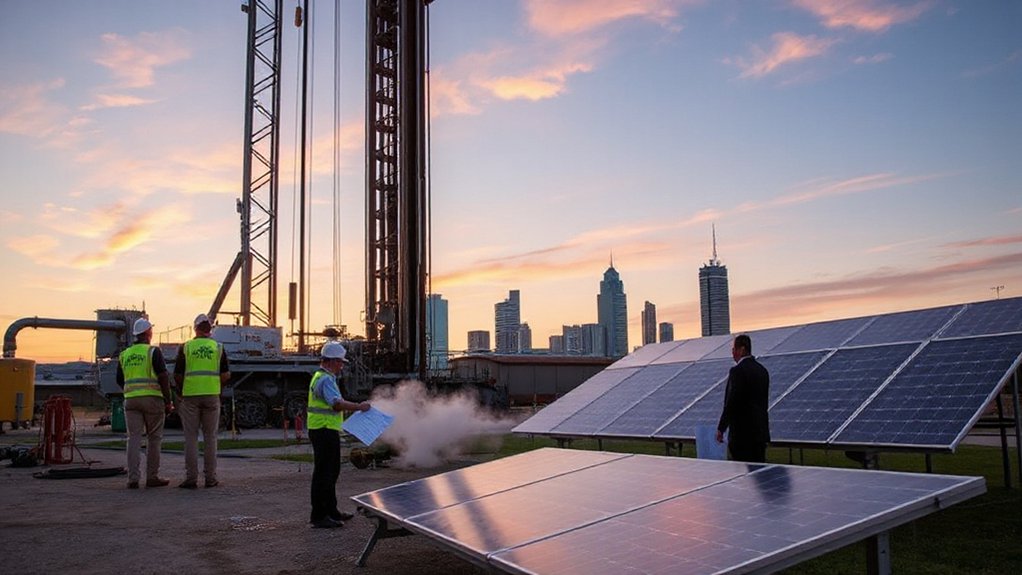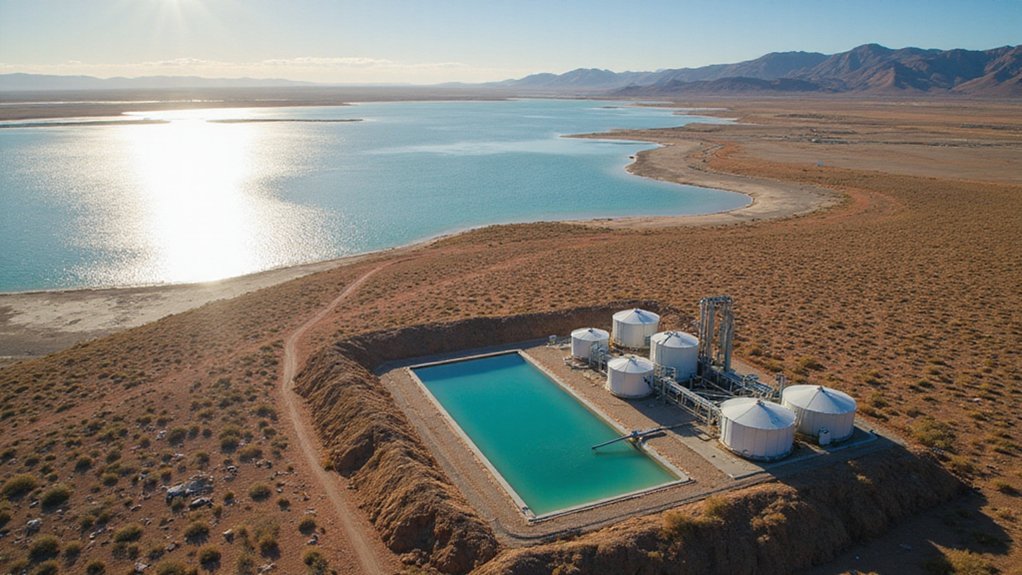
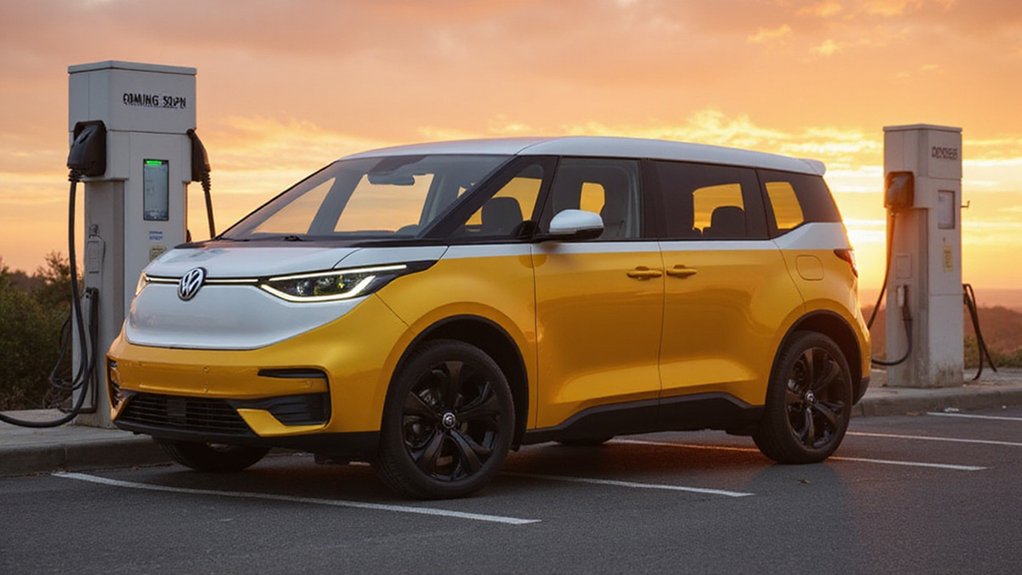
Nearly every piece of modern technology demands lithium—and Direct Lithium Extraction (DLE) is transforming how we get it. This isn’t your grandfather’s mining technique. It’s faster, cleaner, and frankly, less destructive to the planet we’re supposedly trying to save with all these electric vehicles.
Traditional lithium extraction? An environmental nightmare. Massive evaporation ponds stretching across deserts, sucking up water for months or years. DLE changes the game completely. Using specialized adsorption resins or advanced membranes, it yanks lithium from brine in hours instead of months. No joke—we’re talking about production timelines as short as 2 hours for lithium carbonate. The old way recovers a measly 20-40% of available lithium. DLE? Up to 95%. Do the math.
Traditional lithium mining is killing our planet while DLE snatches 95% of lithium in hours, not years. The choice is obvious.
The environmental benefits are staggering. DLE uses roughly 20-80 million gallons of water per 1,000 metric tons of lithium carbonate equivalent—compared to a whopping 550 million gallons for evaporation ponds. Carbon footprint? Slashed by 70%. Land use? Just 1.4 acres versus 65-115 acres for traditional methods. This revolutionary process produces less than 2m³ water per tonne of lithium carbonate equivalent, dramatically outperforming traditional methods. The process also extracts lithium with selective adsorption techniques that attract lithium ions while ignoring other minerals in the brine. Turns out you don’t need to destroy an ecosystem to power your Tesla.
This isn’t some pie-in-the-sky technology. It’s already operating commercially in China and South America. At sites like Hombre Muerto, DLE facilities are pumping out over 20,000 tons annually. In 2023 alone, 83.7 kilotons of lithium carbonate equivalent came from DLE processes globally. This innovation contributes significantly to sustainable solutions for powering electric vehicles while preserving natural resources.
Perhaps the best part? After extraction, spent brine gets re-injected into aquifers. The process can run year-round regardless of weather, and the entire setup is modular—deployable in 12-15 months versus up to 15 years for conventional operations.
Over 30 companies worldwide are racing to perfect their DLE technologies. The lithium transformation is here, and it’s about time. The future of clean energy shouldn’t come at the expense of everything else.
References
- https://ctlithium.com/about/direct-lithium-extraction/
- https://lithiumharvest.com/knowledge/lithium-extraction/what-is-direct-lithium-extraction/
- https://lithium.org/wp-content/uploads/2024/06/Direct-Lithium-Extraction-DLE-An-introduction-ILiA-June-2024-v.1-English-web.pdf
- https://www.woodmac.com/news/opinion/direct-lithium-extraction-is-the-hype-justified-by-the-reality/
- https://literature.rockwellautomation.com/idc/groups/literature/documents/ar/min-ar002_-en-p.pdf