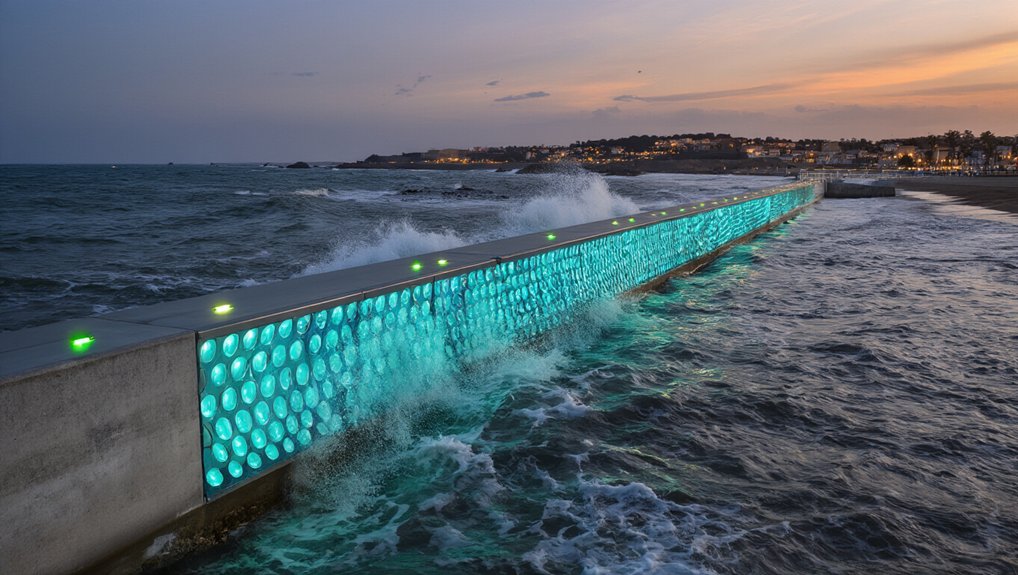
While most countries are still debating climate policies, France has quietly leaped ahead with groundbreaking innovations in clean energy. Their latest achievement? Transforming ordinary breakwaters into perpetual clean energy machines. Not content with structures that merely protect coastlines, French engineers have developed wave-powered breakwaters that pull double duty – blocking destructive waves while generating electricity. Pretty clever stuff.
The Dikwe system, currently under construction, represents the world’s first full-scale energy-positive breakwater. It’s exactly what it sounds like – a coastal protection system that produces more energy than it consumes. The French, apparently, don’t believe in single-purpose infrastructure anymore. Why just block waves when you can harness their power too?
The French are turning breakwaters into energy powerhouses—because why just stop waves when you can make them work for you?
Scheduled for completion by the end of 2025, this demonstrator project could change the game for coastal engineering worldwide. The innovative technology utilizes oscillating panels mounted on breakwaters to convert wave energy into electricity. Imagine that – breakwaters working 24/7, silently converting relentless ocean energy into clean electricity. No smoke, no fumes, just waves doing what they’ve always done, except now we’re smart enough to capture that energy.
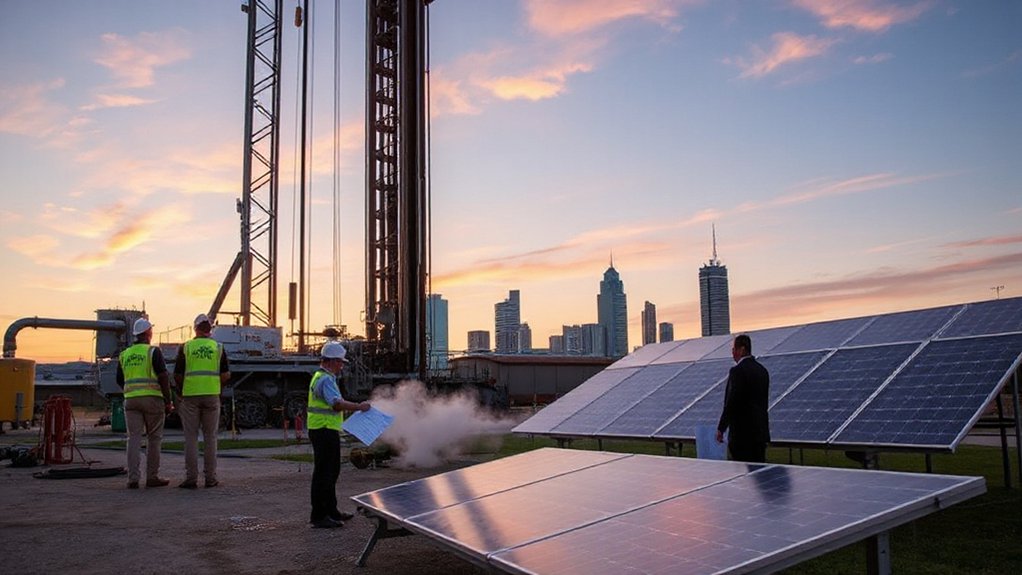
But France isn’t putting all its renewable eggs in one basket. While engineers perfect wave energy technology, geologists have struck gold – or rather, hydrogen – in the Moselle region. They’ve discovered natural hydrogen reserves worth a staggering $92 billion. This “white hydrogen” requires zero industrial processing. Mother Nature has already done the hard work. This naturally occurring hydrogen will offer a cleaner alternative to traditional fossil fuels, potentially reshaping the global energy landscape.
These parallel developments position France at the forefront of the global energy evolution. This initiative follows the global trend where renewable capacity has been rapidly expanding, with wind power alone surpassing 837 GW in 2021. Jobs will be created. Economic stability will follow. Dependence on imported fossil fuels will decrease. It’s a win-win-win situation.
The global implications are enormous. As other nations watch France’s success, similar projects could spring up worldwide. Advanced materials and improved energy conversion efficiency will only make these technologies more viable over time.
France has effectively thrown down the gauntlet in the clean energy race. The question now is: who will follow their lead?
References
- https://www.offshore-energy.biz/frances-first-full-scale-wave-powered-breakwater-underway/
- https://www.sustainability-times.com/energy/france-just-hit-the-jackpot-worlds-largest-hydrogen-treasure-worth-92-billion-sparks-energy-race-and-global-power-upheaval/
- https://impactful.ninja/innovative-breakwater-system-turns-waves-into-clean-electricity-while-protecting-coastlines/
- https://www.world-energy.org/article/52622.html
- https://highways.today/2025/03/26/france-hydrogen-reserves/