
Powering the future isn’t easy. Our high-tech world depends on batteries, and traditional ones just aren’t cutting it anymore. Polymer electrolytes are changing that game—transforming solid-state fluoride-ion batteries from sci-fi dreams into tangible reality.
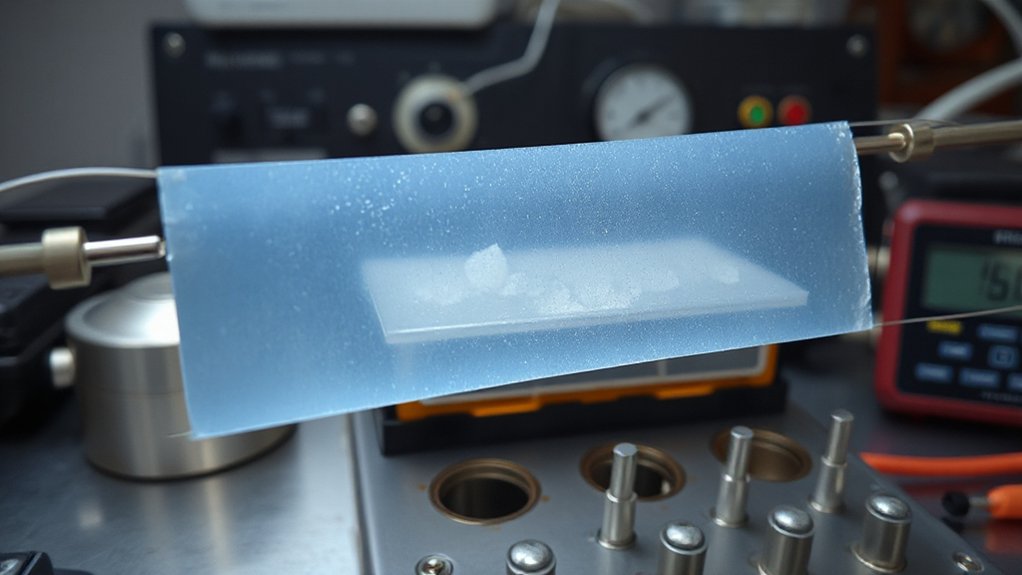
These polymer electrolytes aren’t your average plastic. They’re sophisticated matrices capable of shuttling ions between anodes and cathodes. It’s like molecular hopscotch, but with actual purpose. Solid polymer electrolytes (SPEs) work through a dance of coordination and decoordination, where ions jump from one polymer chain to another. Fancy, right?
The big problem? Terrible conductivity at room temperature. Who wants a battery that only works when it’s hot? Nobody. That’s why scientists are blending polymers, adding plasticizers, and throwing in inorganic fillers like they’re making some kind of electrochemical cocktail. And surprisingly, it’s working.
Natural polymers are joining the party too. Mother Nature, it turns out, might have had the answer all along. These green alternatives deliver impressive conductivity while being kinder to our planet. No small feat in an industry that traditionally cares more about performance than sustainability. These eco-friendly options align with the industry’s growing focus on sustainable practices and recycling programs to reduce environmental impacts.
Temperature remains the stubborn nemesis. Too cold? Ions move like they’re stuck in molasses. Too hot? The polymer starts shrinking and deforming like a cheap sweater in the dryer. Yet engineers keep pushing forward, creating electrolytes that function across wider temperature ranges. These electrolytes aim to overcome the sensitivity to temperature variations that has historically complicated battery operation. The glass transition temperature is particularly important as it marks when polymer chain motion increases enough to facilitate ion transport.
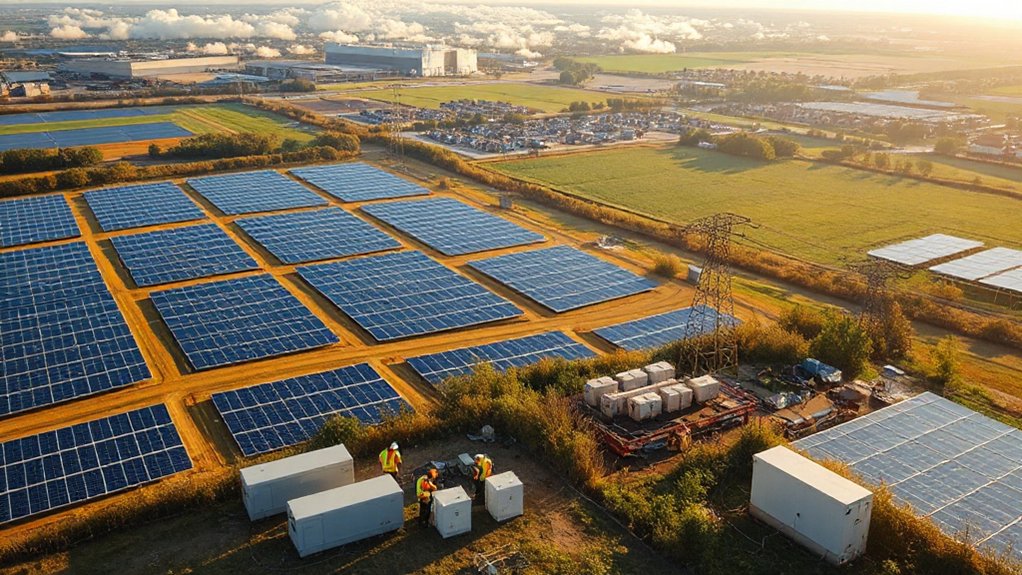
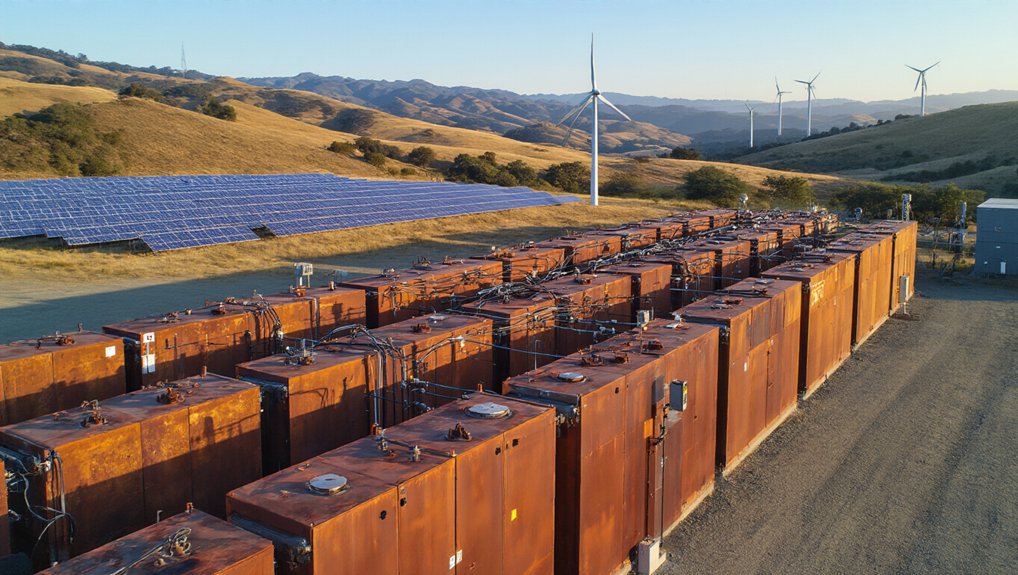
Some of these systems are already deployed in high-energy applications exceeding 1 GWh. That’s not just lab-coat talk—it’s real-world implementation.
The secret sauce lies in managing the delicate balance between mechanical stability and ionic conductivity. It’s chemistry’s version of walking a tightrope. Researchers tweak polymer crystallinity, enhance amorphous regions, and create superhighways for ion transport.
The result? Batteries that are safer, more reliable, and less likely to burst into flames. And let’s be honest—who doesn’t want that?