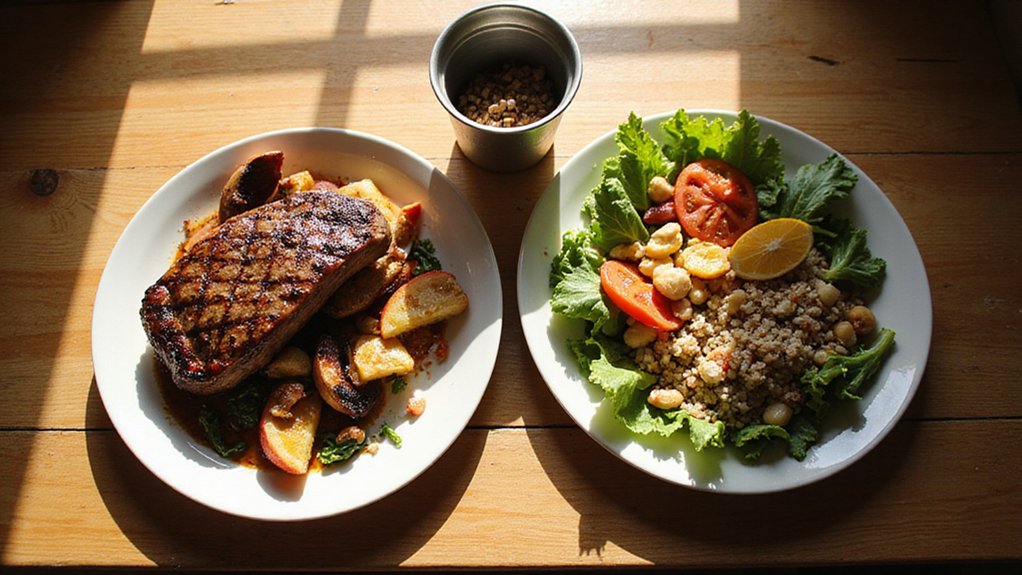

While rising sea levels threaten traditional agriculture worldwide, a new generation of salt-tolerant crops is turning crisis into opportunity. Farmers in coastal regions are discovering that certain plants don’t just survive in salty conditions—they thrive. Quinoa, for instance, couldn’t care less about salt. It produces yields comparable to conventional cereals when irrigated with saline water. Not impressed? Barley laughs in the face of salt levels that would make wheat wither and die.
These aren’t just experimental curiosities. They’re viable food sources. Saltbush provides edible leaves while simultaneously cleaning up saline soils by storing salt in its tissues. Talk about multitasking. Even rice—yes, rice—has wild varieties and landraces that handle brackish water just fine. Coastal communities have been growing these variants for centuries. We’re just late to the party.
Salt-loving plants aren’t just surviving—they’re thriving while doing environmental cleanup on the side.
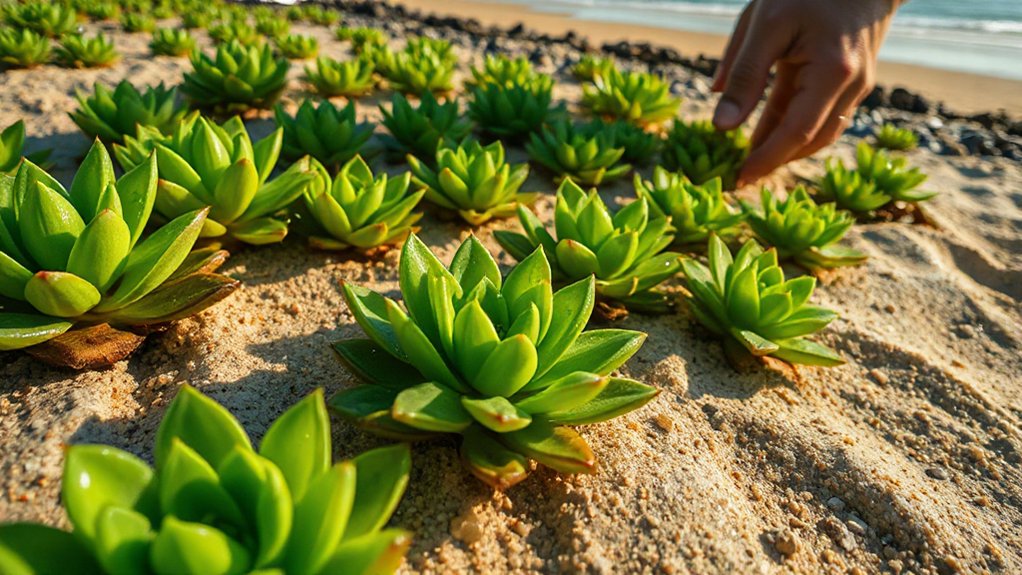
The real money-makers, though? Salicornia. This succulent halophyte yields oil-rich seeds under full seawater irrigation. Commercial pilots are already proving its viability. Nearby, seaweed aquaculture generates high-value food products that integrate perfectly with coastal farming systems. The market pays premium prices for these salt-loving specialties, especially when branded as eco-friendly alternatives. These coastal crops benefit from the dynamic interaction between waves and tides, which naturally flush excess salt and deliver nutrient-rich water to shoreline agricultural areas.
Getting these crops to flourish requires specific techniques. Raised beds improve drainage in waterlogged coastal soils. Mulching prevents salt accumulation at the surface. Smart irrigation scheduling—using brackish water at night or in calculated deficits—manages salt stress while conserving precious freshwater. These salt-tolerant crops possess extensive root systems that enhance soil structure and improve sand retention in coastal agricultural zones.
Seed priming improves germination in salty conditions. Intercropping with halophytic legumes enhances nitrogen availability. Progressive acclimation during the nursery stage toughens plants before field transplanting.
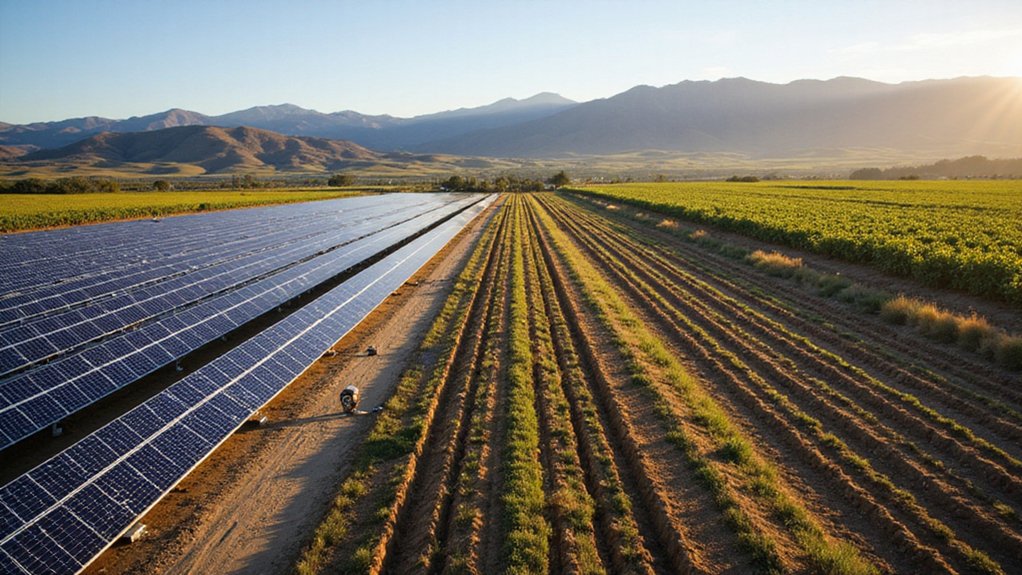
This isn’t just about growing food—it’s about reclaiming land once considered agricultural dead zones. As traditional farmland falls victim to salinization, these adaptive approaches offer resilience. Salt-loving supercrops aren’t just a novelty; they’re becoming an essential strategy for coastal food security. These innovative farming practices support ecosystem services that contribute trillions to the global economy while preserving coastal biodiversity.
The future of farming might be a whole lot saltier. And that’s not necessarily a bad thing.
References
- https://www.coastalwiki.org/wiki/Shore_protection_vegetation
- https://www.zipsud.org/wp-content/uploads/2020/11/Coastal-plant-guide-Bic-2020.pdf
- https://www.fnai.org/PDFs/NC/Coastal_Strand_Final_2010.pdf
- https://response.restoration.noaa.gov/sites/default/files/Characteristic_Coastal_Habitats.pdf
- https://www.nature.com/scitable/knowledge/library/coastal-processes-and-beaches-26276621/
- https://www.cabidigitallibrary.org/doi/pdf/10.5555/20193300858
- https://www.fao.org/4/w8440e/W8440e07.htm
- https://absolutewrite.com/forums/index.php?threads/crops-in-a-self-sufficient-coastal-town.122477/