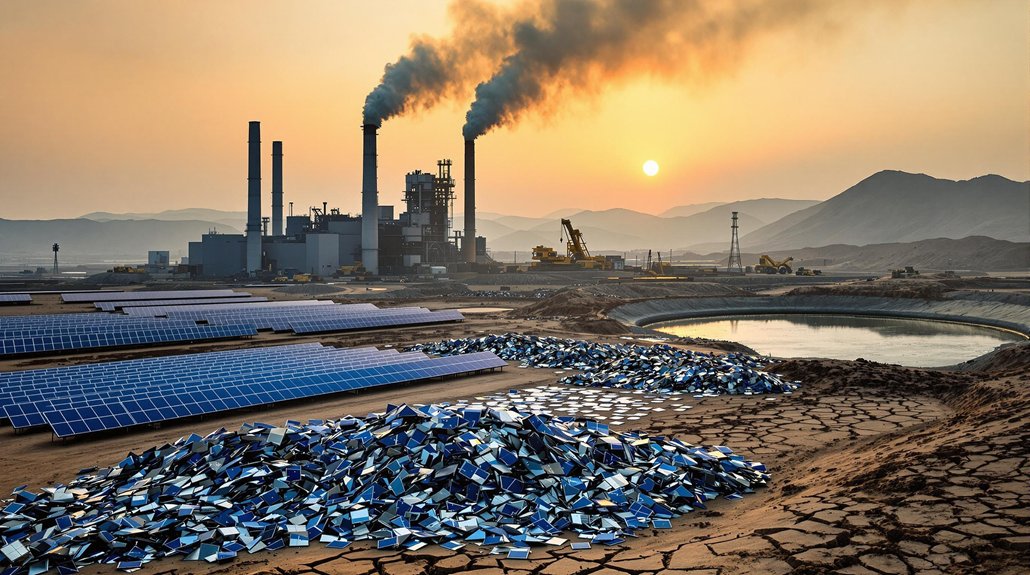

Solar energy isn’t as clean as advertised. Manufacturing panels releases CO2 and toxic chemicals like lead and cadmium. By 2050, we’ll face 78 million tons of solar waste – with nowhere to put it. Solar farms destroy ecosystems and compete with agriculture. They guzzle water, too. Even the mining for materials wreaks environmental havoc. That “zero-carbon” label? Pure marketing. The full environmental story might shock you.
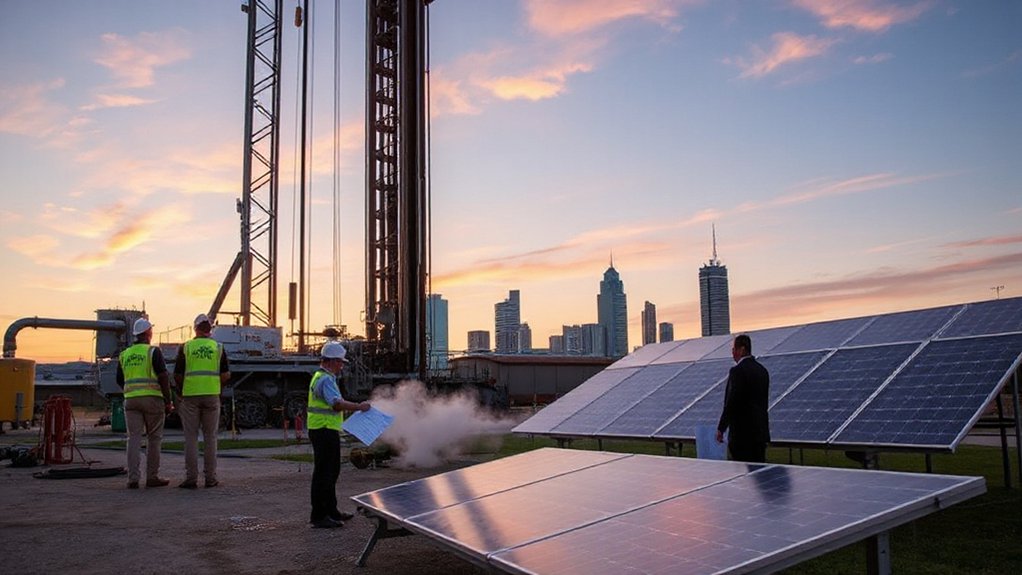
While solar energy is widely praised as a clean alternative to fossil fuels, the uncomfortable reality lurking beneath those shiny blue panels tells a different story. Manufacturing these “green” energy collectors is surprisingly dirty. Production releases greenhouse gases—about 50g CO2 per kWh in the early years—and often relies on coal-powered factories. Not exactly the clean energy poster child we’ve been sold. In contrast, geothermal energy produces nearly 99% less carbon dioxide than fossil fuels.
Behind the glossy eco-friendly facade of solar energy lurks a manufacturing process that’s anything but clean.
The toxic chemical cocktail involved is downright alarming. Hydrochloric acid. Sulfuric acid. Nitric acid. Workers handle these dangerous substances daily. And those panels? They’re packed with lead and cadmium that can leach into soil and groundwater. Many regions don’t even have proper disposal infrastructure. By 2050, we’re looking at 78 million tons of solar panel waste. Where’s all that going? Solar systems also contain hazardous materials like cadmium that pose serious environmental risks if panels are damaged or improperly disposed of.
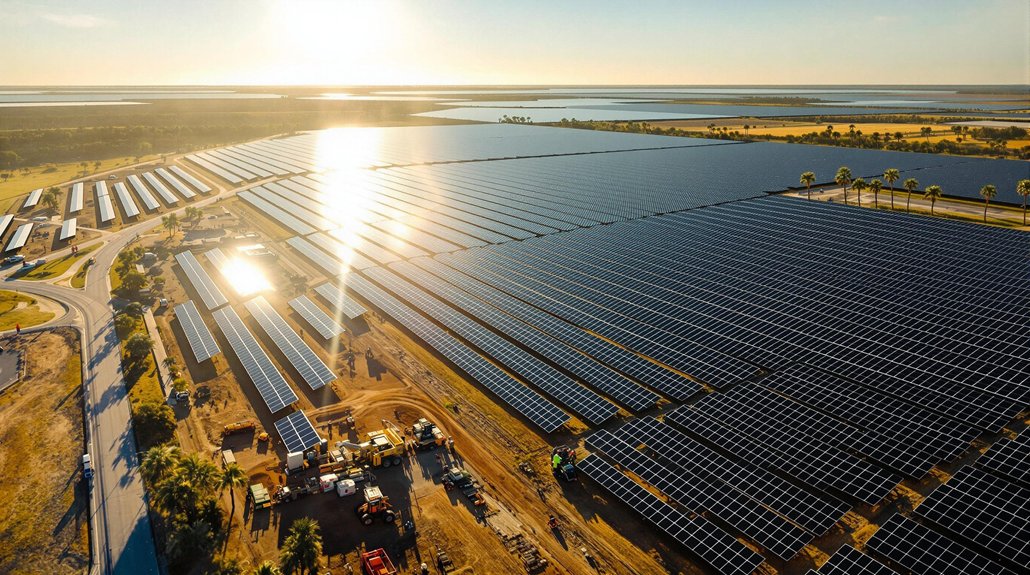
Land use presents another inconvenient truth. Solar farms are land-hungry monsters. They require massive clearing, disrupt ecosystems, and fragment wildlife habitats. Some estimates suggest solar could eventually consume up to 5% of territory in certain countries. Farmland or solar panels? We’re increasingly forced to choose.
Water usage doesn’t get enough attention. Manufacturing gulps water. Cleaning panels demands more. In arid regions already struggling with water scarcity, solar adds another straw to an already parched camel’s back. Some systems use up to 20 gallons per megawatt hour. And that water often gets contaminated with cleaning chemicals.
Mining raw materials leaves scars across landscapes. Transporting components adds more emissions. The full lifecycle assessment isn’t zero-carbon—just lower than fossil fuels. Energy payback takes 1-4 years depending on location and technology. The materials needed for solar cells include silicon, glass, and precious metals like silver that require environmentally damaging mining operations.
Look, nobody’s saying abandon solar energy. But the environmental halo needs tarnishing. Those clean energy claims? Partly true, partly marketing spin. Solar’s environmental footprint is real. The sooner we acknowledge that, the sooner we can actually work to reduce it. Sometimes being truly green means facing uncomfortable truths.