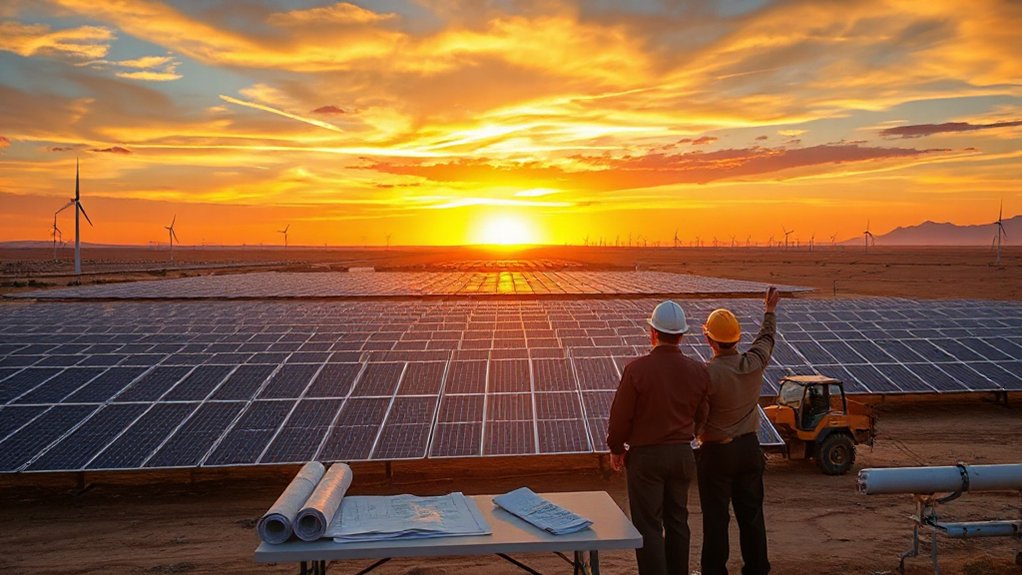
A massive coalition of 143 solar companies is taking aim at the federal government over what they’re calling a “near complete moratorium” on solar project approvals. The alliance sent a blunt letter to Congress demanding they address the Department of Interior‘s July 2025 memo that’s basically strangling the industry. And they’re not mincing words.
The policy requires elevated federal review for wind and solar projects—even those primarily on private land. Got a transmission line crossing federal property? Boom. You’re stuck in review hell. Need a water crossing permit? Good luck with that.
Welcome to the regulatory Twilight Zone, where your private solar project gets federal scrutiny if it so much as glances at public land.
Over 500 solar and storage projects are now at risk, representing a whopping 116 gigawatts of capacity. That’s about half of all planned power additions through 2030. Just… sitting there. Waiting.
“Unduly discriminatory and unprecedented government overreach” is how the coalition describes the situation. Not exactly subtle. The Solar Energy Industries Association (SEIA), which organized the letter, points out that these projects aren’t stalled due to technical or financial issues—it’s purely political and regulatory barriers.
Meanwhile, data centers and AI are gobbling up more electricity every day. The industry stresses that consistent permitting rules are essential for meeting this growing clean energy demand. Solar remains the cheapest and fastest way to add new energy capacity. But sure, let’s just hold everything up with paperwork. Makes perfect sense.
SEIA president Abigail Ross Hopper called the current blockade “unsustainable.” The 1,200-member organization has spent months advocating for permitting reform, but insists current proposals don’t go far enough.
The coalition’s primary demand? Revoke or suspend that July 2025 DOI memo. They’re warning that continued delays threaten energy security, raise electricity costs, and erode private property rights.
For an industry that’s literally powering the future, they’re finding themselves powerless against federal red tape. The irony would be amusing if the stakes weren’t so high.
States like Texas, Virginia, Arizona, and Nevada are among the hardest hit, with these energy-intensive data center hubs especially vulnerable to the permitting gridlock.
With solar energy costs having dropped 90% since 2009, these bureaucratic hurdles are preventing Americans from accessing one of the most affordable electricity options available.
References
- https://solarquarter.com/2025/12/05/143-solar-firms-urge-congress-to-address-interior-policy-slowing-permits-and-threatening-clean-energy-projects/
- https://pv-magazine-usa.com/2025/12/04/congress-urged-to-reform-nearly-complete-moratorium-on-u-s-solar-projects/
- https://taiyangnews.info/markets/us-solar-industry-urges-congress-to-fast-track-permitting
- https://www.solarpowerworldonline.com/2025/12/us-solar-industry-demands-end-to-department-of-interiors-permitting-blockade/
- https://www.pv-tech.org/us-solar-industry-demands-end-to-dois-unequal-pv-permitting/
- https://www.troutman.com/insights/renewables-in-the-crosshairs-doi-and-dot-announce-numerous-new-anti-wind-and-solar-orders-and-policies/
- https://www.doi.gov/pressreleases/interior-ends-preferential-treatment-unreliable-subsidy-dependent-wind-and-solar
- https://www.usda.gov/about-usda/news/press-releases/2025/08/19/secretary-rollins-blocks-taxpayer-dollars-solar-panels-prime-farmland