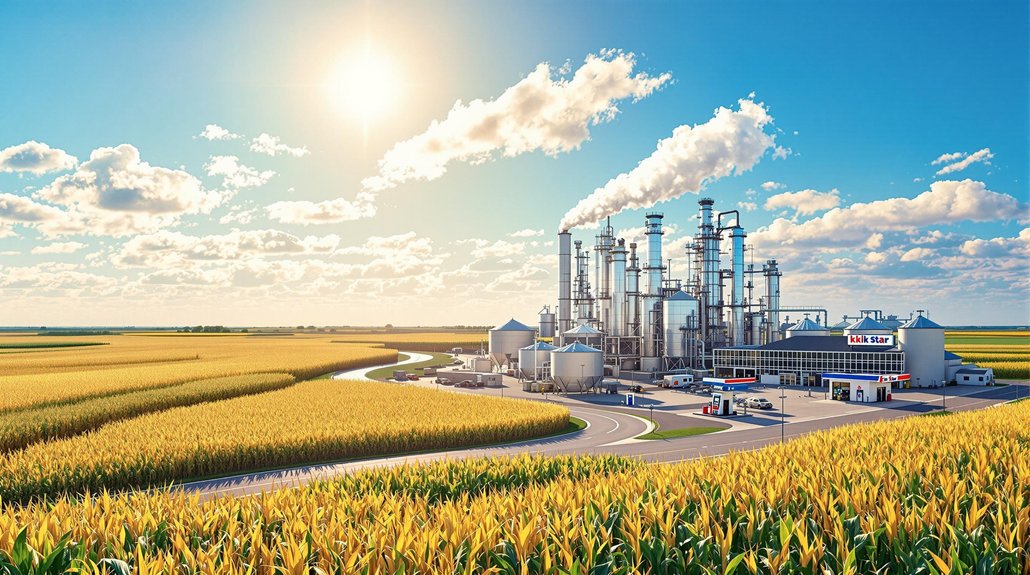

South Dakota’s partnership with Kwik Star marks a significant turn in clean energy promotion. The state, ranking fourth nationally in ethanol production, converts half its corn crop into fuel that reduces greenhouse emissions by 46%. This alliance aims to educate consumers about ethanol benefits—cleaner air, better public health, and economic growth. While pandemic challenges hit hard, the industry still supports 30,000 jobs. The revolution continues to reshape America’s heartland energy landscape.
While many Americans hardly give a thought to what’s in their gas tanks, South Dakota has quietly transformed itself into an ethanol powerhouse. The state now boasts 16 ethanol plants churning out a staggering 1.2 billion gallons annually. That’s enough to make your head spin—or your car engine, at least. South Dakota ranks fourth nationally in ethanol production. Not bad for a state many people couldn’t find on a map.
The numbers tell the story. Nearly 30,000 jobs. $2.4 billion in household income. Over half the state’s corn crop—450 million bushels—gets converted into fuel rather than food. It’s big business in a state not exactly known for economic powerhouses. The pandemic dealt a severe blow, causing ethanol prices to drop by 37 percent in March 2020 alone.
Environmental benefits? Yeah, there are those too. Ethanol slashes greenhouse gas emissions by 46%. Less particulate matter in the air. Reduced carbon monoxide. Clean lungs, clean conscience. The use of ethanol as fuel produces 60-90% less greenhouse gases compared to traditional gasoline. The shift didn’t happen by accident.
Enter the Kwik Star partnership. Working with the South Dakota Corn Utilization Council, they’ve launched an aggressive consumer education campaign. Gas stations across the state now offer everything from standard 10% ethanol blends to E85 for flex-fuel vehicles. Locals get it. Visitors? They pump and go, oblivious to the corn-based fuel powering their road trips.
The future looks… interesting. Carbon capture projects are on the horizon. Sustainable aviation fuel could be next. These advancements are crucial since approximately 70% of corn grown in South Dakota is purchased by ethanol producers. Even electric vehicles might not kill the industry—some planners envision integrated charging-ethanol stations. Smart thinking.
Challenges exist, obviously. Corn prices swing wildly. Federal policies change with political winds. Electric vehicles loom like storm clouds. But South Dakotans aren’t exactly known for backing down from challenges.
The state that gives us Mount Rushmore also delivers a blueprint for energy independence. Four faces carved in stone versus billions of gallons of homegrown fuel. Which contributes more to America? The next time you fill up, think about it. South Dakota already has.