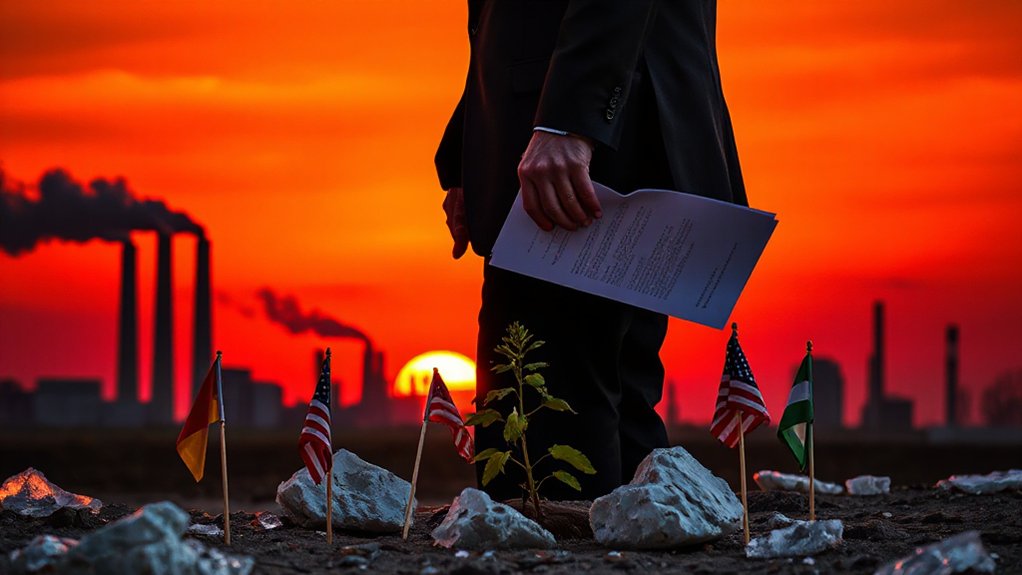
Nearly half of America’s states are competing to host a new type of federal nuclear facility. The U.S. Department of Energy issued a Request for Information on January 28, 2026, seeking proposals for Nuclear Lifecycle Innovation Campuses. The deadline was April 1, 2026, and the response was overwhelming. DOE official Wright confirmed that 28 states submitted applications, making this one of the most successful federal-state partnership efforts in recent memory.
These campuses represent a major shift in how the U.S. handles nuclear energy. They’re designed to manage the entire nuclear fuel cycle, from the beginning to the end. This includes everything from fuel preparation to waste management. States can negotiate which front-end activities they’d host, but back-end waste management is mandatory for all campuses. Options include interim storage, recycling, reprocessing, and deep borehole disposal.
Nuclear Lifecycle Innovation Campuses manage the entire fuel cycle, from preparation through mandatory back-end waste management including storage, recycling, and disposal.
The National Association of State Energy Officials, or NASEO, represents 56 state and territory energy offices. The organization submitted its own response on March 31, 2026, supporting the initiative. NASEO’s Federal-State Nuclear Initiative includes co-chairs from Indiana, Kentucky, New York, Tennessee, and Wyoming. Participating states include Louisiana, Maryland, Pennsylvania, Utah, Virginia, and West Virginia. Additionally, 16 observer states are watching the project closely.
Utah and Tooele County publicly announced their interest on March 27, 2026. Colorado counties also reportedly expressed enthusiasm, though the state’s official submission status remains unclear. Each state must evaluate the geologic conditions of potential campus sites to ensure they’re suitable for nuclear operations. Finland’s Onkalo facility has demonstrated that deep geological repositories can be successfully developed, offering a proven model for states designing their waste management strategies. The waste-management requirements represent a critical component of DOE’s broader strategy to build an end-to-end nuclear fuel cycle approach. An industry source estimated that the actual submission count roughly aligned with DOE expectations for federal infrastructure competitions.
The potential economic benefits are substantial. Host states could see significant investment and job creation from the federal government and private companies. The campuses would strengthen America’s leadership in advanced nuclear energy while speeding up investment opportunities.
DOE will spend six months processing all the responses. The department will then release results and likely begin negotiations with selected states. This initiative builds on growing state interest in nuclear innovation hubs and supports the national strategy for managing nuclear waste and the entire fuel cycle. The competition among states shows how seriously they’re taking nuclear energy’s future role in America’s energy terrain.
References
- https://www.ans.org/news/2026-04-01/article-7898/whos-in-the-running-for-doe-nuclear-lifecycle-innovation-campuses/
- https://www.exchangemonitor.com/multiple-states-respond-to-does-nuclear-lifecycle-hub-inquiry/
- https://www.naseo.org/Data/Sites/1/media/documents/policy/naseo-fm-response-to-doe-lifecycle-rfi-32726.pdf
- https://www.etftrends.com/nuclear-energy-content-hub/companies-win-states-host-nuclear-campuses/
- https://www.energy.gov/articles/department-energy-seeks-hosts-nuclear-lifecycle-innovation-campuses
- https://www.exchangemonitor.com/wright-doe-got-responses-from-28-states-for-nuclear-hubs/?printmode=1