Iran pushed back strongly against U.S. demands to end its uranium enrichment program on Wednesday, insisting that nuclear enrichment is its “sovereign right” under international law. The statement comes as tensions between Washington and Tehran continue to rise over Iran’s growing nuclear capabilities.
Nuclear enrichment remains Iran’s sovereign right despite mounting U.S. pressure and escalating tensions.
The Trump administration has demanded Iran completely dismantle its nuclear program, including all uranium enrichment and plutonium reprocessing capabilities. President Trump and Vice President Vance have threatened military action if Iran doesn’t comply with their demands. Current U.S. policy emphasizes that no civilian program should have enrichment infrastructure that could produce weapons material.
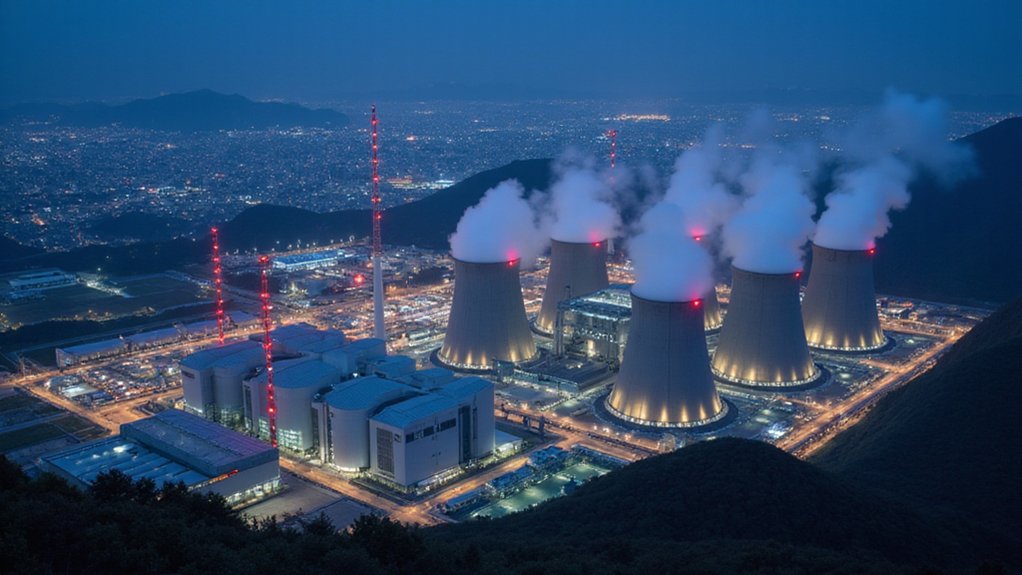
Iran currently operates 36 cascades of IR-1 centrifuges at its Natanz facility, along with 42 cascades of more advanced centrifuges. The Fordow plant houses additional centrifuges, including seven cascades of the more powerful IR-6 models. This growing infrastructure has dramatically shortened Iran’s “breakout time.”
Experts warn that Iran could now produce enough weapons-grade uranium for 5-6 bombs in less than two weeks. The country’s stockpile of uranium enriched to 60% and 20% approaches 900 kilograms, enough to fuel up to eight nuclear warheads with further enrichment.
Despite these concerns, Iran hasn’t produced uranium enriched to the 90% level needed for weapons. Iran’s Supreme Leader Ali Khamenei has recently modified his stance on negotiations, now showing more flexibility due to credible military threats from the US and Israel. The country plans to increase its 60% enrichment by feeding 20% material into IR-6 centrifuges.
U.S. and Iranian officials have met for three rounds of talks in Oman, with a fourth round possibly upcoming. The U.S. position allows Iran to maintain a civilian nuclear program but only with imported enriched uranium fuel.
Recent reports indicate an Iranian cargo ship was suspected of transporting missile components from China in late March 2025.
The standoff continues as Iran notified the International Atomic Energy Agency of plans to install an additional 32 centrifuge cascades. This expansion, combined with Iran’s growing stockpile of highly enriched uranium, has renewed fears of a potential military confrontation if diplomatic efforts fail.
References
- https://www.fdd.org/analysis/policy_briefs/2025/05/09/any-iranian-enrichment-gives-tehran-a-path-to-nuclear-weapons/
- https://www.inss.org.il/publication/iran-2025/
- https://www.armscontrol.org/factsheets/status-irans-nuclear-program-1
- https://www.iranwatch.org/our-publications/articles-reports/irans-nuclear-timetable-weapon-potential
- https://www.armscontrol.org/issue-briefs/2025-03/art-new-iranian-nuclear-deal-2025