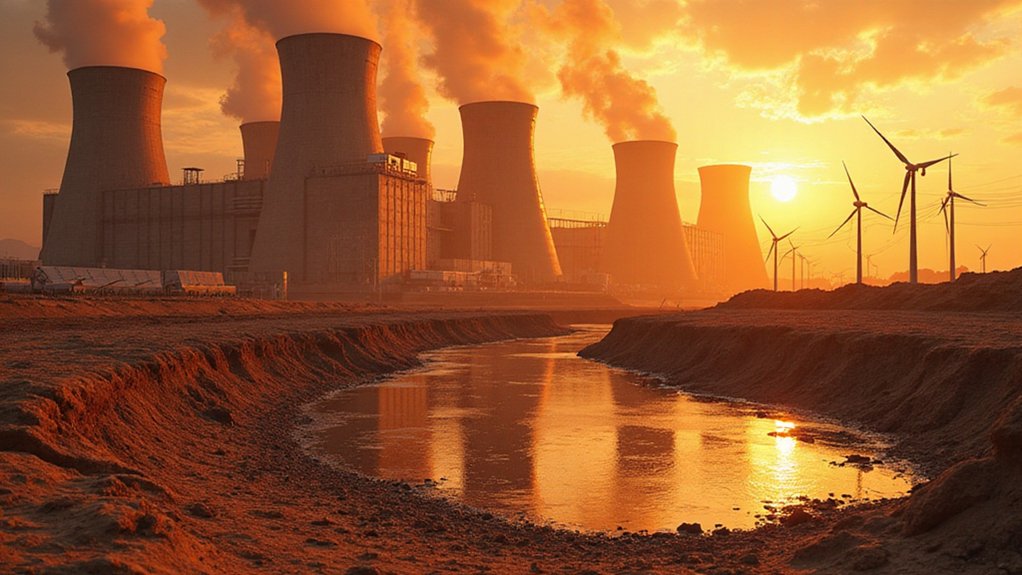
How much water does it take to power Texas? The answer’s shocking. In 2024, power plants across the state consumed over 100 billion gallons of water. That’s enough to supply roughly a million homes for an entire year.
Coal plants alone drank 34 billion gallons in 2024. To put that in perspective, the water consumed by just 13 coal plants could serve 1 million homes for a year. Texas has several massive coal plants ranking among the nation’s largest water consumers. These facilities rely on water for cooling systems that generate electricity.
Just 13 Texas coal plants consume enough water annually to serve 1 million homes for an entire year.
The water intensity of coal is staggering. Coal plants use approximately 672 gallons per megawatt hour of electricity produced. That’s over 100 times more water than solar energy requires. Solar panels need just 6 gallons per megawatt hour. The difference highlights why energy experts are pushing for renewable alternatives.
This massive consumption comes from coal, gas, and nuclear power plants combined. The pattern’s been consistent since at least 2015. Every year, consumption stays above 100 billion gallons. The state’s water supply is shrinking amid ongoing concerns, making this drain particularly concerning.
Coal plants hold legal rights to 116 billion gallons annually from Texas rivers, creeks, and aquifers. That’s more than the 34 billion they actually used in 2024. Even so, these permits strain the state’s already stretched water resources.
Switching to solar could dramatically reduce water usage. If Texas expanded solar energy, it’d need far less water for electricity production. The math is simple: 6 gallons versus 672 gallons per megawatt hour makes solar far more water-efficient.
Texas faces a critical choice. The state’s water supply continues shrinking while power plants consume record amounts. Population growth increases demand for both water and electricity. A shift toward solar and other renewables could help meet energy needs while protecting limited water resources. Geothermal energy also offers a compelling water-efficient alternative, as geothermal heat pumps are generally reported to achieve efficiency ratings of 300-500% while consuming far less water than conventional fossil fuel plants. The data shows renewable energy isn’t just better for the environment. It’s essential for Texas’s water future.