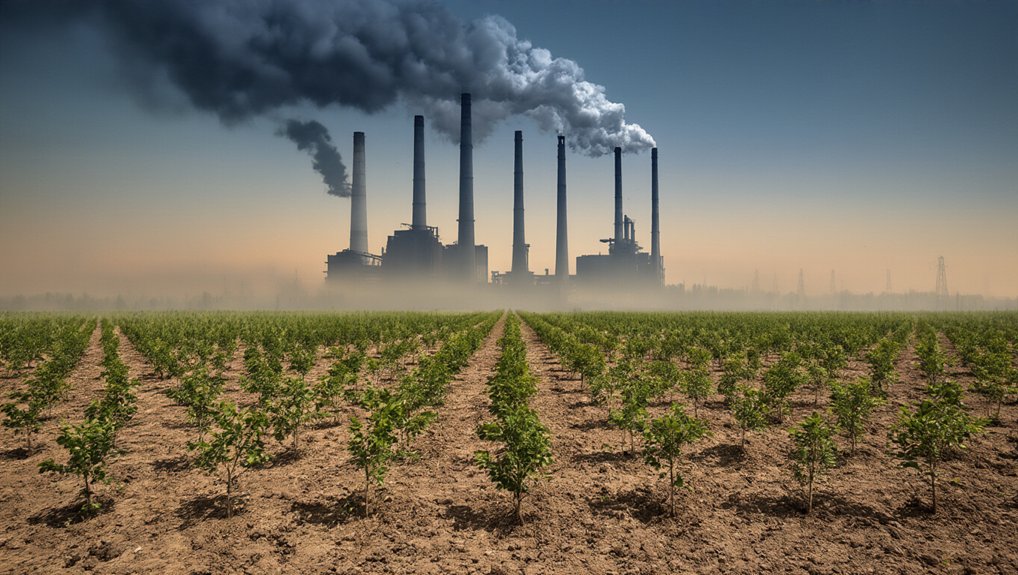
Trees won’t save us. The math is brutal. Plant half a trillion trees, capture 205 gigatons of carbon, reduce atmospheric carbon by 25%. Sounds impressive until you realize that only erases about 20 years of human emissions. Twenty years. That’s it.
Earth could theoretically support 900 million more hectares of forests. But here’s the thing: trees are slow. A young tree absorbs maybe 10-20 kilograms of CO2 annually for its first two decades. Over 40-50 years, if it’s lucky enough to dodge fire, disease, and chainsaws, a hardwood might sequester one metric ton of carbon. Meanwhile, humans pump out billions of tons yearly.
The carbon math gets worse. Mature forests hit equilibrium, basically becoming carbon neutral. Young trees absorb, old trees decay and release. It’s a wash. Plus, carbon sequestration varies wildly—10 to 1,000 tons per hectare depending on species, climate, and location. Average youngish forest? About 50 tons per hectare. Not exactly a miracle cure.
Reality check: global greenery currently absorbs 31% of fossil fuel emissions. The rest? Straight into the atmosphere. And that’s with existing forests working overtime. Even with increased CO2, trees won’t grow faster without adequate nitrogen and phosphorus in the soil. New models show plants actually sequester 157 petagrams of carbon annually, but that’s still nowhere near enough to offset our relentless emissions.
Then there’s the land problem. Those 900 million hectares aren’t just sitting empty, waiting for trees. People need food. Cities need space. Natural grasslands and wetlands shouldn’t be bulldozed for tree farms. Planting trees where they don’t belong can destroy native ecosystems and mess up water systems.
Even successful plantings face threats. Climate change brings more fires, droughts, and storms. Pests multiply. What takes decades to grow can burn in hours. Those stored carbons? Gone. Back into the atmosphere.
Failed reforestation projects sometimes release more carbon than they capture. Poor management, wrong species, bad locations—it happens constantly. Trees need protection for centuries to matter, but humans rarely think beyond quarterly earnings reports. Companies often ignore recommendations to invest in ecological restoration while continuing to destroy Indigenous lands for mining profits.
The permanence problem is real. Fossil fuel carbon stays buried for millions of years. Tree carbon? Maybe decades if everything goes perfectly. It usually doesn’t. Trees are a band-aid on a bullet wound. Nice gesture, wrong scale.
References
- https://science.nasa.gov/earth/climate-change/examining-the-viability-of-planting-trees-to-help-mitigate-climate-change/
- https://climate.mit.edu/ask-mit/how-many-new-trees-would-we-need-offset-our-carbon-emissions
- https://www.triplepundit.com/story/2024/carbon-sequestration-study-trees/813271
- https://onetreeplanted.org/blogs/stories/how-much-co2-does-tree-absorb
- https://terrapass.com/blog/what-is-the-effectiveness-of-tree-planting-offsets/