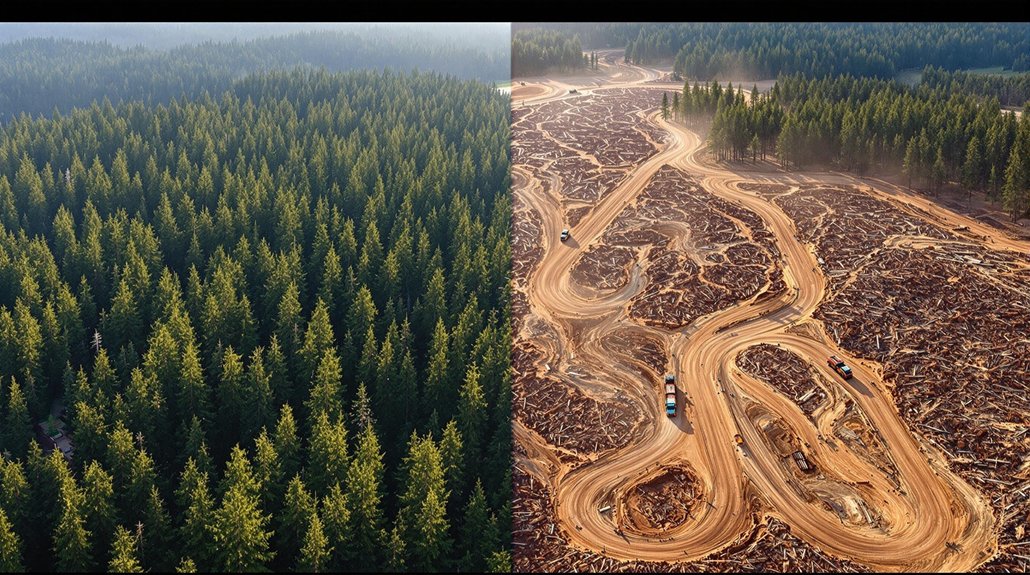

President Trump signed an executive order in March 2025 aimed at increasing logging in national forests by 25%. The order streamlines approval for timber projects by reducing environmental reviews and public comment periods. It affects over 100 million acres of federal lands and could create jobs in forestry. Critics worry about impacts on endangered species and forest ecosystems, while supporters point to economic benefits and wildfire risk reduction. The initiative raises significant questions about land management priorities.
President Donald Trump has signed a sweeping executive order aimed at dramatically expanding timber production across America’s national forests. The “Immediate Expansion of American Timber Production” order, signed in March 2025, directs federal agencies to cut red tape and fast-track logging projects in federal forests.
The policy instructs the USDA and Forest Service to increase logging production by 25% during Trump’s second term. Under the order, agencies may bypass certain environmental reviews and public comment periods that have traditionally been required before approving logging projects.
The administration says the move will address a gap in domestic timber supply that has made America reliant on imported wood since 2016. Supporters point to potential economic benefits, including job creation in forestry, milling, and construction industries, as well as possible reductions in construction costs.
Increased domestic timber production promises jobs, economic growth, and less reliance on foreign wood imports.
Critics, however, are raising alarms about the environmental consequences. Conservation groups warn that expedited logging could harm endangered species habitats, increase erosion, and damage forest ecosystems. The order allows projects to use “categorical exclusions” to avoid standard environmental reviews.
The initiative also streamlines processes under the Endangered Species Act and pauses regulations deemed to impose “undue burdens” on timber production. Agriculture Secretary Brooke Rollins made the formal announcement on April 4 in Washington, emphasizing the need for forest management to combat wildfire risks. The executive order comes shortly after thousands of Forest Service employees were laid off, raising concerns about oversight capacity. New guidance aims to expedite timber sales and reduce supply chain uncertainty for the industry.
Over 100 million acres of federal lands could be impacted, with forests like Los Padres National Forest already seeing large-scale vegetation clearing. Local communities and environmental advocates have voiced opposition, arguing that public lands are being handed over to private industry interests.
The administration defends the policy as a necessary measure to manage wildfire risks in overgrown forests. They claim that removing excess vegetation through logging reduces fuel loads that can feed catastrophic fires.
Meanwhile, reduced Forest Service capacity for wildfire management and forest stewardship raises questions about the government’s ability to properly oversee the expanded logging operations and their environmental impacts.