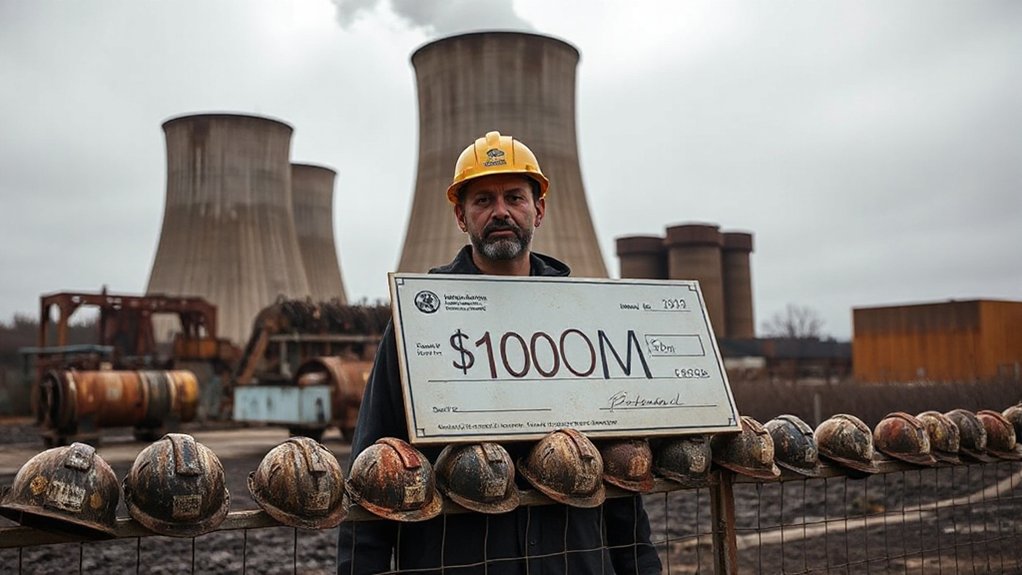
The Trump administration has repealed a major rule that allowed the EPA to regulate greenhouse gases from cars, trucks, and power plants. The 2009 Endangerment Finding was the foundation for federal climate regulations. Removing it eliminates the EPA’s authority to set emissions standards, marking what officials describe as the single largest deregulatory move. The administration claims this action will save roughly $1.3 trillion.
The Trump administration’s repeal of the 2009 Endangerment Finding eliminates EPA authority to regulate greenhouse gas emissions, marking the largest deregulatory move.
This decision seeks to overturn the EPA’s 2009 Endangerment Finding, issued after the Supreme Court ruling in Massachusetts v. EPA affirmed greenhouse gases as pollutants under the Clean Air Act. The administration argues that predictions from the original 2009 finding haven’t come true and that U.S. vehicle emission cuts won’t impact global temperatures through 2100.
The EPA now officially labels climate change as no threat to public health. This makes climate denial official U.S. policy. Environmental groups point out that decades of scientific research show connections between greenhouse gases like CO2 and methane and serious problems. These include extreme heat, severe storms, wildfires, and disease spread. Critics say this reversal protects oil industry interests over planetary health. Illinois is reportedly among states suing the EPA over the decision to renounce its fight against climate change. The rescission directly undermines Supreme Court precedent established in Massachusetts v. EPA.
The Trump administration also began removing climate and environmental data from federal websites. Within the first two weeks of the second term, pages about climate change disappeared from multiple agencies. The White House deleted pages on environmental policy. The State Department removed sections about the climate crisis and the Paris Agreement. Environmental groups like EDGI started archiving data to keep it publicly available.
Illinois faces particular challenges from this repeal. The state has plans, including under its Clean Energy Jobs Act, targeting coal plant reductions. The federal rollback creates confusion about those timelines. Illinois joined other states in suing the EPA over the decision. These states argue that eliminating emission standards and air pollution rules violates the Clean Air Act.
The administration issued an executive order challenging certain state climate policies, including those like New York’s that impose fees on emissions. Officials argue state policies discriminate against out-of-state businesses and interfere with federalism. They contend this approach ensures affordable energy for Americans without compromising quality. Critics counter that this erases scientific consensus on climate risks. Multiple states have also challenged Trump administration actions limiting wind energy development, arguing those moves threaten billions in investments and thousands of jobs tied to renewable energy development.
References
- https://abc7chicago.com/story/what-does-donald-trump-administration-epa-reversal-landmark-climate-change-ruling-mean-illinois/18866889/
- https://pingree.house.gov/news/documentsingle.aspx?DocumentID=6617
- https://nsarchive.gwu.edu/briefing-book/climate-change-transparency-project-foia/2025-02-06/disappearing-data-trump
- https://www.epa.gov/newsreleases/president-trump-and-administrator-zeldin-deliver-single-largest-deregulatory-action-us
- https://www.whitehouse.gov/presidential-actions/2025/04/protecting-american-energy-from-state-overreach/
- https://www.nrdc.org/stories/how-trump-administration-bakes-climate-denial-us-policy