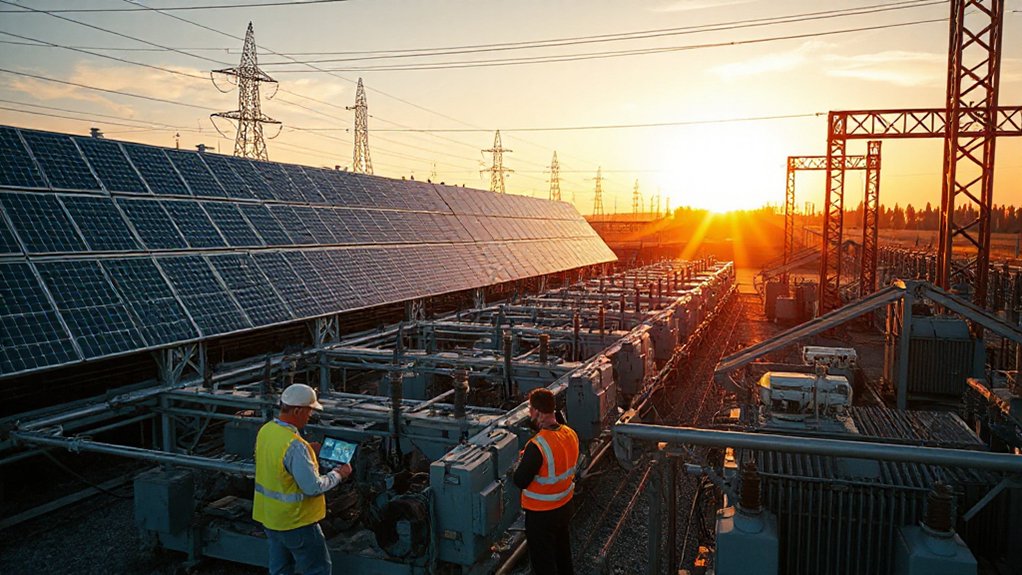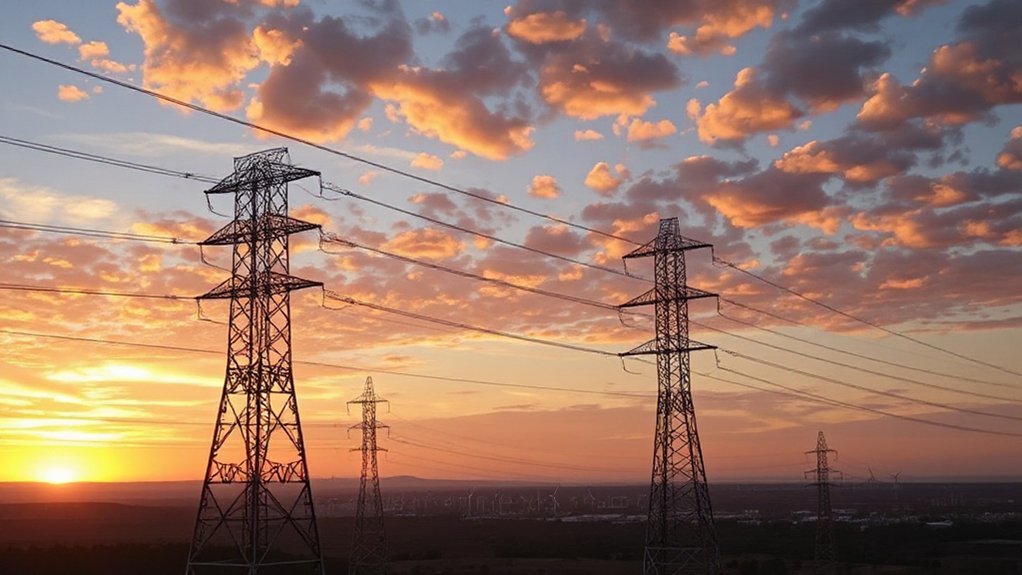
While Americans flip switches without a second thought, the nation’s electrical backbone is crumbling beneath them. A shocking 31% of transmission and 46% of distribution infrastructure is near or beyond its useful life. Power outages? Increasing. No surprise there.
The numbers tell a grim story. Utilities are pouring $63 billion into replacements in 2024 – that’s 67% of all grid spending. Only $32 billion goes toward new lines and substations. Band-Aids on a patient needing open-heart surgery.
Meanwhile, electricity demand is exploding like a firecracker factory. PJM projects a staggering 60% growth over two decades. Data centers alone could gobble up 12% of all US electricity by 2028. In Texas, large-load interconnection requests quadrupled in a single year to 230 GW. The grid just can’t keep up.
Electricity demand isn’t just growing—it’s exploding, while our aging grid stands frozen in the headlights of oncoming disaster.
Transmission investment is growing, sure – at 8.9% annually over the past decade. But actual electricity demand grew at just 0.5%. Where’s all that money going? Fixing ancient equipment, not building the grid of tomorrow.
The Department of Energy isn’t mincing words. We need a 64% increase in carrying capacity by 2040. That’s not happening at current investment levels, folks.
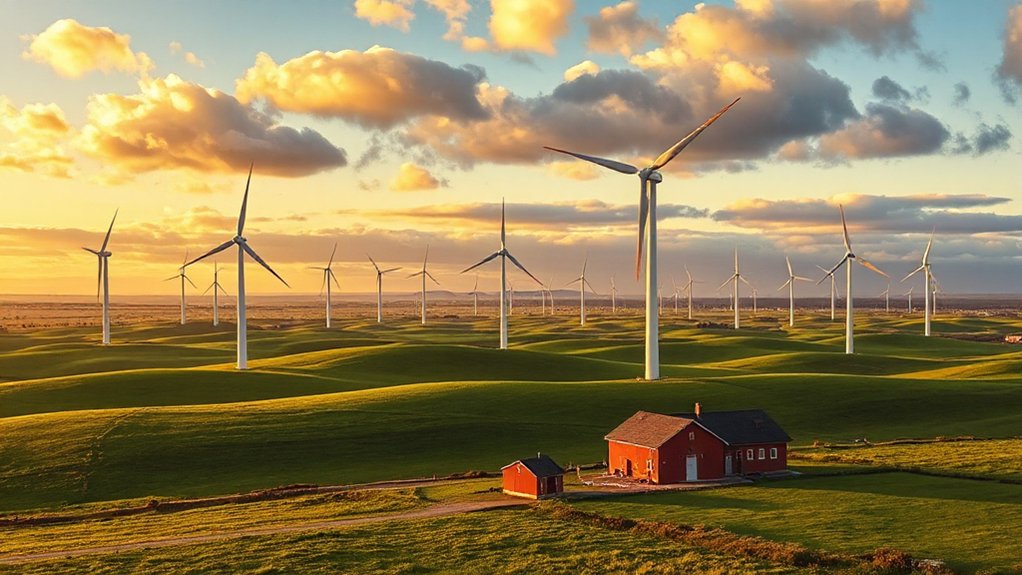
Renewables are piling on faster than new wires can carry them. Solar and batteries account for 81% of expected capacity additions in 2025. Great for clean energy goals, terrible for grid planning.
There are solutions. Advanced composite-core conductors can double capacity on existing lines. No years-long permitting battles. Just modern cables replacing old ones. The urgent need for integrated capacity planning is now undeniable as baseline load surges from widespread electrification.
Regulators are pushing for change. The DOE’s Transmission Acceleration Action Plan has shifted from talk to action. But 2026 looms as a pivotal year for grid decisions.
The harsh truth? America’s building tomorrow’s clean energy future on yesterday’s grid. Extreme weather events are further exposing vulnerabilities in our aging infrastructure, with lengthening wildfire seasons and intensifying storms. The ASCE grade D+ for our power grid reflects a dangerous decline from previous years, signaling imminent system failure without immediate intervention. Something’s gotta give – and soon. Otherwise, those light switches might stop working altogether.
References
- https://institute.bankofamerica.com/content/dam/transformation/us-electrical-grid.pdf
- https://www.trccompanies.com/insights/2026-megatrends-powering-the-shift-in-the-utility-landscape/
- https://ctcglobal.com/the-grid-at-a-crossroads-why-2026-must-be-the-year-of-transformation/
- https://logic2020.com/insight/grid-flexibility-operations-trends-2026/
- https://www.powermag.com/meeting-the-moment-industry-leaders-chart-the-course-for-power-in-2026/
- https://www.mlstrategies.com/insights-center/viewpoints/53996/2026-01-26-_026-energy-outlook-how-affordability-data-centers-and
- https://www.zeroemissiongrid.com/insights-press-zeg-blog/2026-transmission-planning/
- https://www.utilitydive.com/spons/dtech-2026-5-observations-ahead-of-the-biggest-grid-event-of-the-year/806865/
- https://www.yesenergy.com/blog/changes-to-the-us-electric-grid-and-how-to-prepare