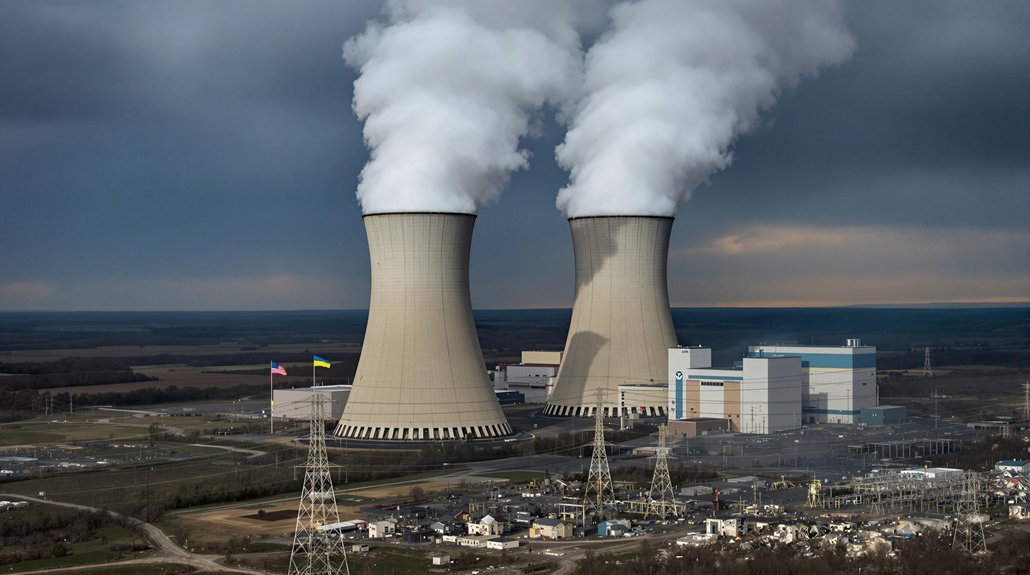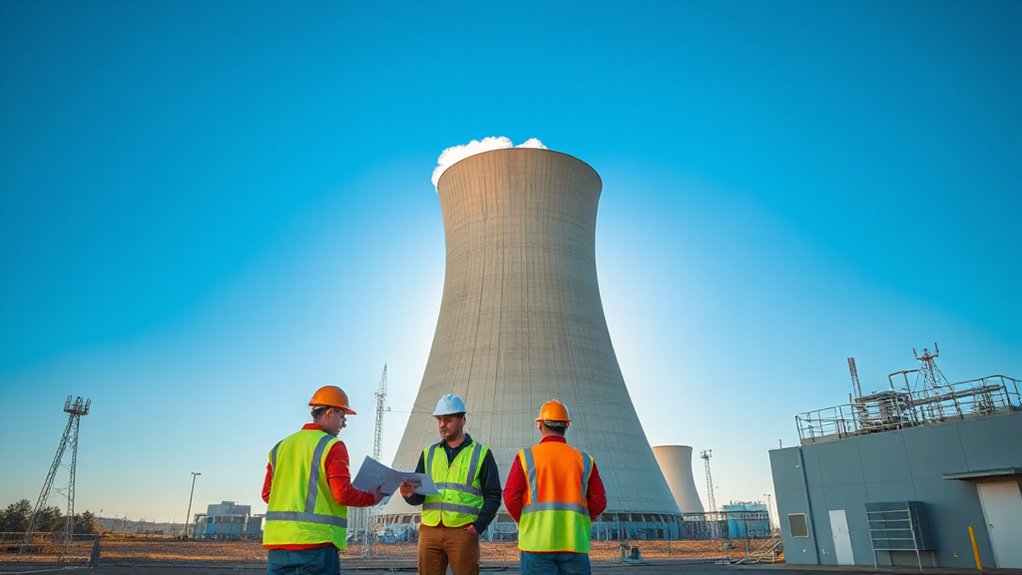
While skeptics have long predicted nuclear power’s demise, the Nuclear Regulatory Commission just dealt them a serious reality check. In a stunning 2025 milestone, the NRC approved 20-year license extensions for thirteen nuclear reactors, preserving a massive 12,000 megawatts on the U.S. power grid. Not exactly the nuclear apocalypse critics have been waiting for.
The renewals span multiple states. Illinois scored big with Clinton and Dresden units 2 and 3. South Carolina’s V.C. Summer grabbed four extensions. Wisconsin, Alabama, and Ohio rounded out the list with six more. These aren’t small potatoes – Clinton Unit 1 alone delivers 1,062 megawatts. That’s serious juice.
These reactors pack a serious energy punch across six states, with Clinton Unit 1 alone pumping out over 1,000 megawatts.
Let’s talk timelines. Nuclear plants initially get 40-year licenses. These renewals push them to either 60 or 80 years total, depending on previous extensions. V.C. Summer now runs until 2062. Clinton’s good until 2047. Dresden units have until 2049 and 2051. Ancient by human standards, practically teenagers for these workhorses.
Operators aren’t being cheap about it. Constellation dropped $370 million upgrading Clinton and Dresden. Meta’s backing Clinton with a 20-year carbon-free energy agreement. Turns out tech giants need reliable power too. Who knew?
The NRC’s efficiency is frankly shocking for a government agency. They’ve slashed renewal processing times by over 50%. Executive Order 14300 hammered home this urgency, mandating 12-month deadlines for renewals.
This nuclear renaissance has serious ambitions – 400 gigawatts of capacity by 2050. That’s a massive increase. Some are even pushing to eliminate license expiration dates entirely through legislation. Bold move.
Critics will certainly question running 80-year-old nuclear plants. But the NRC’s aging management protocols aren’t exactly relaxed. The economic impact is substantial with these plants contributing USD8.1 billion in tax revenue while supporting thousands of jobs. V.C. Summer has provided reliable energy for over four decades while supporting South Carolina’s growing energy needs. Safety standards remain stringent.
These thirteen reactors prove nuclear isn’t going quietly into that good night. Despite major challenges in Western nations, where the average project delay is approximately eight years with costs 2.5 times original estimates, these renewals demonstrate nuclear’s resilience. Sorry, skeptics. Nuclear’s still very much in the game.
References
- https://www.world-nuclear-news.org/articles/three-illinois-reactors-receive-licence-extensions
- https://www.ans.org/news/2025-07-02/article-7168/nrc-approves-vc-summers-second-license-renewal/
- https://www.nei.org/resources/statistics/us-nuclear-license-renewal-filings
- https://www.nrc.gov/reactors/operating/licensing/renewal/applications
- https://www.nrc.gov/docs/ML2521/ML25213A112.pdf
- https://www.catf.us/resource/actions-address-executive-order-14300-reforming-nuclear-regulatory-commission/
- https://www.nrc.gov/sites/default/files/cdn/doc-collection-news/2025/25-071.pdf
- https://www.energyonline.com/Industry/News.aspx?NewsID=36301&NRC_Renews_Operating_Licenses_for_Constellation’s_Nuclear_Reactors_at_Clinton_and_Dresden_Facilities_