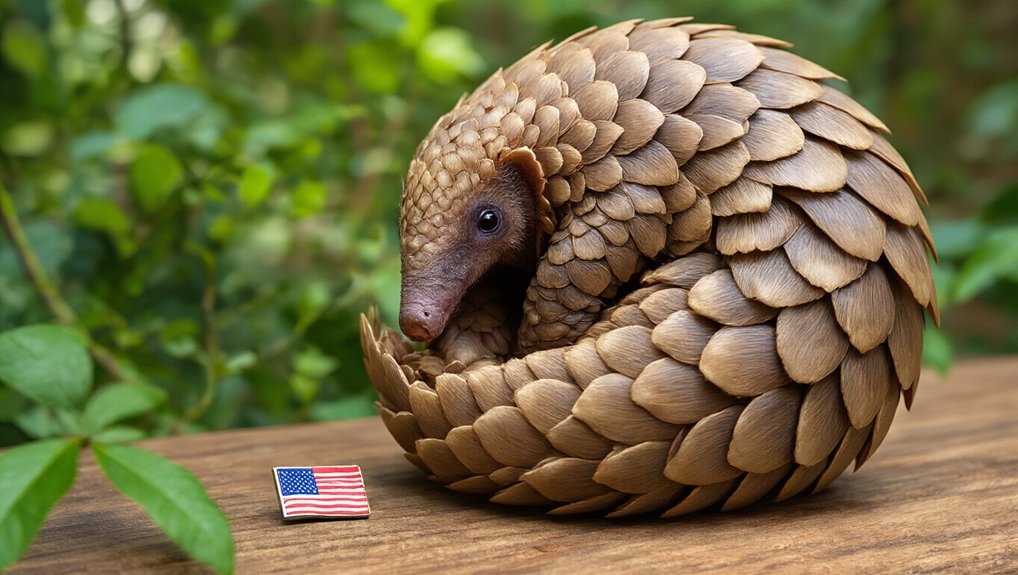

While the world obsesses over pandas and polar bears, the planet’s most trafficked mammal is getting decimated. The U.S. Fish and Wildlife Service finally proposed Endangered Species Act protections for pangolins in 2025. About time.
These scaly anteaters are getting wiped out faster than you can say “traditional medicine.” One pangolin vanishes every three minutes. That’s not a typo. The global Chinese Pangolin population crashed by 80%, earning them a Critically Endangered badge nobody wants. All eight pangolin species made it onto the IUCN Red List of Threatened Species. Every. Single. One.
Here’s the twist: pangolin scales are just keratin. Same stuff as your fingernails. Yet people still believe they have magical healing powers. Spoiler alert: they don’t. Science confirmed it. Multiple times. But trafficking syndicates don’t care about facts when there’s money to be made.
The trafficking game changed dramatically. Fifteen years ago, most pangolins seized in Hong Kong came from Southeast Asia. Now? African pangolins are the new targets. Why? Because Asian populations got obliterated. Traffickers just shifted their supply chain like it’s Amazon Prime for endangered species. The economic cost of shipping from Africa to Asia is higher, which tells you everything about how desperate the situation has become. Nigeria alone saw authorities confiscate seven metric tons of pangolin scales in recent years.
These creatures matter beyond Instagram appeal. Pangolins demolish termite populations, keeping forests from becoming all-you-can-eat buffets for wood-munching insects. A single pangolin devours up to 70 million ants and termites annually, making them nature’s most effective pest controllers. The Chinese Pangolin even evolved prehensile tails for tree-climbing adventures. Remove pangolins from the equation, and forest ecosystems go haywire.
Despite protection under CITES and various national laws, illegal trade continues its merry destruction. DNA forensic studies are tracking trafficking routes, and radiographic imaging helps rehabilitate rescued pangolins. Small victories in a losing war.
Conservation efforts exist, but they’re fighting an uphill battle against ignorance and greed. While rescue centers use X-rays to patch up injured pangolins, three more get snatched from the wild. The math doesn’t work out. Forest health, biodiversity, ecosystem services – all hanging by a thread because humans can’t stop believing in fairy tales about magical scales.
References
- https://www.fws.gov/press-release/2025-06/us-fish-and-wildlife-service-proposes-endangered-species-act-protections
- https://wildafrica.org/world-pangolin-day-2025/
- https://www.worldwildlife.org/species/pangolin
- https://davidshepherd.org/species/pangolins/
- https://www.kfbg.org/en/KFBG-blog/post/World-Pangolin-Day-2025